What Is Thai Massage and How Does It Work?
Thai massage is right for you if you want a hands-on, movement-based way to reduce muscle tension, ease back or joint discomfort, improve flexibility, and feel both calmer and more energized. Its key health perks include meaningful pain relief, greater range of motion, faster post-activity recovery, and stress reduction. At Transcending Health in Charlottesville, VA, we use this traditional floor-based bodywork as part of an integrative plan for pain relief and mobility.
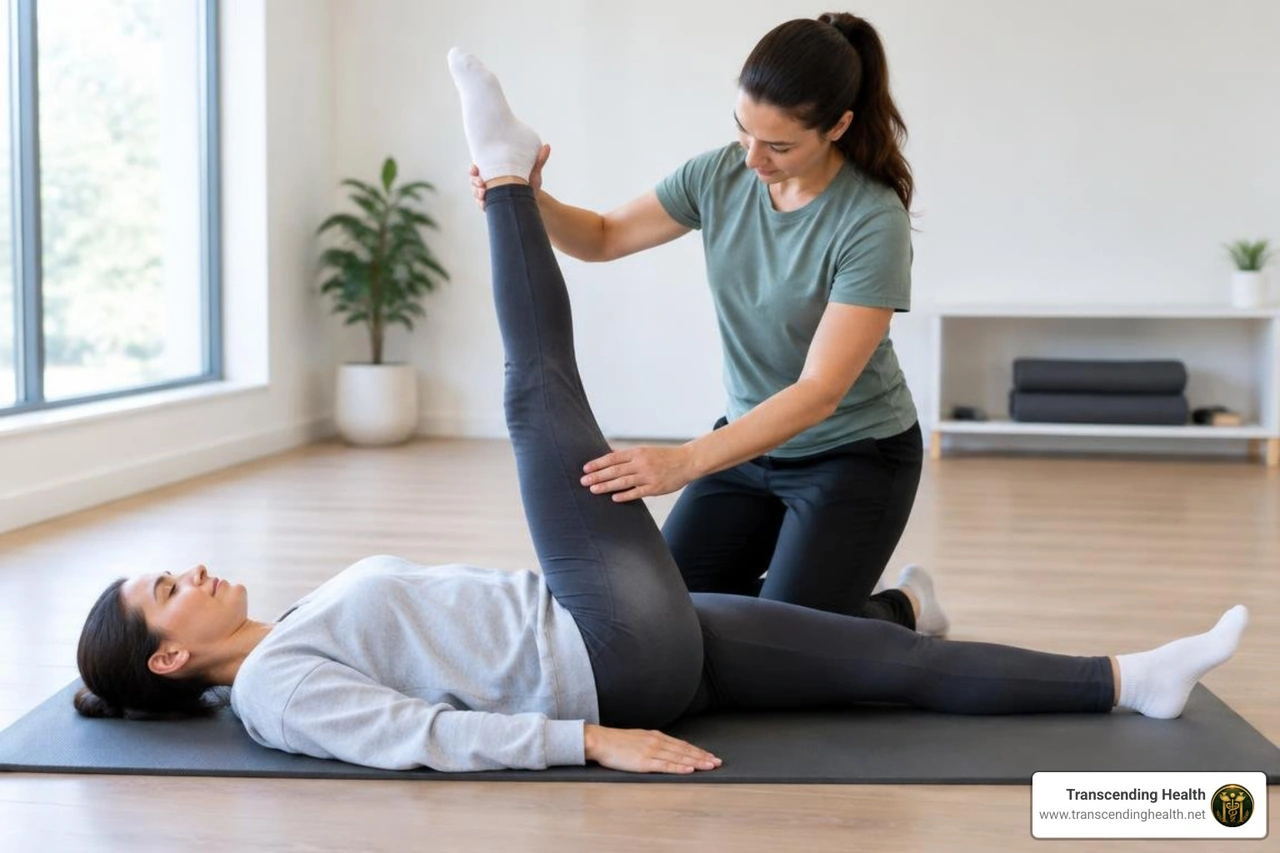
Traditional Thai massage differs fundamentally from typical Western spa modalities. Instead of disrobing and lying passively under a sheet while a therapist glides across your skin with aromatic oils, you remain fully dressed in loose, flexible clothing. The entire session takes place on a wide, firm mat on the floor.
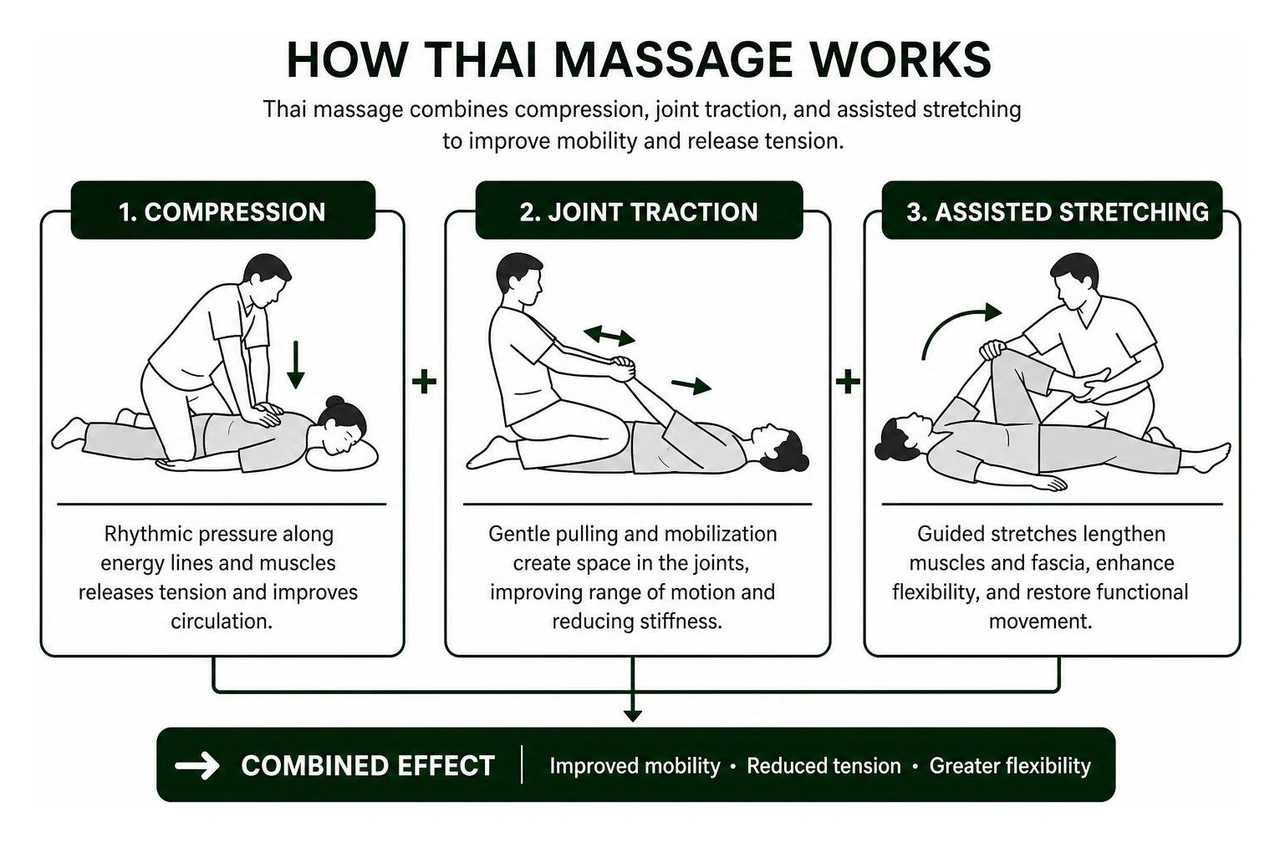
This floor-based setup gives the practitioner the mechanical leverage needed to move your body through dynamic planes of motion. Often described as "assisted yoga" or "lazy person’s yoga," Thai massage blends deep acupressure compressions, joint mobilization, rhythmic rocking, and assisted stretching. Rather than relying solely on hand strength, practitioners use their thumbs, palms, forearms, elbows, knees, and even feet to apply calibrated body weight.
In classical Thai medicine, this work follows Sen energy pathways—ten primary channels through which vital energy (Lom) is believed to flow. From a modern physiological perspective, these energy pathways correspond closely to myofascial meridians, neurovascular bundles, and lymphatic pathways. The mechanical pressure and traction stimulate mechanoreceptors in your soft tissues, down-regulate pain signals in the nervous system, and improve tissue pliability.
For those curious about how this compares directly to table-based modalities like deep tissue bodywork, here is how the core characteristics break down:
| Feature | Traditional Thai Massage | Table-Based Deep Tissue Massage |
|---|---|---|
| Client Attire | Fully clothed (loose, flexible attire) | Disrobed under a sheet/drape |
| Setting | Padded floor mat | Elevated massage table |
| Medium | No oil or lotion used | Minimal oil, cream, or specialized wax |
| Primary Techniques | Assisted stretching, acupressure, rocking | Slow, sustained deep friction, trigger point release |
| Client Role | Active participation and assisted movement | Mostly passive, occasional breath cues |
| Primary Outcome | Mobility, energy balance, dynamic flexibility | Chronic muscle adhesion release, targeted tension relief |
If you appreciate direct physical engagement and guided movement, exploring assisted stretching therapy or a specialized floor-based session is an effective way to restore functional movement patterns that table massages cannot always access.
Proven Thai Massage Benefits for Physical and Mental Health
The physical and psychological effects of Thai massage extend well beyond general relaxation. When rhythmic compressions are applied to shortened muscle groups alongside passive joint traction, your musculoskeletal system experiences real structural realignments. Muscle spindles relax, resting tone normalizes, and restricted fascia begins to glide freely again.
Simultaneously, the steady, rhythmic pacing stimulates the parasympathetic branch of the autonomic nervous system—the classic "rest, digest, and heal" state. A comprehensive systematic review on pain reduction examining multiple clinical trials found that traditional Thai massage yielded pain reductions ranging from 25% to 80% across conditions like myofascial pain syndrome and chronic lower back tension, with positive effects lasting up to 15 weeks post-treatment.
Evidence-Based Thai Massage Benefits for Pain Relief
Chronic discomfort in the lumbar spine, neck, and major joints often stems from a combination of muscle tightness, joint stiffness, and sensitized neural pathways. Traditional Thai bodywork directly addresses these overlapping issues:
- Chronic Lower Back Pain: In clinical trials, Thai massage consistently demonstrates significant relief. In a landmark randomized study, Thai massage was found to be just as effective as clinical joint mobilization for chronic nonspecific low back pain, reducing Visual Analog Scale (VAS) pain scores from 5.3 down to 0.51 after 4 weeks of treatment while improving Oswestry Disability Index scores by over 67%. Furthermore, a 2020 randomized controlled trial demonstrated that combining Thai massage with therapeutic stretching yielded significantly greater reductions in back pain intensity and functional disability than self-care education alone.
- Sciatic Discomfort: By targeting deep hip rotators, gluteal trigger points, and the piriformis muscle, assisted floor stretches take pressure off the sciatic nerve. You can read more about these focused protocols in our guide to sciatica relief protocols.
- Headaches and Migraines: Tension-type headaches and cervicogenic migraines frequently originate from muscular restrictions in the upper trapezius and suboccipital base of the skull. Thai massage utilizes specialized suboccipital traction and neck mobilization techniques that have been shown to reduce chronic headache intensity, providing relief that can last for weeks.
- Osteoarthritis Comfort: Joint stiffness from degenerative wear responds remarkably well to gentle traction. Clinical research found that three weeks of traditional Thai massage provided pain relief and functional walking improvement for knee osteoarthritis patients comparable to standard conservative care, without any of the risks associated with long-term medication use.
Thai Massage Benefits for Flexibility and Athletic Mobility
If you are an active runner, lifter, or field athlete in Albemarle County, flexibility is about more than just touching your toes—it is about usable, dynamic range of motion (ROM) and injury resilience.
During Thai massage, the practitioner moves your limbs through progressive, sustained ranges that you cannot easily achieve on your own. This assisted approach triggers the Golgi tendon organs, allowing the nervous system to let go of defensive muscular guarding.
A 2024 comparative study on youth football players revealed that traditional Thai massage produced improvements in joint range of motion directly comparable to specialized sports massage. Additionally, by facilitating blood flow into overworked soft tissues, it accelerates muscle fatigue recovery and clears metabolic waste following hard training sessions. To optimize your athletic regimen, you can explore our detailed overview of post-workout recovery strategies.
Intriguingly, the systemic impact of this bodywork reaches down to the cellular and immune levels. A clinical trial evaluating older adults showed that regular sessions over six weeks altered immune markers by reducing senescent CD4+ T-cell subsets, highlighting how deep mechanotransduction can influence systemic health, as detailed in this clinical study on immune response.
Stress Reduction, Energy Flow, and Circulation
While passive table relaxation massage tends to induce a drowsy state, Thai massage offers a unique combination of deep mental calmness and physical revitalization.
- Biochemical Stress Relief: A 2015 medical study found that Thai massage significantly reduces salivary alpha-amylase (sAA), a primary biological marker of sympathetic nervous system stress, outperforming simple resting.
- Invigorating Energy Boost: A 2018 randomized trial demonstrated that while conventional passive table massage promoted sleepiness, Thai massage increased reported energy levels and mental stimulation among people suffering from physical fatigue.
- Enhanced Vascular and Lymphatic Flow: The rhythmic, whole-body compressions act as a mechanical pump for both the circulatory and lymphatic systems. Research published in 2020 showed that specialized Thai foot and lower-leg bodywork significantly enhanced skin blood flow and ankle range of motion in patients with peripheral neuropathy.
To dive deeper into the history and philosophical framework behind these techniques, take a look at our traditional Thai bodywork guide.
What to Expect and Safety Considerations
If you have never experienced a Thai massage session before, knowing what to anticipate will help you get the most out of your treatment:
- What to Wear: Dress as if you are attending a gentle yoga or stretching class. Loose-fitting athletic pants, joggers, or leggings paired with a breathable T-shirt are ideal. Avoid rigid jeans, belts, or restrictive clothing with heavy zippers.
- Session Structure: Sessions typically run from 60 to 90 minutes. You will lie on a large, comfortable floor mat. The therapist will guide your limbs, apply palm and thumb compressions along your legs, hips, back, and shoulders, and gently traction your spine and joints.
- Communication: A skilled therapist calibrates pressure to your tolerance. While deep stretching and trigger point compressions can feel intense, it should never cross into sharp or unbearable pain. Always provide real-time feedback.
.webp "Therapist applying palm compression along the back during a clothed floor massage session")
Safety and Contraindications
Because Thai massage involves active movement, traction, and deep compression, it is not suitable for every medical condition. You should exercise caution or seek medical clearance if you have:
- Recent bone fractures, severe osteoporosis, or joint instability
- Active deep vein thrombosis (DVT) or severe bleeding disorders
- Uncontrolled cardiovascular disease or severe hypertension
- Recent spinal surgery, acute disc herniations, or severe spondylolisthesis
- Active cancer undergoing acute medical treatment
If you are pregnant, traditional deep twisting, intense prone compression, and certain pelvic pressure points must be avoided. Prenatal sessions require a specially trained therapist using side-lying positions. When exploring hands-on care, working with a clinic offering comprehensive therapeutic massage services ensures that every session is tailored safely to your unique medical history.
Frequently Asked Questions About Thai Massage
How often should you get a Thai massage for optimal results?
For chronic discomfort, back pain, or stubborn mobility restrictions, an initial series of 1 to 2 sessions per week for 3 to 4 weeks often produces measurable, lasting improvements. Once your baseline range of motion is restored and symptoms subside, a maintenance schedule of once every 2 to 4 weeks is generally sufficient to maintain tissue pliability and manage everyday stress.
Is Thai massage painful or uncomfortable?
Thai massage should not be agonizing. You will likely experience a sensation often described as "good discomfort" or "productive tension"—similar to a deep, assisted stretch or foam-rolling session. A qualified therapist will constantly monitor your breathing and muscle response, adjusting the depth of compression to match your comfort level. Mild muscular soreness the next day is normal, similar to the feeling after a light workout.
Who should avoid Thai massage?
Individuals with acute, unhealed traumatic injuries, severe bone density loss (osteoporosis), active blood clots, open surgical wounds, or unstable heart conditions should avoid vigorous Thai bodywork. If you have chronic conditions such as diabetes, mild hypertension, or joint replacements, discuss your health history with your practitioner beforehand so they can modify stretches and pressures accordingly.
Conclusion
Whether you are seeking relief from persistent lower back tension, looking to enhance athletic flexibility, or wanting an invigorating alternative to passive table massage, the evidence-backed benefits of Thai massage make it a valuable addition to any proactive wellness routine.
At Transcending Health in Charlottesville, Virginia, we believe that real healing happens when traditional hands-on wisdom is integrated with modern rehabilitation science. Located at 1445 Rio Road East, Suite 201, Charlottesville, VA 22901, our team pairs individualized manual bodywork with advanced modalities like SoftWave acoustic wave therapy (shockwave), Rolfing structural integration, cryotherapy, and corrective exercise to help you move freely and live without pain.
If you are ready to experience what targeted bodywork can do for your mobility and vitality, explore the full health benefits of Thai massage or schedule a personalized consultation with us today at our appointment calendar.
References
Juntakarn C, Prasartritha T, Petrakard P. "The Effectiveness of Thai Massage and Joint Mobilization.." International journal of therapeutic massage & bodywork, 2017. PMCID PMC5495387.