Understanding Sciatica and Posterior Chain Tension
Thai massage relieves sciatica by combining passive stretching, joint traction, rhythmic acupressure, and myofascial decompression to ease pressure along the sciatic nerve pathway. By releasing muscular impingement in the hips, glutes, and lower back, this dynamic bodywork restores healthy neural mobility, increases localized circulation, and calms irritated nerve fibers for lasting comfort in Charlottesville, VA.
Sciatica describes symptoms caused by irritation or compression of the sciatic nerve—the longest and thickest nerve in the human body. Originating from the L4 to S3 nerve roots in the lumbar spine and sacrum, this nerve runs deep through the buttock, branches down the back of the leg, and continues into the foot. When something presses on or inflames these nerve fibers, the result is often a sharp, burning, or aching sensation along the entire posterior chain.
An estimated 40% of adults experience sciatica at some point in their lives. While structural spinal issues frequently trigger the irritation, the body’s natural reaction is to tighten the surrounding muscular framework. This protective spasm locks up the lower back, pelvis, and hips, creating a secondary layer of compression that amplifies pain. Consulting an experienced sciatica specialist in Charlottesville VA helps determine whether your discomfort stems from spinal structures, muscular entrapment, or a combination of both.
Lumbar Spine vs. Piriformis Syndrome
Sciatic nerve irritation generally originates from one of two primary locations: the lumbar spine or the deep gluteal space.
- Lumbar Spine Origin: Disc herniations, bone spurs, or spinal stenosis directly compress nerve roots as they exit the spinal column. This type of nerve root impingement often requires a delicate approach focused on spinal decompression and postural balancing.
- Piriformis Syndrome (Deep Gluteal Space): The sciatic nerve passes underneath—and in roughly 15% of the population, directly through—the piriformis muscle. When the piriformis spasms, shortens, or thickens due to prolonged sitting, running, or pelvic torsion, it physically pinches the nerve.
Differentiating between these sources is essential for proper bodywork. When muscular entrapment is the main culprit, techniques like targeted trigger point massage can deactivate hyperirritable knots within the gluteal complex. Releasing the external rotators of the hip removes direct mechanical pinching, giving the sciatic nerve breathing room to glide smoothly during movement.
How Muscular Tension Affects the Sciatic Nerve
The posterior chain operates as a continuous myofascial network. Tension rarely stays isolated in a single muscle. When the piriformis tightens, neighboring structures—such as the gluteus medius, gluteus minimus, gemelli, and obturator internus—frequently contract in compensation. Over time, this chronic tightness spreads downward into the hamstrings and calves (soleus and gastrocnemius), restricting the nerve's natural excursion pathway.
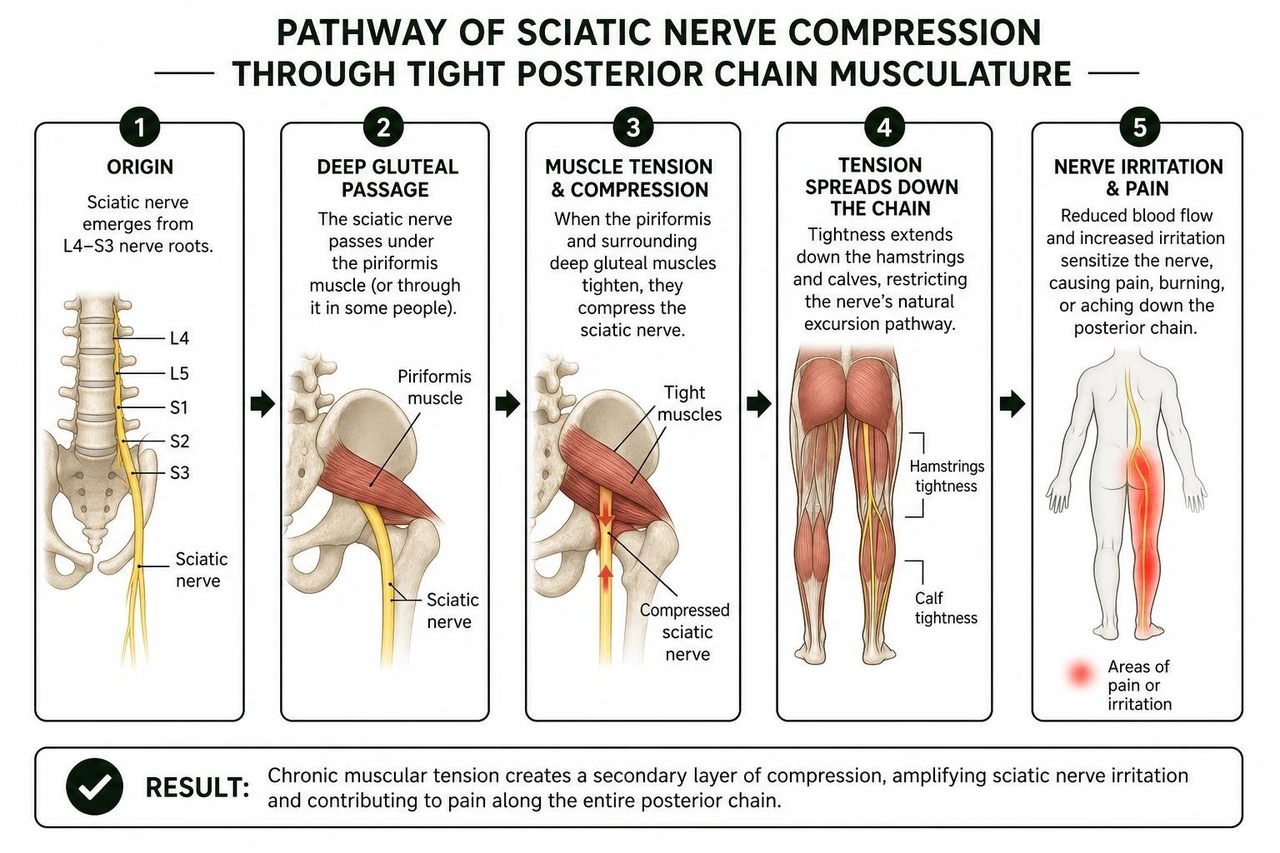
When muscles remain chronically contracted, local microcirculation decreases. This lack of blood flow deprives tissues of oxygen and prevents the clearing of inflammatory metabolic waste. In turn, chemical irritation sensitizes the nerve fibers even further. Thai bodywork addresses this whole chain at once, breaking the cycle of tension, ischemia, and localized nerve sensitivity.
How Thai Massage for Sciatica Works to Relieve Nerve Pain
Traditional Thai bodywork—sometimes called "passive yoga"—is an ancient healing modality that combines rhythmic acupressure, gentle rocking, passive joint mobilization, and deep, assisted stretching. Unlike conventional table massages where you remain passive under a sheet, Thai massage is an active, dynamic experience performed fully clothed on a comfortable floor mat.
This modality supports sciatic recovery by working through both mechanical and neurophysiological pathways. The rhythmic compressions soothe an overactive nervous system, downregulating sympathetic "fight or flight" tension into a restorative parasympathetic state. Applying authentic traditional Thai massage principles releases fascial adhesions, boosts venous return, and restores natural tissue glide along the leg.
The Biomechanics of Thai Massage for Sciatica Relief
From a biomechanical perspective, Thai massage acts as an integrated system of traction and leverage. Instead of relying solely on upper-body strength, practitioners use body weight, feet, knees, forearms, and palms to apply broad, controlled forces that decompress congested joints.
- Pelvic and Lumbar Traction: By anchoring the hips and gently extending the legs, Thai bodywork opens up the intervertebral spaces and sacroiliac (SI) joints, reducing mechanical pressure on spinal nerve roots.
- Myofascial Lengthening: The practitioner guides your body into supported yoga-like postures that isolate the deep hip rotators, tensor fasciae latae (TFL), and hamstrings, achieving therapeutic myofascial release without forcing the tissue.
- Restoring Neural Mobility: Nerves need to slide and stretch during daily movement. By freeing the muscles and enveloping fascia from adhesions, Thai massage allows the sciatic nerve to glide freely rather than snagging on restricted fibers.
As outlined in clinical research on myofascial therapy, these synchronized biomechanical inputs help restore pelvic alignment and alleviate the muscular forces pulling the spine out of balance.
Sen Energy Line Stimulation and Neural Mobility
In traditional Thai medical theory, the body contains 72,000 energetic pathways known as Sen lines, with ten primary lines (Sen Sib) serving as the foundation for bodywork. Two major lines—Sen Ittha and Sen Pingkhala—run up the posterior legs, traverse the buttocks, and travel along the spine, tracing a path remarkably similar to modern anatomical maps of the sciatic nerve and posterior myofascial chain.
Practitioners apply rhythmic thumb and palm pressing along these Sen lines. This work stimulates local mechanoreceptors, inhibits pain signaling via the spinal cord (the "gate control" mechanism), and triggers the release of endorphins. This combination of traditional meridian balancing and nervous system regulation helps calm hyperactive nerve signaling, providing deep somatic relaxation.
What to Expect on the Mat During Treatment
Walking into a Thai massage session is different from a typical spa visit. You remain fully clothed in loose, breathable athletic wear, lying down on a firm, supportive mat on the floor. This setup allows the therapist to use gravity, leverage, and full-body positioning to stretch and mobilize your body safely.
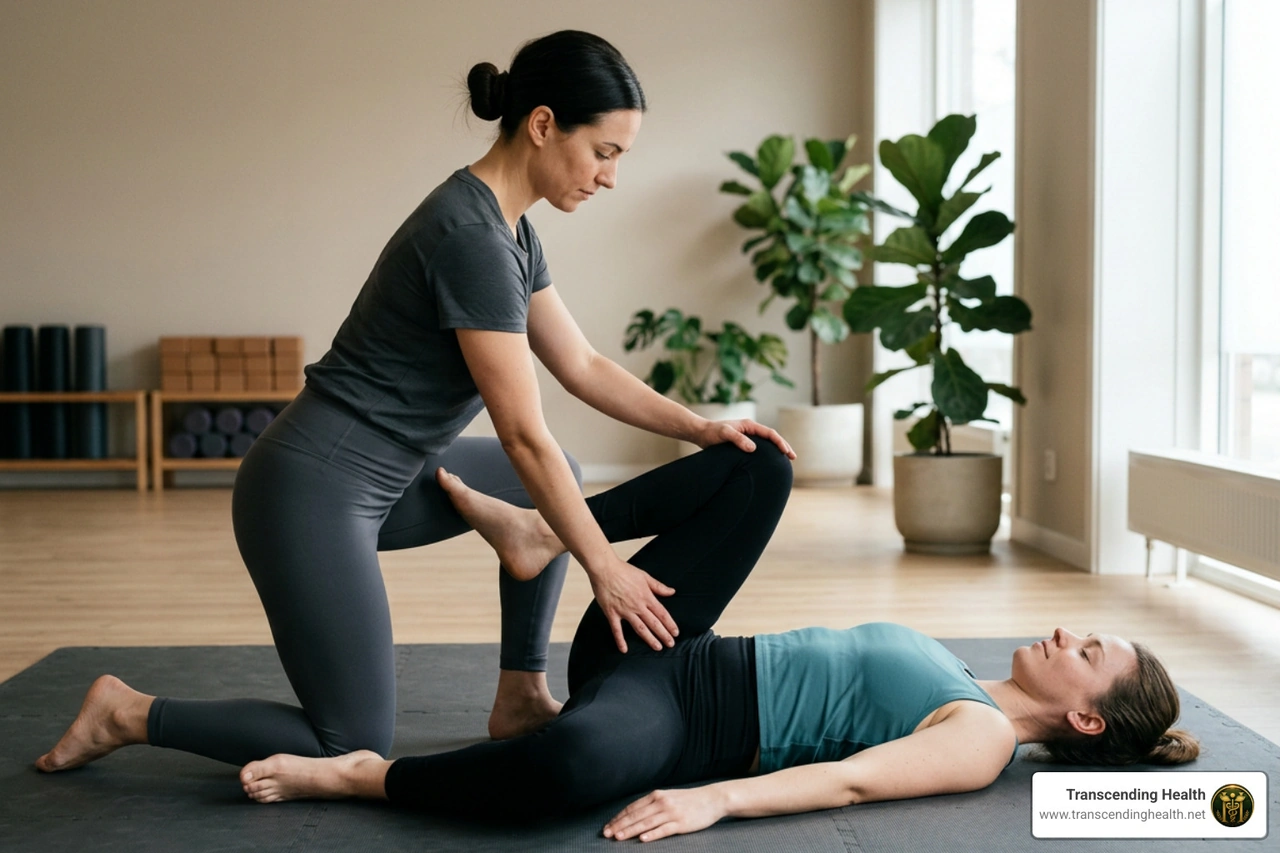
Every session begins with an intake assessment to discuss your symptom history, pain triggers, and movement limitations. Because sciatica symptoms fluctuate, our certified practitioners adapt their approach to your comfort level, ensuring no technique forces your body into sharp pain. This mindful application of clinical massage therapy ensures your treatment is focused, therapeutic, and tailored to your specific needs.
Core Hip and Glute Release Techniques
During a session focused on sciatic discomfort, the practitioner uses a series of specialized techniques to open up the hips and lower back:
- Supported Knee-to-Chest Mobilization: The practitioner stabilizes your opposite hip while gently driving your knee toward your chest and across the midline, stretching the deep gluteus medius and piriformis.
- Greater Trochanter Glides and Palm Compressions: Using broad palm pressure, the therapist rocks the hip joint, applying rhythmic compression around the greater trochanter to ease tight hip rotators.
- Passive Pigeon and Figure-Four Stretches: With the therapist supporting your leg, your hip is guided into external rotation to stretch deep tissue without straining the knee joint.
- Sacral Decompression and Traction: Placing soft pressure across the sacrum while lightly tractioning the leg creates space across the SI joint and lower lumbar segments.
- Lower Extremity Compression: Rhythmic compression along the hamstrings, IT band, and calves (gastrocnemius and soleus) releases tension all the way down the leg.
Tailoring Thai Massage for Sciatica Flare-Ups
During a severe flare-up, the sciatic nerve is highly inflamed and sensitive. Direct, heavy elbow pressure into an acutely aggravated piriformis can worsen symptoms.
In our practice, we modify techniques based on your current pain levels. For acute presentations, we avoid deep poking into the nerve path. Instead, we use gentle traction, broad palm compressions, and supported stretches on adjacent muscle groups—such as the psoas, quadratus lumborum (QL), and adductors—to ease tension around the hips without irritating the nerve. Clear, continuous communication ensures the work stays within a safe, comfortable range.
Comparing Thai Bodywork with Other Massage Modalities
Choosing the right bodywork modality depends on the root cause of your symptoms, your pain tolerance, and how your nervous system responds to touch.
| Feature | Thai Bodywork | Deep Tissue Massage | Sports Massage |
|---|---|---|---|
| Primary Focus | Whole-body stretching, joint traction, and Sen line acupressure | Focused, deep pressure to break down muscle knots and fascial adhesions | Targeted muscle recovery, biomechanics, and injury rehab |
| Environment | Clothed on a firm floor mat | Disrobed under sheets on a massage table | Clothed or disrobed on a treatment table |
| Medium | Dry (no oils or lotions) | Massage oils, lotions, or creams | Oils, dynamic balms, or dry work |
| Best Suited For | Hip stiffness, piriformis tension, and general mobility limitations | Chronic localized muscle tension and deep postural knots | Sports injuries, tendon strains, and athletic performance recovery |
| Nerve Impact | Broad decompression through traction and passive range of motion | Direct, localized pressure (must be used carefully near inflamed nerves) | Targeted friction and active stretching techniques |
Thai Massage vs. Deep Tissue and Sports Massage
While standard deep tissue massage relies on isolated, sliding strokes to release tight muscle layers, it can sometimes feel too intense for a sensitive nerve. Thai massage spreads force across broader contact points, utilizing leverage and movement to decompress tissues naturally.
In clinical settings, these modalities can complement one another. A comprehensive medical massage program might combine the assisted stretching of Thai bodywork with precise trigger point work to address both local spasms and full-body movement imbalances.
Frequency, Safety Guidelines, and Contraindications
Consistency is key when using bodywork for sciatica relief. Research indicates that frequent, targeted sessions—such as a 30-minute massage daily for five days, or regular weekly sessions over 4 to 6 weeks—can significantly reduce low back and sciatic discomfort. Once acute symptoms settle, bi-weekly or monthly maintenance sessions help prevent future flare-ups.
When to Avoid Thai Massage (Contraindications)
While Thai massage is safe for most individuals, certain conditions require medical clearance or alternative care:
- Cauda Equina Red Flags: Sudden loss of bowel or bladder control, progressive lower-limb weakness, or numbness in the groin/saddle area requires immediate emergency medical evaluation.
- Acute Severe Disc Herniation: If minor movements cause intense, shooting pain down the leg, aggressive stretching is contraindicated until spinal inflammation resolves.
- Severe Osteoporosis or Bone Fractures: The dynamic leverages and bodyweight pressure of Thai massage are unsafe for compromised bone density.
- Uncontrolled High Blood Pressure or Cardiovascular Disease: Extensive inversions and intense stretching should be modified or avoided.
Frequently Asked Questions About Sciatica Relief
Can Thai massage cure sciatica or just manage symptoms?
Thai massage is a supportive therapy for symptom management, structural decompression, and functional recovery; it is not a standalone "cure" for structural spinal abnormalities like large disc herniations or severe stenosis. When sciatica is driven by muscular tightness (such as piriformis syndrome) or postural strain, Thai bodywork can help eliminate the primary cause of nerve compression. For structural spinal conditions, it serves as an effective, non-invasive tool to relieve surrounding muscle spasms and improve daily comfort.
How many sessions are typically needed for lasting relief?
Most clients feel noticeable relief in muscle tension and mobility after a single session. However, addressing chronic sciatic pain usually requires a series of treatments. A common protocol involves weekly sessions for 3 to 6 weeks to retrain tight muscles and restore pelvic balance. Afterward, transitioning to bi-weekly or monthly maintenance visits helps sustain healthy tissue mobility alongside home movement routines.
Is Thai massage safe during an acute sciatica flare-up?
Yes, provided the practitioner knows you are experiencing an acute flare-up and modifies the session accordingly. During acute inflammation, aggressive deep-tissue pressure and deep twisting should be avoided. A skilled therapist will focus on gentle joint traction, broad palm compression, diaphragmatic breathing, and easing tension in compensating muscle groups to help settle the nervous system without irritating the sciatic nerve.
Finding Lasting Relief from Sciatica in Charlottesville
Living with sciatic nerve pain can make simple routines—like driving, working at a desk, or enjoying a walk—feel exhausting. At Transcending Health, we believe you do not have to settle for chronic discomfort. As an integrative pain relief and wellness clinic in Charlottesville, Virginia, our whole-person care model combines advanced recovery tools, movement coaching, and hands-on bodywork to help you get back to moving comfortably.
Whether your discomfort stems from hours of sitting, athletic strain, or deep muscular tension, our customized sessions address your symptoms at the root. Explore the restorative benefits of Thai massage and let our team support your path to lasting relief.
We invite you to visit our clinic at 1445 Rio Road East, Suite 201, Charlottesville, VA 22901, or take the next step in your recovery journey and book your initial assessment today at transcendinghealth.net/appointment-calendar.