
Why Traditional Thai Massage Can Help You Move With Less Pain
.webp "traditional Thai massage")
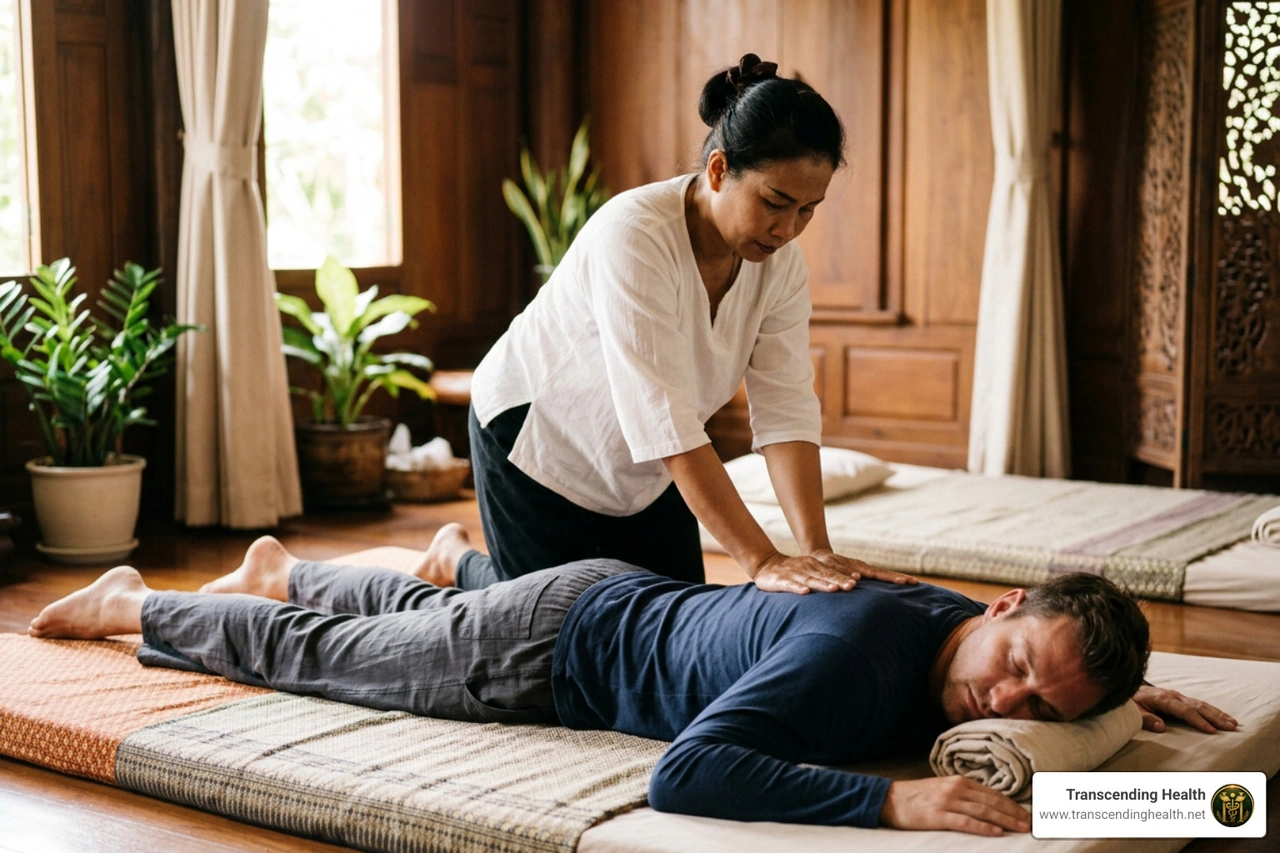
Traditional Thai massage is a fully clothed form of bodywork that combines firm rhythmic pressure, guided stretching, and joint movement. Often called assisted yoga, it may help ease muscle tension, support flexibility, and provide short-term relief for problems such as low back pain, knee discomfort, and tension headaches.
Unlike an oil massage on a table, this treatment is usually done on a padded floor mat. The practitioner uses their hands, thumbs, elbows, forearms, knees, and sometimes feet to apply pressure and guide your body through comfortable, yoga-like positions. You do not need to be flexible to benefit. The work should be adapted to your body, injury history, and comfort level.
Traditional Thai massage, known in Thailand as Nuad Thai, is also more than a modern spa service. It is part of Thailand's traditional healing culture and was added to UNESCO's Representative List of the Intangible Cultural Heritage of Humanity in December 2019. Its techniques are traditionally organized around sen lines, or energy pathways, while modern practitioners can also use an anatomical understanding of muscles, joints, and movement.
For active adults dealing with recurring pain or post-injury stiffness, the appeal is simple: this is hands-on care that treats movement as part of the session, not an afterthought.
I am Drew Edmondson, owner of Transcending Health in Charlottesville, Virginia, where we combine hands-on therapies, corrective exercise, and recovery technology to help people move and feel better. In this guide, I will explain where traditional Thai massage may fit into a practical plan for pain relief, mobility, and performance.

What Is Traditional Thai Massage and How Does It Work?
Traditional Thai massage differs fundamentally from typical Western table treatments. Performed entirely on a firm, supportive floor mat, clients remain fully clothed in loose, breathable garments throughout the session. By eliminating slippery lotions and massage oils, the practitioner maintains firm mechanical leverage, allowing for steady traction, deep compressions, and precise limb placement.
The mechanics rely on a dynamic interplay between practitioner body weight and client receptivity. Rather than simply using arm and shoulder strength, therapists use their palms, thumbs, forearms, elbows, knees, and feet to apply rhythmic compressions. These techniques integrate smoothly with therapeutic acupressure and passive joint mobilizations. By leveraging gravity and body mechanics, the practitioner creates a safe, deeply relaxing experience that opens tight joint capsules, releases rigid myofascial layers, and eases systemic tension.
Core Principles and Techniques of Traditional Thai Massage
At the center of authentic Thai bodywork is a harmonious blend of rhythm, breath, and structural engagement:
- Rhythmic Palm and Thumb Compressions: Systematic pressing warms the superficial tissues and calms the nervous system before deeper stretches begin.
- Forearm and Elbow Leverage: Broad, steady pressure targets dense muscle groups in the hips, glutes, hamstrings, and back.
- Foot Compressions and Stepping Methods: Controlled, grounded foot pressure delivers broad compression to large kinetic structures without pinching sensitive tissues.
- Assisted Yoga Postures: Gentle rocking and passive movement open the hips, decompress the spine, and elongate shortened muscle groups.
- Mindfulness and Metta: Rooted in Buddhist philosophy, sessions are offered with metta (loving-kindness) and focused awareness, ensuring the recipient feels supported and at ease.
Ancient Origins, Sen Lines, and Cultural Heritage
The historical roots of Nuad Thai date back over 2,500 years. Traditional accounts link its origins to Jivaka Komarabhacca, a revered ancient physician in northern India who served as the personal doctor to King Bimbisara and attended to the Buddha. As Buddhism spread across Southeast Asia, these Ayurvedic concepts, herbal practices, and yogic stretches integrated with indigenous healing traditions in Thailand.
During the Ayutthaya period, Thai medicine became formalized through royal medical departments. Following the destruction of ancient medical texts during historical conflicts, King Rama III commissioned the preservation of this knowledge in 1832 by having stone inscriptions and anatomical diagrams carved into the walls of Wat Pho in Bangkok. Later, in 1955, Wat Pho established the first Thai Medical School approved by the Thai Ministry of Education, teaching Thai massage, midwifery, pharmacy, and medical practice.
Central to this tradition is the concept of ten sen lines (energy pathways). Blockages along these channels are believed to manifest as muscle discomfort, lethargy, or systemic imbalance. In Thailand, professional practice is strictly regulated: licensed practitioners must complete at least 800 hours of rigorous training under the Ministry of Public Health's Department of Health Service Support.
Historically, the art developed across two distinct styles:
- Royal Court Style (Nuad Rajasamnak): A formal approach historically used for royalty that relies primarily on the hands and thumbs, emphasizing gentle etiquette and specific pressure points.
- Folk Style (Nuad Chaloeysak): The commoner approach that freely employs elbows, knees, feet, and dynamic body positions to relieve physical fatigue from daily labor.
This rich cultural lineage led to its official UNESCO Intangible Cultural Heritage recognition in December 2019.
Key Differences: Thai Bodywork vs. Western Massage Modalities
Many massage styles focus on localized kneading while you rest quietly on an elevated table. Traditional Thai bodywork, by contrast, operates as an interactive conversation between client and practitioner.
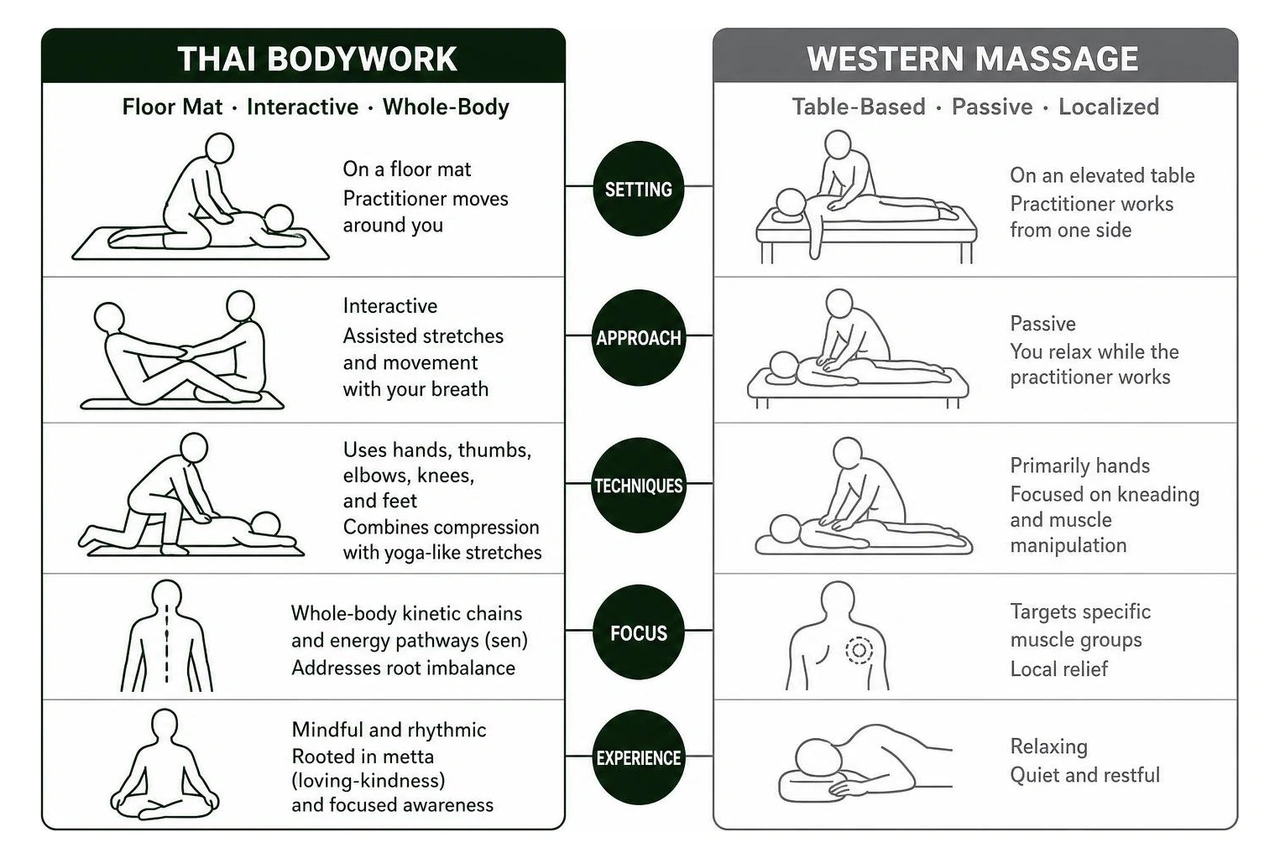
While Western techniques primarily isolate individual muscle groups, Thai bodywork focuses on whole-body kinetic chains. It blends deep compression with structural stretching, inviting your breath and posture into the process.
Floor Mat Dynamics vs. Table Massage
The physical setup of a treatment alters the biomechanics of bodywork:
- Movement Freedom: Working on a wide floor mat allows your therapist to maneuver around you seamlessly, using their whole body for stable leverage.
- Effective Traction: Ground-level bodywork makes it easier to decompress the spine and open tight hip joints compared to elevated tables.
- Clothing and Draping: Because you stay fully dressed in flexible clothing, there is no need for traditional sheet draping.
While classical relaxation massage techniques rely on long, oil-based strokes for surface relaxation, and deep tissue bodywork zeroes in on specific muscle adhesions, traditional Thai bodywork approaches the body holistically to improve overall mobility.
| Feature | Traditional Thai Massage | Swedish Massage |
|---|---|---|
| Primary Environment | Padded floor mat | Elevated massage table |
| Attire | Fully clothed (loose, comfortable garments) | Disrobed to comfort level (under draping sheets) |
| Lubrication Used | None (no oils or lotions) | Oils, creams, or lotions |
| Primary Techniques | Rhythmic compression, passive stretching, acupressure | Effleurage, petrissage, friction, vibration |
| Tools Used | Hands, thumbs, elbows, knees, feet | Hands, palms, forearms |
| Sensation & Goal | Energizing, mobility-focused, deeply releasing | Sedating, soothing, localized muscle relaxation |
Traditional Thai vs. Thai Combination Massage
As Thai bodywork gained global popularity, hybrid modalities emerged:
- Traditional Thai Massage: Remains committed to floor-mat execution, zero oil application, deep rhythmic acupressure, and comprehensive assisted yoga stretches.
- Thai Combination Massage: Blends traditional acupressure and gentle stretching with table-based Swedish oil techniques. It often incorporates warmed herbal compresses (steamed pouches filled with lemongrass, ginger, and turmeric) to soothe superficial tissues.
If you want a relaxing experience that eases surface tension, a combination session is an accessible starting point. If you want to expand your range of motion, relieve deep stiffness, and reset your kinetic movement patterns, a traditional mat session offers unmatched structural benefits.
Evidence-Based Therapeutic and Mobility Benefits
.webp "assisted spinal twist stretch during a Thai bodywork session")
Beyond its rich heritage, traditional Thai massage provides measurable physiological benefits that are well-documented in clinical research. By stimulating blood circulation and engaging the parasympathetic nervous system, this rhythmic bodywork helps the body shift away from chronic fight-or-flight stress into a state of tissue repair and deep recovery.
Health Benefits of Traditional Thai Massage Backed by Science
Modern research continues to validate the therapeutic outcomes of traditional Thai bodywork:
- Chronic Low Back Pain Relief: A landmark 2017 study in Thailand involving 120 participants with nonspecific low back pain revealed that receiving Thai massage twice a week for four weeks produced significant reductions in pain intensity, matching the benefits of standard conservative clinical care.
- Osteoarthritis Management: Clinical trials evaluating patients with knee osteoarthritis showed that three weeks of regular Thai bodywork reduced joint pain and improved physical mobility as effectively as standard oral ibuprofen regimens.
- Tension Headache Alleviation: A 2015 study demonstrated that structured Thai massage protocols significantly lowered chronic tension-type headache intensity, with therapeutic improvements lasting anywhere from several days up to 15 weeks post-treatment.
- Measurable Stress Reduction: Multiple clinical reviews highlight that Thai bodywork reduces physiological stress markers, including salivary alpha-amylase, helping to restore nervous system balance.
- Mental and Physical Energy: Unlike modalities that leave you feeling groggy, a 2018 comparative study showed that participants receiving Thai massage reported feeling noticeably more energized and mentally alert than those receiving Swedish massage.
Institutions such as Chulalongkorn University clinical research groups continue to explore how these traditional methods support modern clinical rehabilitation and athletic recovery.
Restoring Range of Motion and Alleviating Chronic Tension
Sedentary habits, repetitive motion, and intense training can lead to tight myofascial tissue and restricted joints. Over time, shortened muscle fibers and stiff connective tissues restrict movement, pulling your joints out of balance.
Using massage therapy for pain relief helps interrupt this cycle. The slow, supported stretches in Thai massage lengthen stubborn muscle groups—like tight hip flexors, hamstrings, and pectoral lines. This deep work creates space in your joints, calms overactive nerve pathways, and helps address why tension recurs after regular exercise or long days at a desk.
What to Expect During a Session, Precautions, and Safety
If you are new to traditional Thai bodywork, knowing what to expect can help you relax and get the most out of your appointment. Sessions typically last between 60 and 120 minutes. A 60-minute session serves as a great introduction, while 90- to 120-minute sessions provide enough time to work through the entire body without rushing.
Session Etiquette, Attire, and Sensations
- Attire: Wear clean, loose, or stretchy athletic clothing, such as yoga pants, sweatpants, and a comfortable t-shirt. Avoid restrictive fabrics, jeans, belts, or bulky jewelry.
- The Setting: You will lie comfortably on a wide, cushioned mat on the floor. Pillows, bolsters, and rolled towels are used to support your spine, knees, and neck.
- Sensations: You will feel rhythmic pressure and deep, assisted stretches. While the pressure can feel intense when working through tight tissues, it should never feel sharp or pinching. A good stretch should always allow you to breathe slowly and comfortably.
- Hydration & Post-Care: You will likely leave the session feeling both physically relaxed and mentally refreshed. Drink plenty of water afterward to support tissue recovery, and expect mild muscular tenderness over the next day or two, similar to how you feel after a light workout.
Contraindications and Safety Considerations
While traditional Thai bodywork is safe for most healthy adults, its dynamic movements require caution in certain situations.
Primary contraindications and safety considerations include:
- Uncontrolled cardiovascular disease or severe hypertension
- Deep vein thrombosis (DVT) or active blood clotting disorders
- Recent bone fractures, joint surgeries, or acute spinal disc herniations
- Severe osteoporosis or fragile bone density
- Pregnancy (traditional deep twists, abdominal compression, and prone positioning should be avoided; specialized prenatal adjustments are required)
- Active skin infections, open wounds, burns, or acute inflammatory flare-ups
Always share your complete medical history, past injuries, and current discomforts with your therapist before getting started.
How to Choose a Thai Massage Provider Near You
Proximity is only one part of the decision. Use these questions to compare providers in Charlottesville and Albemarle County:
- What training does the practitioner have? Ask about massage licensure and specific education in Thai massage or assisted stretching.
- Is the session traditional mat-based Thai massage or a blended service? Both can be valuable, but the provider should describe the difference clearly.
- How is the session customized? Look for an intake process, pressure options, and modifications for injuries or mobility limitations.
- Are claims realistic? Choose providers who discuss potential benefits without guaranteeing results.
- Is the next step clear? You should be able to review services, ask questions, and book without confusion.
Frequently Asked Questions About Thai Bodywork
How often should you get a Thai massage?
For ongoing wellness and mobility maintenance, one session every two to four weeks works well. If you are recovering from joint stiffness, managing chronic postural strain, or training heavily, an initial series of weekly sessions for three to four weeks can help create lasting changes in your flexibility and comfort.
Is Thai massage painful or uncomfortable?
It should not be painful. You may feel a deep, productive stretching sensation—often described as a "good ache"—as tight muscles release. Your therapist will adjust their pressure to match your comfort level. Open communication is always encouraged: if a stretch feels too intense, let your practitioner know so they can ease off.
How does Thai massage compare to assisted stretching?
While standard assisted stretching sessions focus primarily on isolating specific muscle groups through mechanical planes, Thai bodywork is a comprehensive healing art. It blends passive stretching with rhythmic compressions along energy pathways, targeted acupressure, gentle rocking, and mindful breathing. This combination eases muscular tension while helping calm your entire nervous system.
Is Thai massage good for beginners?
Yes, when the practitioner scales the pressure and range of motion to the client. A beginner session should prioritize communication, supported positions, and gradual movement. You do not need to be flexible to start.
Does Thai massage use oil?
Traditional Thai massage is usually performed without oil while you stay clothed. Some studios offer oil-based combination sessions, so ask which format you are booking.
Can Thai massage help back pain?
Some research suggests massage may help certain people with nonspecific low back pain, but back pain has many causes. New or severe symptoms, progressive weakness, bowel or bladder changes, saddle-area numbness, fever, or pain after trauma need prompt medical evaluation before bodywork.
Conclusion
Traditional Thai massage bridges the gap between hands-on bodywork and active movement therapy. By combining mindful breathwork, rhythmic compressions, and supported stretches, this ancient practice helps unbind tight joints, ease persistent aches, and leave you feeling balanced and energized.
At Transcending Health in Charlottesville, Virginia, we integrate time-tested bodywork with advanced recovery therapies to help you move freely and feel your best. Whether you are recovering from an injury, working through daily stiffness, or looking to boost your athletic performance, our team is here to support you.
Ready to move with less pain? Explore the complete benefits of Thai massage, see our Thai massage service in Charlottesville, and schedule your session at Transcending Health today.