When to Use Pressure-Point Work for Muscle Knots
When treating a stubborn muscle knot, a cautious approach helps calm localized tightness by increasing local blood flow and providing temporary neurological feedback. Active individuals frequently look up specific pressure points for a Theragun or similar handheld percussive tool to break up deep tension after training. If you use a percussion device, starting on the muscle belly around a knot rather than driving the attachment head directly into the sorest spot yields far better results. When people treat persistent muscle knots by hammering aggressively into sensitive trigger points, surrounding tissues often contract reflexively to guard against bruising or irritation.
Clinical studies evaluating percussive massage therapy on musculoskeletal recovery show that mechanical vibration can temporarily improve acute range of motion and tissue compliance. However, sustained relief requires respecting the underlying neurology of hyperirritable tissue bands. That protective guarding response is one reason recurring tension often needs a more nuanced, professional approach.
I am Drew Edmondson, owner of Transcending Health at 1445 Rio Road East, Suite 201 F, in Charlottesville, Virginia. At our center, we coordinate hands-on bodywork, movement support, and restorative therapies for active adults throughout Albemarle County. When clients ask about pressure-point work for persistent aches, I help them understand when self-care is helpful and when recurring tension calls for an in-person, whole-body evaluation.
Everyday muscle tightness that eases with a bit of stretching, warm-up movement, or a few minutes of self-massage is usually nothing to worry about. But when the same spot keeps tightening up day after day, or when the discomfort starts to change how you move, that pattern is worth a closer look. A personalized, hands-on assessment can help identify what is actually driving the tension rather than just treating the sore spot in isolation.
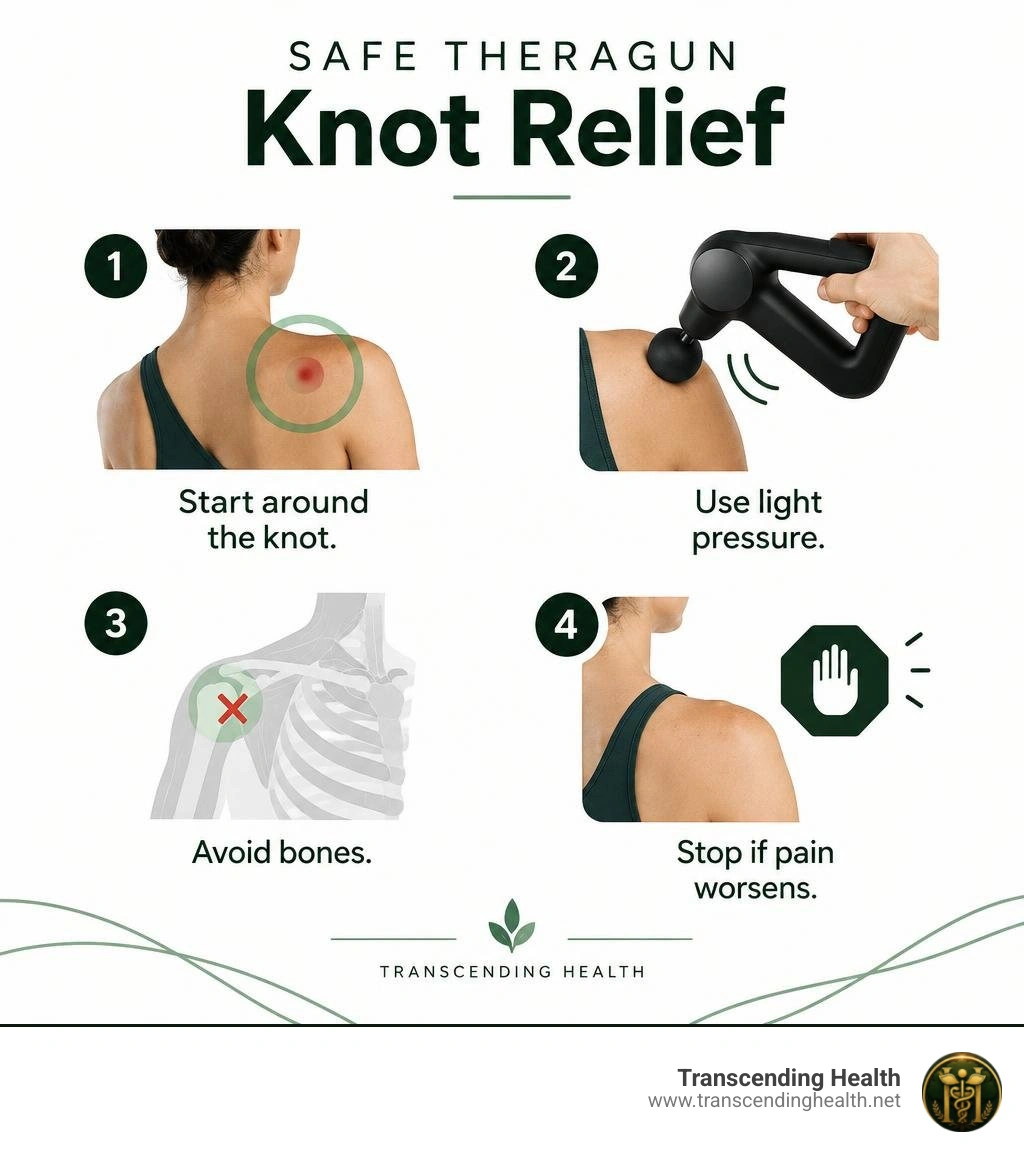
Exploring how mechanical pressure and palpation interact with taut bands helps active individuals make informed decisions about their recovery routines. You can also explore our guide on trigger point massage to learn more about how hyperirritable tissue bundles behave under sustained manual pressure.
How Can In-Clinic Bodywork Address Persistent Muscle Tension?
When you press on a tight muscle at home, you are working with surface-level feedback: the tissue feels hard, tender, or ropey, and you push on it until the sensation changes. What you cannot sense is how the underlying tissue responds, how the surrounding joints are positioned, or why that hyperirritable band formed in the first place. In-clinic bodywork pairs targeted tissue work with real-time palpation and a whole-body assessment to address those deeper questions.
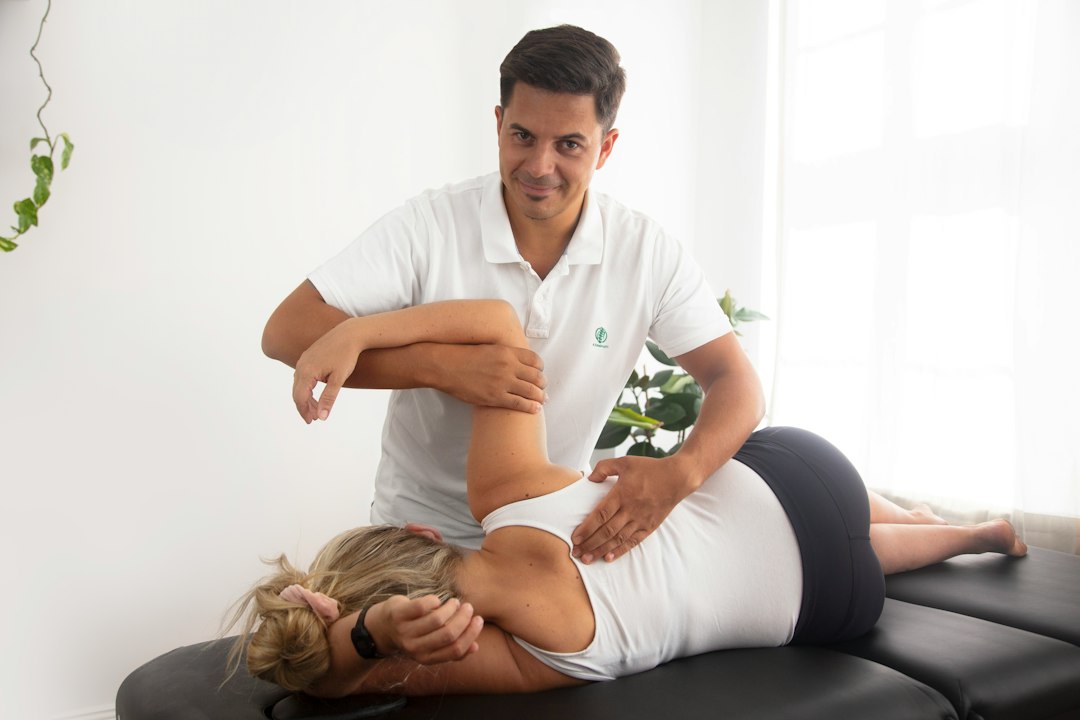
At Transcending Health, we look at muscle knots through a functional lens. A session may incorporate clinical massage in Charlottesville, myofascial release, and integrative manual therapy. These techniques allow us to apply sustained, responsive pressure directly to taut bands without the high-frequency pounding that sometimes causes protective muscle guarding.
Clinical research evaluating manual therapy interventions on pain and pressure pain thresholds highlights how skilled manual approaches can improve tissue sensitivity and comfort. Rather than hammering a sore spot, hands-on care adapts depth, direction, and tempo based on your body's subtle neurological responses.
What Areas Might a Practitioner Assess?
Tension rarely exists in isolation. When you feel a stubborn knot between your shoulder blades, the root issue might stem from restricted thoracic mobility, tight pectoral muscles pulling the shoulder forward, or poor rib cage mechanics. Research on myofascial trigger points and chronic musculoskeletal pain demonstrates that taut bands frequently arise from chronic postural strain and compensatory movement loops.
During an in-person assessment, we evaluate interconnected regions:
- Shoulders and upper back: Examining the relationship between the levator scapulae, upper trapezius, rhomboids, and anterior chest wall.
- Hips and gluteal complex: Looking at how the piriformis, gluteus medius, and hip flexors influence pelvic alignment and lumbar strain.
- Feet and calves: Evaluating how foot mechanics, calf tightness, and plantar tension affect your entire kinetic chain when walking or running around Charlottesville.
By looking at the whole functional chain rather than chasing a single painful spot, we help you uncover the underlying mechanics driving the tension.
How Is a Session Adapted to the Person?
No two bodies hold tension in the exact same way. In-clinic bodywork relies on clear, constant communication about pressure, sensation, and comfort. If a technique feels sharp or causes you to hold your breath, we adjust our approach immediately.
We also coach you through diaphragmatic breathing to help shift your nervous system into a relaxed, parasympathetic state. This calm baseline allows deeper tissue layers to soften without force.
| Modality | Primary Focus | Best Suited For |
|---|---|---|
| Trigger Point Massage | Deactivating localized hyperirritable muscle knots with precise pressure | Focused, isolated aches and referred tension patterns |
| Myofascial Release | Lengthening restricted connective tissue sheets across muscle groups | Broad stiffness, postural restrictions, and reduced range of motion |
| Integrative Manual Therapy | Combining structural techniques, fascial work, and gentle joint mobilization | Complex, multi-region movement limitations and chronic guarding |
When Might Professional Bodywork Be a Better Fit?
Self-applied pressure-point work can be a useful part of a warm-up or cool-down, but certain signs suggest that scheduling an in-clinic session is the better path forward:
- The tension returns immediately: If a knot loosens under self-applied pressure only to lock up an hour later, the muscle may be contracting to stabilize a joint or compensate for a weaker muscle elsewhere. Peer-reviewed findings on neuromuscular adaptation and muscle compensation strategies indicate that persistent hypertonicity often serves as a protective reflex rather than a purely local tissue defect.
- Movement feels restricted or altered: When tightness changes how you walk, turn your neck, or lift overhead, continuing to apply heavy local pressure can irritate surrounding nerves or tendons.
- You cannot identify what aggravates the area: If resting, stretching, and self-massage all fail to ease the ache, a comprehensive body assessment can pinpoint whether the issue is muscular, fascial, or postural.

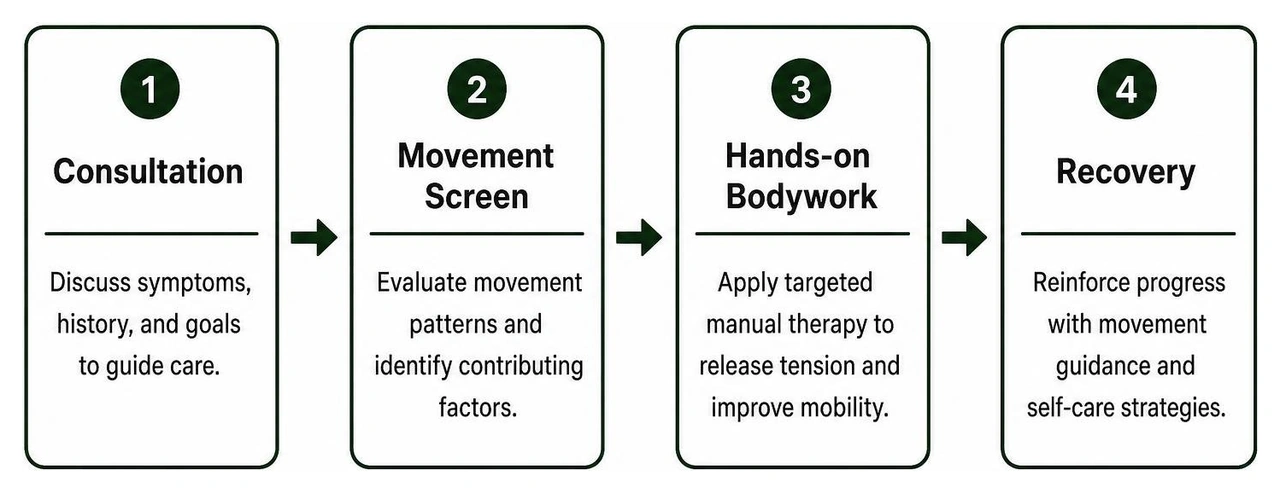
At our clinic on Rio Road East, we guide clients through a comprehensive pathway. We start with a detailed consultation and body assessment, followed by hands-on bodywork, such as clinical trigger point massage, fascial counterstrain, or structural integration, paired with corrective exercise and non-invasive recovery technologies like SoftWave therapy or focused cryotherapy. This blended strategy addresses both the local symptoms and the broader kinetic imbalances holding tension in place.
Every person's tension pattern is a little different, which is why we avoid a one-size-fits-all protocol. Some clients benefit most from fascia-focused work, while others need a combination of manual therapy and movement coaching to keep tension from returning. Discussing your goals and daily habits during the consultation helps us build a plan that fits your body and your routine around Charlottesville.
What Should You Know Before Booking a Bodywork Session?
To get the most out of your bodywork session, open communication is essential:
- Share your health background: Let us know about any recent injuries, surgeries, nerve sensitivity, or health conditions.
- Communicate your comfort preferences: Always speak up during the session if the pressure feels too intense, dull, or uncomfortable.
- Seek medical guidance when needed: Bodywork supports muscular recovery and functional movement, but it is not a substitute for medical diagnosis. As noted in clinical guidelines from the American Academy of Family Physicians on evaluating chronic myofascial symptoms, red-flag neurological signs warrant formal medical investigation. If you experience severe, unexplained pain, numbness, tingling, or sudden weakness, consult a qualified physician first.
Understanding your body's history helps us tailor pressure depth, session tempo, and manual techniques safely to your individual needs and goals.
Frequently Asked Questions About Persistent Muscle Tension
How often should I schedule bodywork for recurring tension?
Individual needs vary based on your activity level, daily movement demands, and how long the tension has been present. During your initial consultation, we assess your movement patterns and discuss a personalized care plan tailored to your body rather than relying on a rigid schedule.
Why might an area feel more tender after bodywork?
Mild tenderness can occur as tight muscle fibers and restricted fascia adapt to manual pressure and increased circulation. We encourage you to communicate your comfort level during treatment so we can adjust our pressure. If you ever experience severe, sharp, or persistent discomfort, you should contact an appropriate medical provider.
Can bodywork help with tension that keeps returning?
A trained practitioner can evaluate the surrounding musculature, posture, and movement patterns to identify what might be driving that stubborn tightness. By addressing the broader functional system rather than just the tender spot, hands-on care helps support long-term mobility and comfort.
Conclusion
When a stubborn knot keeps returning, the answer is rarely more force. At Transcending Health in Charlottesville, Virginia, we combine personalized hands-on bodywork, movement coaching, and advanced recovery tools to help you move freely and feel your best.
Ready to uncover what your muscles need? You can schedule an appointment or reach out to us at 434-465-2905 or info@transcendinghealth.net to get started.