
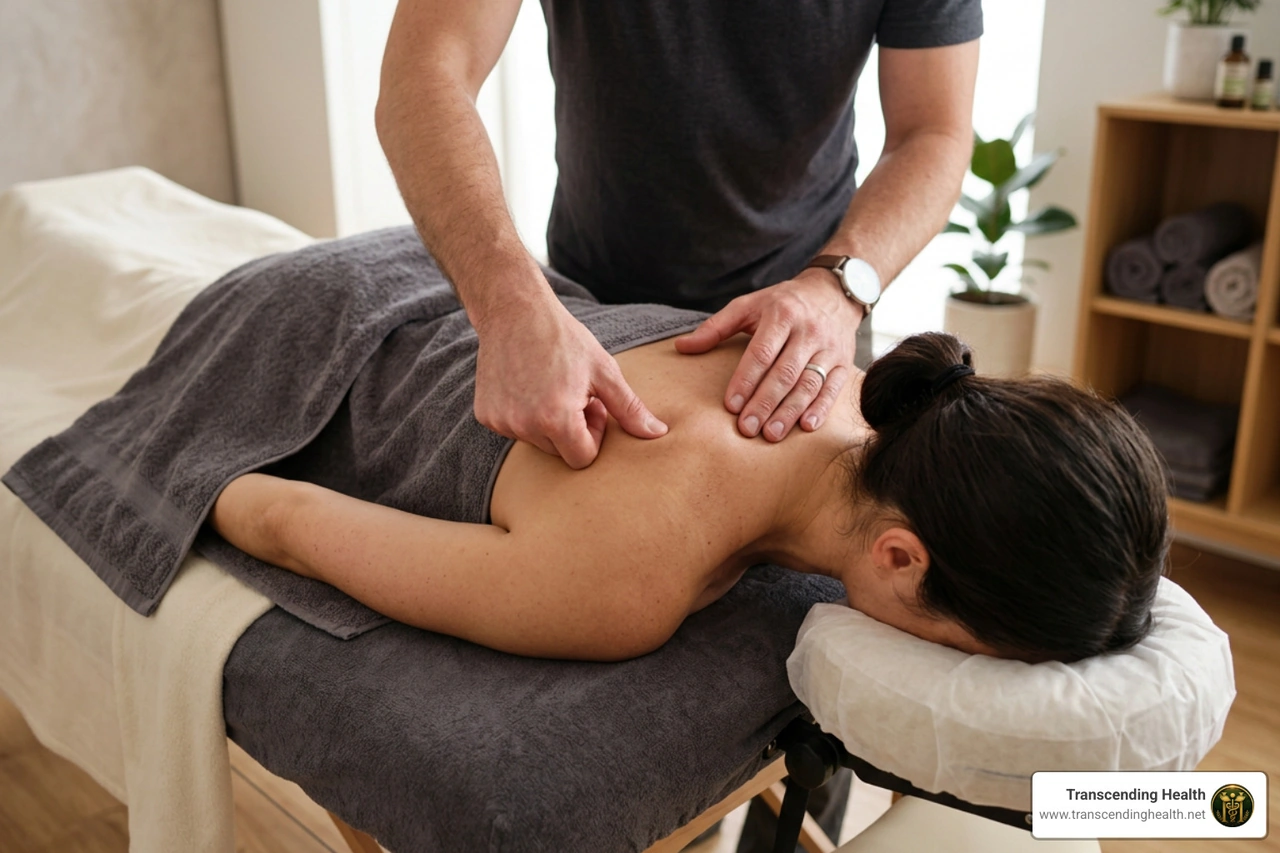
A Simple Way to Start Trigger Point Massage

To try trigger point massage, find a tender spot in a relaxed muscle and apply gentle, steady pressure. Breathe normally, then ease off and move the area gently. The pressure should feel manageable and productive, never sharp or intolerable. Stop immediately if you feel tingling, numbness, or worsening sharp pain.
I’m Drew Edmondson, owner of Transcending Health, where our hands-on care and movement coaching help people manage persistent pain, recover from injury, and move more comfortably. At our center at 1445 Rio Road East, Suite 201 F, Charlottesville, VA 22901, I approach trigger point massage as one component of a complete, whole-person recovery strategy rather than a temporary fix you have to force through aggressive pressure. When a stubborn knot keeps returning despite careful self-care, it almost always points to an underlying movement pattern, postural imbalance, or compensatory strain that needs attention. Learning how these sensitive nodules form and how to release them safely gives you practical control over muscular tension.
What Is a Myofascial Knot and What Causes It?
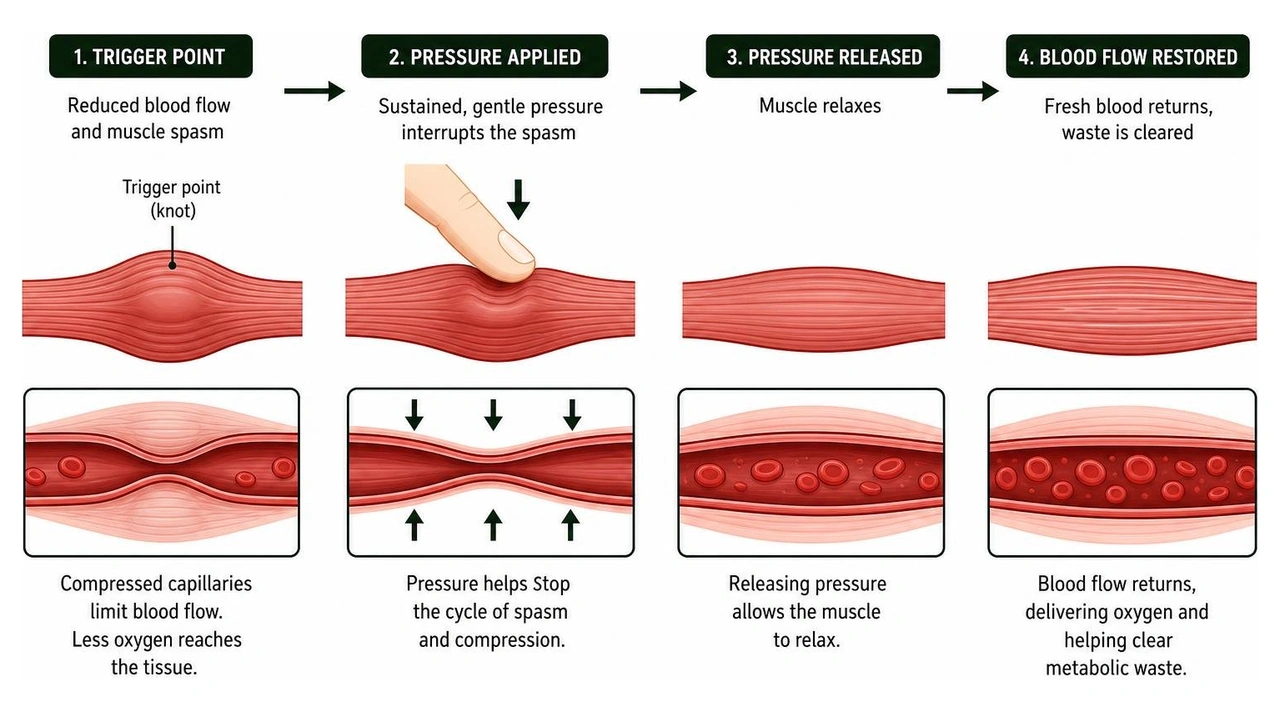
A myofascial knot is a hyperirritable spot located within a taut band of skeletal muscle. At the microscopic cellular level, these sustained contractions develop when the motor endplate continuously releases the neurotransmitter acetylcholine. This continuous firing keeps calcium ions pooled within the muscle fibers, locking individual sarcomeres into an involuntary, sustained contraction cycle known as the energy crisis model.
This localized muscular contraction compresses nearby capillary beds, resulting in local ischemia—a sharp drop in blood flow and tissue oxygenation. Without fresh, oxygen-rich circulation, the muscle tissue cannot readily clear metabolic waste products or replenish its energy stores. Sensory nerve endings in the surrounding fascia become sensitized, producing both localized aching and characteristic radiating discomfort. As explained by the Cleveland Clinic, these hyperirritable spots frequently arise from poor posture, repetitive motions, sudden muscular overload, or sustained emotional stress. To dive deeper into the physiology of these tight bands and why they develop, explore our breakdown on muscle knots and trigger points.
In my clinical experience, the most common drivers we see here in Charlottesville and Albemarle County are prolonged desk work, long commutes, repetitive lifting, and athletic training loads that ramp up faster than muscular tissues can adapt. A knot is rarely just an isolated muscle problem; it is an active signal that a muscle has been asked to carry tension longer than it can independently recover from.
How Does Trigger Point Massage Relieve Chronic Muscular Pain?
Targeted manual pressure acts as a mechanical reset for restricted tissue. Applying deliberate, sustained compression—often called ischemic compression—temporarily interrupts the local cycle of spasm. When you release the pressure, fresh, oxygenated blood floods the restricted fibers, clearing cellular waste and relaxing the contracted sarcomeres.
Clinical research supports the value of targeted soft-tissue work. A systematic review published in (Sadeghnia et al., 2025) PMC found that friction massage significantly reduces pain intensity and improves the pressure pain threshold in upper trapezius trigger points. Furthermore, targeted manual pressure stimulates mechanoreceptors that downregulate pain signaling in the central nervous system through the pain gate mechanism. The National Center for Complementary and Integrative Health notes that massage therapy may help reduce pain and improve function in some musculoskeletal conditions, which is why we use it as one part of a broader recovery plan. For broader tension patterns throughout the back or legs, we often integrate this approach with deep tissue massage to address both the focal point and surrounding fascial layers.
Active vs. Latent Trigger Points: How to Tell the Difference
Not all muscle knots behave the same way or produce the same symptoms. Understanding whether a knot is active or latent helps determine the right level of care and expectations for relief:
| Feature | Active Trigger Point | Latent Trigger Point |
|---|---|---|
| Spontaneous Pain | Constant or throbbing ache even at rest | No pain until direct pressure is applied |
| Referral Pattern | Radiates familiar pain to distant areas | Pain remains localized unless heavily pressed |
| Muscle Function | Causes noticeable weakness, stiffness, and restricted range | Causes subtle stiffness and altered movement efficiency |
| Typical Care Needed | Focused sessions paired with movement | Gradual sessions paired with mobility work |
Active points are commonly behind tension headaches, radiating shoulder discomfort, and persistent back stiffness that disrupts daily activity. Latent points, by contrast, can remain quiet for weeks or months until fatigue, sudden postural loading, or emotional stress activates them into painful flare-ups. When either type keeps returning, the underlying issue is rarely the knot alone; it is the repetitive movement habit or postural compensation that keeps reloading the tissue. That is why combining hands-on release with corrective exercise and mobility training creates far more lasting results than rubbing a sore spot in isolation.
How to Apply Trigger Point Release at Home in 5 Steps
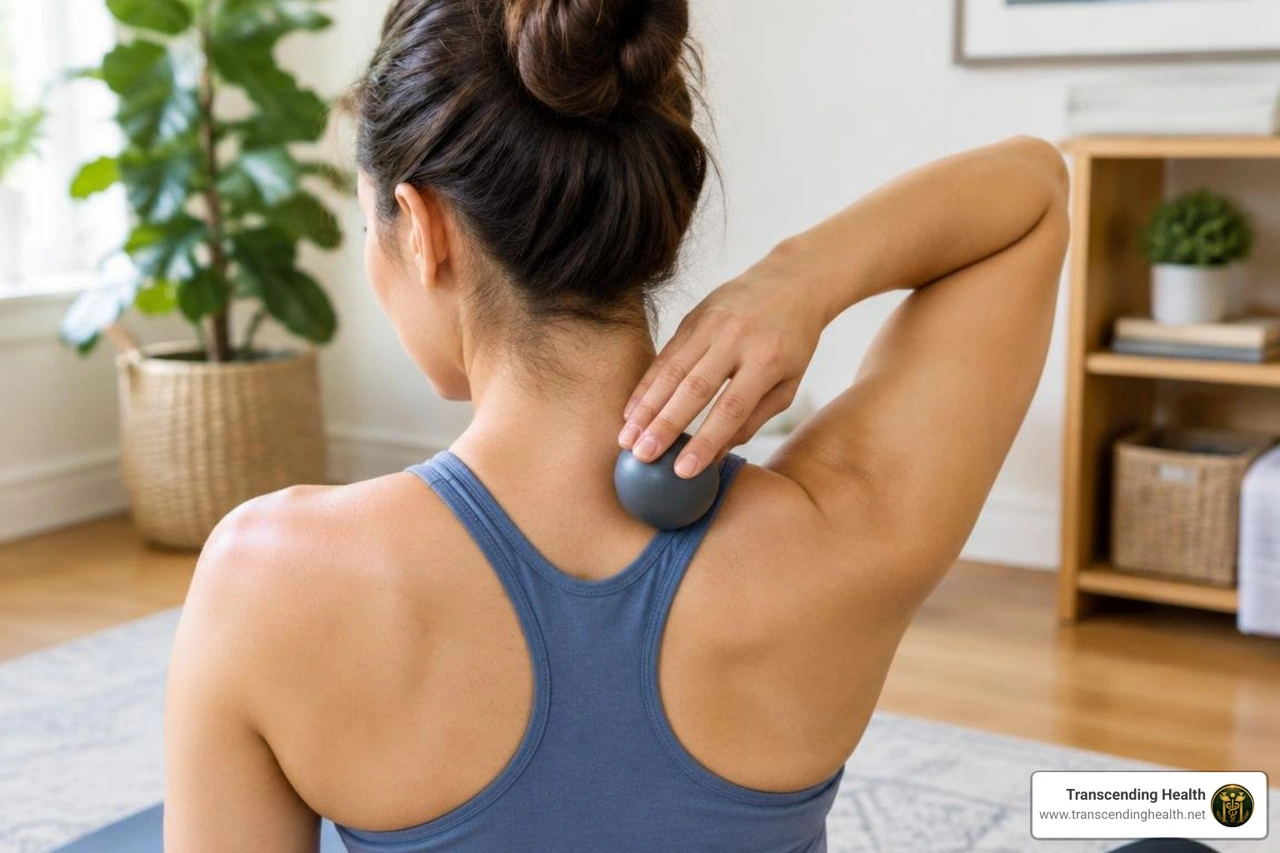
Self-applied trigger point work is an effective way to manage everyday muscular tension at home between clinical visits. Follow these five straightforward steps to practice safe, effective self-release.
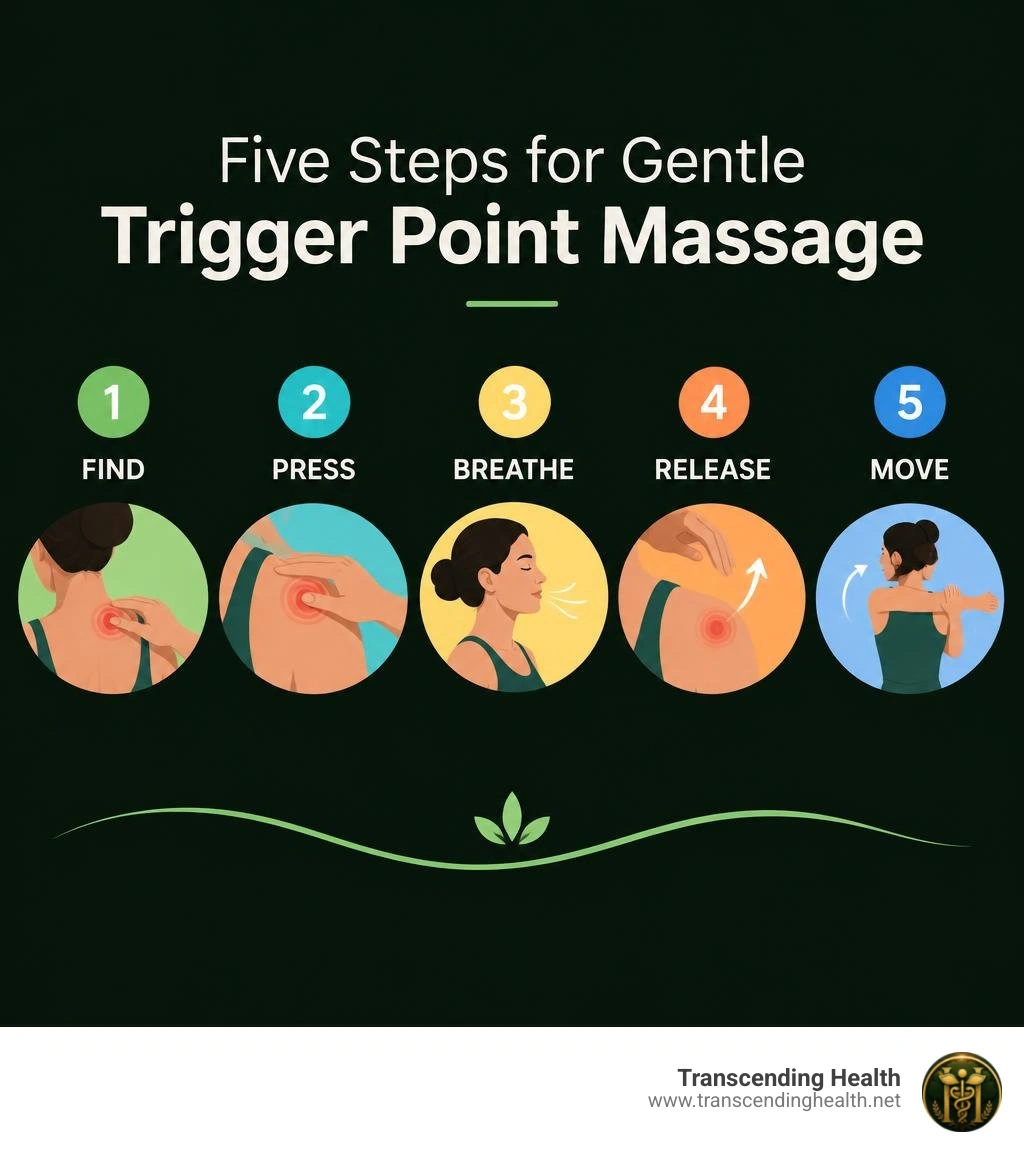
Step 1: Locate the Taut Band and Referral Pattern
Gently palpate the affected muscle group using your fingertips or thumb while the muscle is completely relaxed. Feel for a firm, rope-like strand of fibers running parallel to the muscle line. Glide along this taut band until you locate a sensitive nodule. When pressed gently, an active trigger point often produces a distinct referral pattern or a mild local twitch response that recreates your familiar ache.
Step 2: Choose a Safe Self-Care Approach
Use your hands for gentle, controlled compression, or lean gently against a soft surface to support your positioning. Position your fingers or thumb perpendicular to the tissue to maintain solid mechanical support without straining your wrists. Avoid pressing directly on bony landmarks, superficial nerve pathways, blood vessels, or joints. If you feel sudden numbness, pins and needles, or pulsing sensations, immediately back off and shift away from that location.
Step 3: Apply Precise Trigger Point Massage Pressure
Apply direct, gradual pressure onto the nodule. Keep the intensity moderate—aim for a 6 or 7 on a 1-to-10 discomfort scale. The sensation should feel like productive, relieving tension release, not sharp, bruising, or intolerable pain. Avoid aggressive gouging or rapid rubbing, which causes the surrounding tissue to tighten protectively.
Step 4: Hold Ischemic Compression and Regulate Breathing
Hold steady compression for 8 to 12 seconds, or up to 30 to 60 seconds if you feel the tissue gradually softening beneath your contact. Breathe deeply through your diaphragm during the hold to encourage parasympathetic nervous system relaxation. Never hold your breath or clench your jaw, as this triggers defensive muscle guarding and counteracts the release.
Step 5: Flush, Stretch, and Prevent Recurrence
After releasing the compression, use light, broad gliding strokes to gently flush blood flow through the muscle. Follow this with a slow, gentle passive stretch held for 20 to 30 seconds to restore the muscle to its full resting length. Drinking water, moving the joint through full active range of motion, and avoiding static slumping right afterward will help keep the knot from recurring.
When to Seek Professional Bodywork for Resistant Knots
While home self-care is excellent for ongoing maintenance, stubborn, chronic, or recurrent knots often require clinical manual therapy. Persistent trigger points are frequently anchored by deeper structural restrictions, joint stiffness, and entrenched compensation patterns that self-massage tools cannot fully resolve.
What to Expect During Clinical Trigger Point Massage
Our clinical work at Transcending Health begins with an in-depth intake and whole-body postural assessment to pinpoint the exact root causes of muscular overload. During hands-on sessions, targeted manual therapies like focused trigger point therapy are combined with nervous system down-regulation to release deep contractions without unnecessary tissue trauma. It is normal to experience mild soreness for 24 to 48 hours after treatment as tissue oxygenation normalizes, followed by noticeable improvements in mobility, comfort, and daily function.
Enhancing Manual Therapy with Advanced Recovery Stack Technologies
At Transcending Health, we pair hands-on bodywork with advanced recovery technologies to accelerate tissue repair and neuromuscular reset. Combining manual therapy with SoftWave acoustic wave therapy, orthopedic laser, focused cryotherapy, and corrective exercise helps resolve stubborn tension patterns that resist stretching alone. When you need comprehensive, personalized care, our massage therapy services in Charlottesville provide an integrative pathway toward long-term movement freedom and lasting pain relief.
Frequently Asked Questions About Muscle Knots
How many sessions does it take to get rid of a trigger point?
Active trigger points often respond quickly when paired with corrective movement and postural adjustments. Chronic or latent points embedded in long-standing compensatory patterns may take longer to resolve alongside targeted mobility exercises and guided hands-on care.
Can massaging a trigger point cause bruising or soreness?
Mild post-treatment soreness lasting 24 to 48 hours is normal as circulation returns to previously ischemic muscle fibers. However, deep bruising is never the goal and indicates excessive pressure that can trigger defensive muscle guarding.
When is trigger point pressure contraindicated?
Direct compression should be avoided over open wounds, acute muscle tears, fractures, deep vein thrombosis, active infections, or areas with unexplained numbness and tingling. Always consult a qualified healthcare provider for unresolved, sudden, or severe pain.
Ready to address stubborn muscle knots with a whole-person approach? Book an appointment online to schedule your initial consultation and comprehensive body assessment.