
Achilles Recovery Starts With Protection, Then Gradual Movement
Achilles recovery depends on the injury. If you felt a sudden pop or cannot push off your foot, stop activity and seek prompt medical care. A torn tendon may need surgery or a protective boot. Once a clinician says it is safe, guided movement and gradual strengthening help you rebuild walking ability and calf strength. Do not rush back to running or sports just because the pain has eased.
Recovery takes patience because the tendon must heal while learning to handle load again. Your care plan should follow your injury and your progress, not someone else’s schedule.
I’m Drew Edmondson, owner of Transcending Health in Charlottesville, where I help coordinate injury-recovery support through hands-on care, corrective exercise, and wellness guidance. In this guide, I’ll explain the decisions and milestones that shape achilles recovery, from the first signs of injury to a safer return to activity.
Key Takeaways
- A sudden pop or trouble pushing off your foot needs prompt medical care.
- Both surgery and non-surgical bracing can work well. Your doctor will help you weigh the trade-offs.
- Full recovery usually takes 6 to 12 months. Move to each new phase when you hit its goals, not just when the calendar says so.
- Rebuilding calf strength is the key to getting back to running and sports safely.
If your pain came on slowly instead of with a pop, you may be dealing with tendinitis. Read how long Achilles tendinitis takes to heal.
What Causes an Achilles Tendon Rupture and How Is It Diagnosed?
An Achilles tendon rupture occurs when the fibrous cord connecting your calf muscles to your heel bone is placed under excessive mechanical stress. This injury frequently occurs during sudden acceleration, jumping, or violent deceleration in sports like basketball, soccer, and tennis.
Most ruptures happen two to six centimeters above the heel bone. This spot, sometimes called the watershed zone, gets less blood flow than the rest of the tendon. So it is slower to repair small strains and more likely to give way.
A doctor diagnoses an Achilles rupture by asking how it happened, feeling along the tendon, and testing how your foot moves. The main check is the Thompson test. You lie face down and the examiner squeezes your calf. If your foot does not point down on its own, the tendon is likely torn all the way through. It is one of the most reliable quick checks for a full tear. When the answer is not clear, an ultrasound or MRI can show where the tear is and how far apart the ends are.
| Symptom / Marker | Complete Achilles Rupture | Partial Tendon Tear |
|---|---|---|
| Onset Sensation | Sudden, loud "pop" or feeling kicked in the heel | Sharp, burning pain or gradual ache during loading |
| Push-Off Strength | Complete inability to bear weight or push off toes | Weakness present, but limited push-off remains |
| Palpable Gap | Noticeable soft depression in the tendon cord | Localized thickening, tenderness, or swelling |
| Thompson Test | Positive (no involuntary foot movement upon squeeze) | Negative (foot moves downward upon calf squeeze) |
Understanding Tendon Pathology and Risk Factors
A healthy tendon is made of strong, neatly lined-up collagen fibers built to handle heavy pulling forces. When small strains pile up without enough recovery time, those fibers can become weaker and less organized. That makes a tear more likely.
Some medicines raise the risk too. Fluoroquinolone antibiotics (such as ciprofloxacin) and steroid shots or pills can weaken tendon tissue. If you take these, ask your doctor how they might affect your tendons. Understanding how tendon healing times vary by injury severity helps set realistic expectations before deciding between surgical and conservative management paths.
Should You Choose Surgical Repair or Non-Surgical Treatment?
Deciding between surgical repair and conservative functional rehabilitation depends on your age, activity goals, medical background, and physician recommendations.
Surgical intervention involves reconnecting the torn tendon ends through an open incision or a minimally invasive percutaneous procedure. Modern non-surgical management utilizes functional bracing with a rigid boot and specialized heel wedges. This approach keeps the ankle in equinus (toes pointed down) to bring the torn fibers together so they can knit naturally.
Studies comparing the two paths generally find that surgery lowers the chance of tearing the tendon again. Non-surgical care avoids wound and infection problems. When non-surgical care includes early, guided movement, the difference in re-tear risk gets smaller. The Mayo Clinic overview of Achilles tendon rupture treatment explains both options. The right choice comes down to weighing re-tear risk against surgery risks with your doctor.
| Factor | Surgical Repair | Functional Non-Surgical Bracing |
|---|---|---|
| Re-Rupture Risk | Lower | Somewhat higher, especially without early guided rehab |
| Infection Risk | Small risk of wound problems (lower with minimally invasive methods) | No surgical wound risk |
| Initial Position | Rigid splint / boot in slight equinus | Immediate rigid boot with multi-stage heel wedges |
| Primary Candidates | Competitive athletes and high-demand workers | Sedentary individuals, older adults, compromised healing |
Managing Immediate At-Home Care and Protection

During the first several weeks following surgery or injury, protecting the tendon repair site is the top clinical priority. The leg must be immobilized in plantarflexion using a splint or controlled ankle movement (CAM) boot.
Patients should follow standard at-home care guidelines for Achilles injuries, elevating the limb above heart level for the first 72 hours to reduce swelling. When bathing, wrap the splint or boot in waterproof coverings, use a seated shower chair, and rely on crutches or a knee scooter for mobility. Inspect the skin around splint borders daily for redness, excessive friction, or pressure points.
What Does a Realistic Achilles Recovery Timeline Look Like?
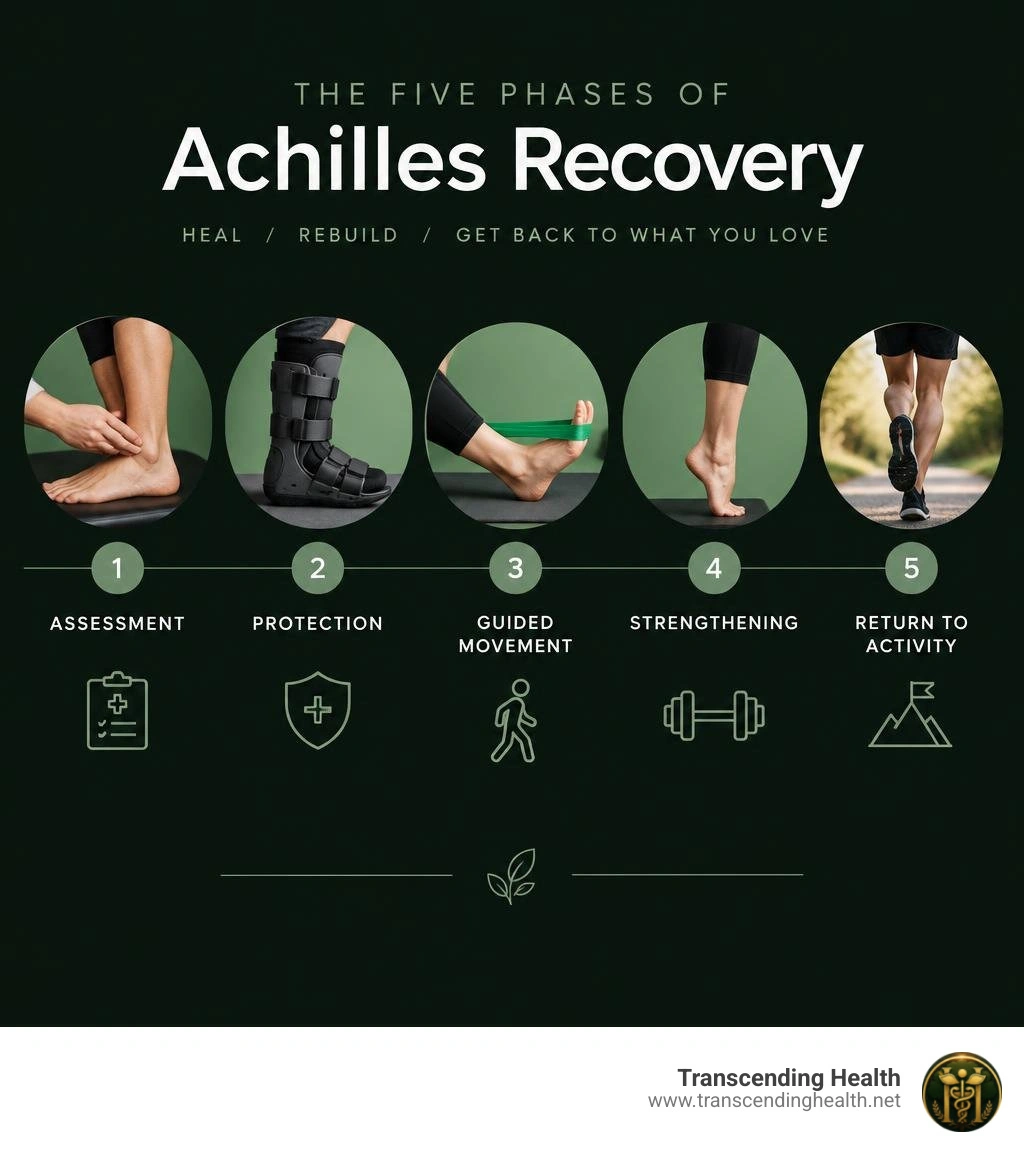
Achilles tendon recovery requires a phased, progressive plan over six to twelve months. Because connective tissues remodel slowly, progressing through each phase should be guided by functional criteria rather than calendar weeks alone.

- Weeks 0 to 2 (Acute Immobilization): Strict non-weight-bearing in a rigid splint or CAM boot with maximum heel wedges. Focus is on pain control, limb elevation, and proximal hip and core conditioning.
- Weeks 2 to 6 (Protected Weight-Bearing): Introduction of partial weight-bearing in a boot, gradually increasing load as tolerated. Passive dorsiflexion past neutral is strictly avoided to protect resting tendon length.
- Weeks 6 to 12 (Boot Weaning and Gait Normalization): Gradual, staged removal of heel wedges. Transition from the walking boot to supportive sneakers featuring an internal heel lift. Focus shifts to regaining symmetrical walking mechanics and active range of motion.
- Months 3 to 6 (Progressive Strength Re-Education): Rebuilding calf muscle volume and tendon load capacity through double-leg and seated calf raises, progressing toward standing single-leg heel raises.
- Months 6 to 12 (Elastic Loading and Athletic Return): Reintroducing low-impact jogging, multi-planar agility drills, and controlled plyometric progressions once strength symmetry exceeds 90% compared to the uninjured side.
Why Achilles Recovery Demands Gradual Mechanical Loading
A healing tendon needs the right amount of load. Gentle, steady tension tells the repair cells to line up new fibers in strong, neat rows. But loading too fast, or stretching the ankle too far too early, can leave the tendon permanently longer. That costs you push-off power.
Controlled, step-by-step loading helps the tendon get its stiffness and spring back without putting the repair at risk.
Rehab usually starts with gentle, pain-free calf holds with the knee bent. Next come seated calf raises. Later you move on to slow lowering exercises (eccentric heel drops) on a step. To support tissue repair and calm persistent discomfort, many individuals integrate non-invasive SoftWave therapy to stimulate local cellular activity and blood flow.
Restoring Calf Strength and Elasticity in Late-Stage Achilles Recovery
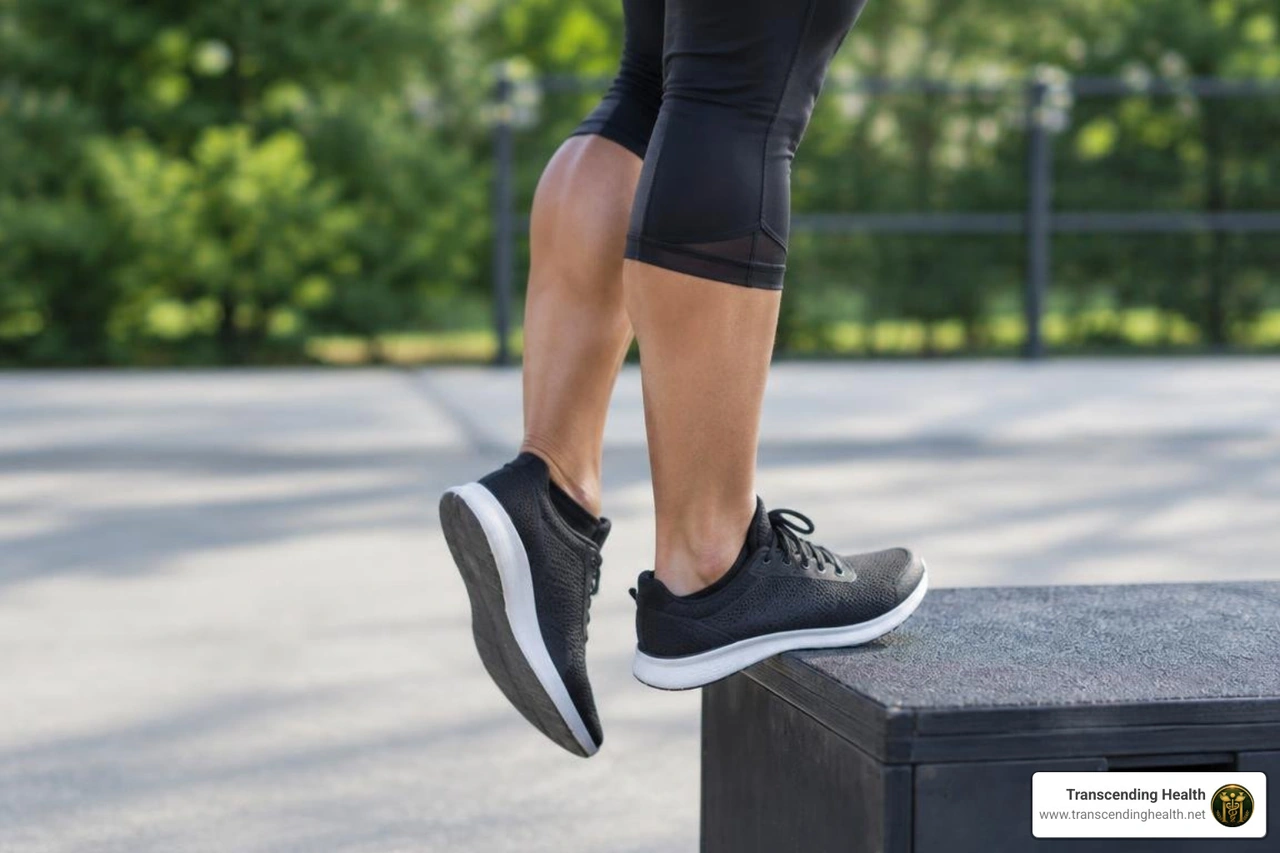
Regaining symmetrical lower leg power requires dedicated strength work across both the gastrocnemius (straight knee) and soleus (bent knee) muscles. The soleus generates the vast majority of force required during walking and running push-off.
Clinicians evaluate late-stage recovery using objective benchmarks, such as completing 25 continuous single-leg calf raises and achieving a 90% or higher Limb Symmetry Index (LSI) on single-leg hop testing. Transitioning through guided post-rehab movement training helps athletes rebuild eccentric force absorption, balance, and agility before returning to unrestricted sports participation.
Frequently Asked Questions About Achilles Recovery
How long does it take to walk normally after an Achilles rupture?
Most patients transition out of their protective walking boot and begin walking in supportive street shoes between 10 and 14 weeks post-injury. Achieving a symmetrical, limp-free walking gait typically requires an additional 4 to 8 weeks of targeted calf strengthening and gait retraining.
What are the warning signs of Achilles re-rupture or complications?
Red flag symptoms include a sudden snapping sensation or audible "pop" in the back of the ankle, a newly visible or palpable gap, calf warmth, severe localized redness, or calf pain accompanied by shortness of breath (which can indicate deep vein thrombosis). If these occur, contact your physician immediately.
Can nutrition and lifestyle habits accelerate tendon remodeling?
They can help. Getting enough protein and vitamin C supports the collagen your tendon uses to repair itself. Ask your doctor or a nutrition coach how much protein is right for you. Prioritizing seven to nine hours of quality sleep, avoiding tobacco products, and maintaining proper hydration improve local microcirculation and cellular recovery.
Conclusion
Recovering from an Achilles tendon injury is a long-term commitment that rewards patience, consistency, and structured loading. By respecting early immobilization guidelines, following a criteria-based progression, and rebuilding lower-leg strength, you can safely return to your favorite daily activities and sports.
At Transcending Health in Charlottesville, we support individuals throughout their post-injury journey with non-invasive acoustic wave therapy, targeted manual bodywork, corrective exercise, and personalized wellness coaching. When you are cleared by your medical provider for active recovery, schedule an evaluation via our appointment calendar to develop a customized restorative plan.