
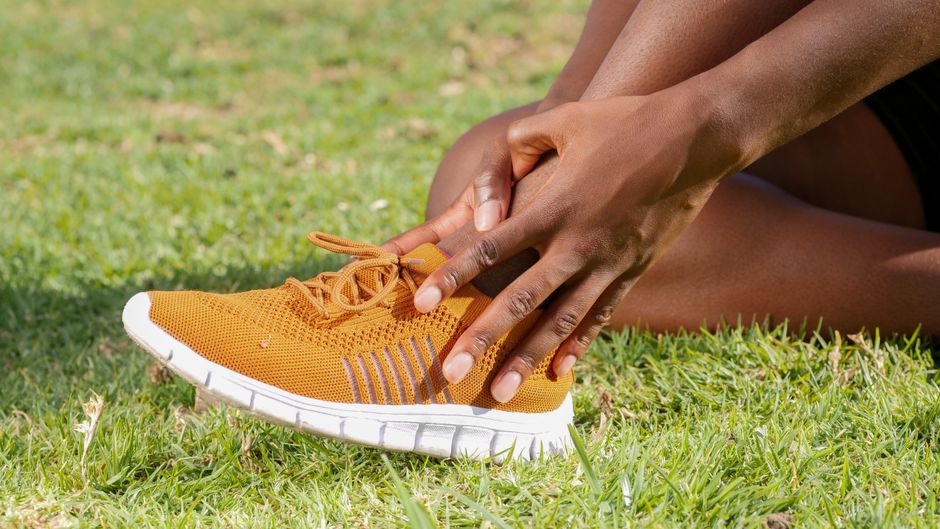
How Long Does Achilles Tendinitis Take to Heal?
Mild Achilles tendinitis may improve within a few weeks. Moderate cases often take weeks to months, while long-standing tendon pain can take several months or longer. Less pain does not always mean the tendon is ready for running or jumping. A gradual return to activity matters far more than a fixed date on the calendar.
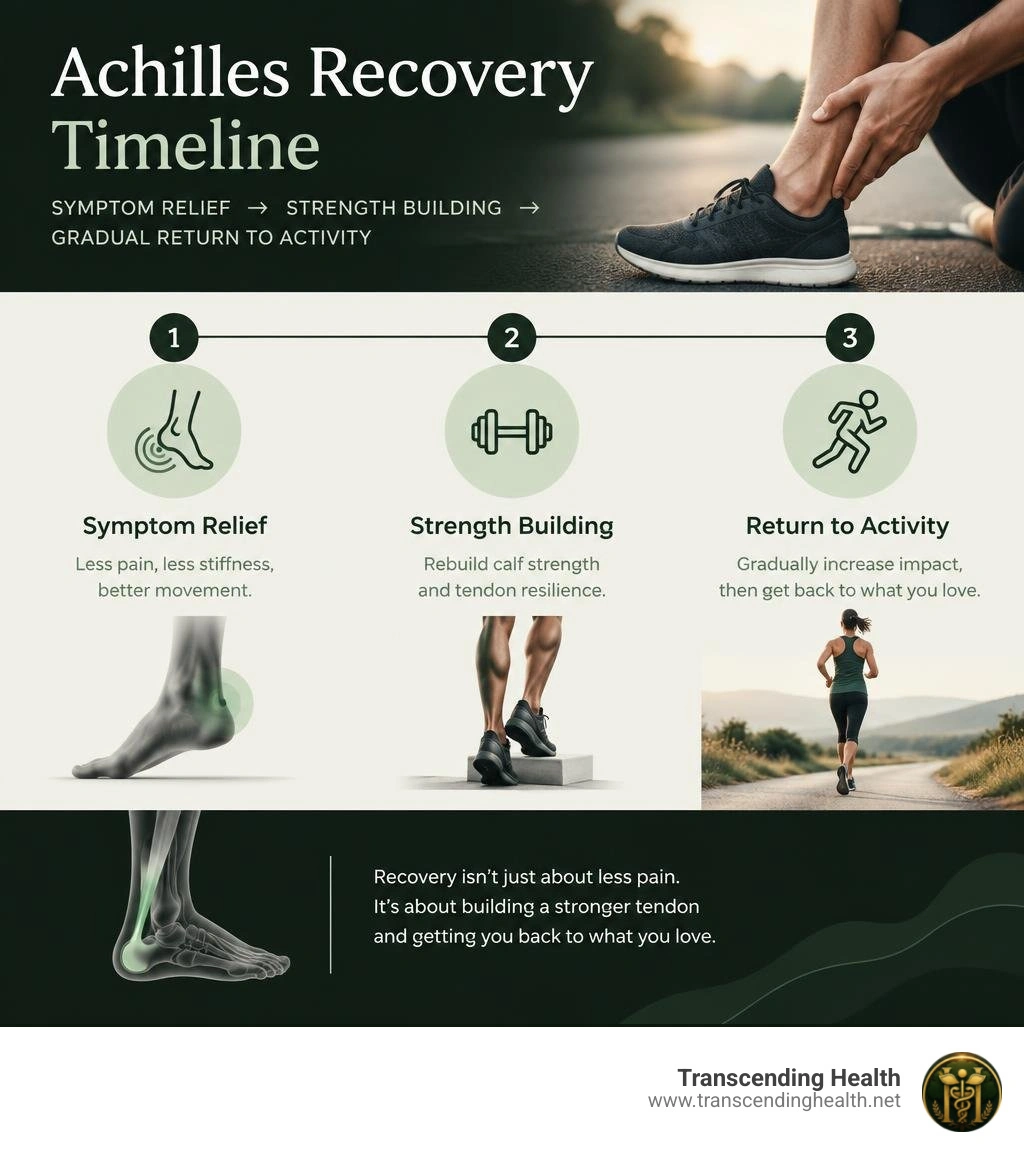
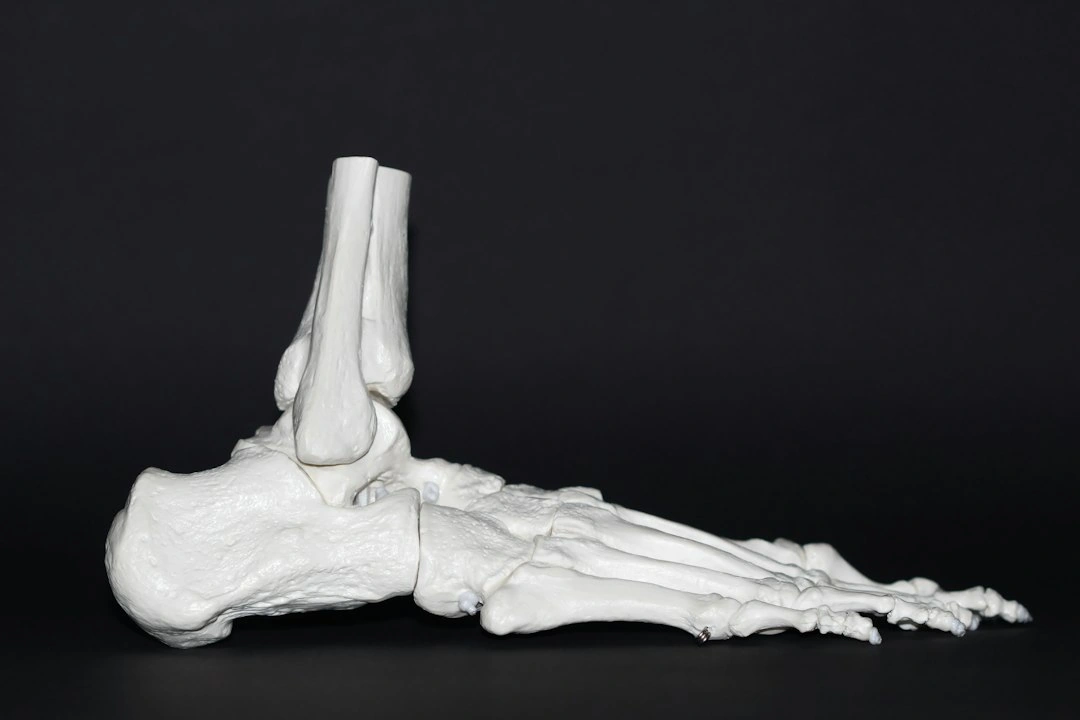
The Achilles tendon connects your calf muscles to your heel bone. It handles immense force during everyday walking, running, and jumping. Repeated mechanical strain, such as a sudden jump in mileage, uphill running, or abrupt plyometrics, can leave the dense fibrous connective tissues irritated, swollen, and stiff. Complete recovery usually moves through distinct phases: first easing painful irritation, then methodically rebuilding calf and tendon tensile capacity, and finally reintroducing high-impact dynamic loading.
I’m Drew Edmondson, owner of Transcending Health, a human restoration and performance center at 1445 Rio Road East, Suite 201 F, Charlottesville, VA 22901. When people search “achilles tendinitis how long to heal,” I draw on my experience helping active adults work through stubborn pain, ankle stiffness, and movement limitations to explain why true connective tissue recovery requires patience, progressive mechanical loading, and a step-by-step restoration plan tailored to your body. In practical terms, how long Achilles tendinitis takes to heal depends less on a fixed number of days and more on how consistently the tendon is loaded, how well the surrounding calf and hip mechanics are restored, and how gradually running or jumping is reintroduced.
Achilles Tendinitis: How Long to Heal Based on Severity?
Tendon tissue heals differently than muscle because it has a specialized, low-density blood supply. When repetitive microtrauma exceeds the tendon’s intrinsic biological capacity to repair itself, collagen fibers become disorganized and ground substance increases. Proper healing requires progressive mechanical load to signal tenocytes to remodel disorganized matrix into aligned, parallel type I collagen strands.
According to research in sports medicine, the overall incidence rate of Achilles tendinopathy is approximately 2.35 per 1,000 adults, making it a frequent hurdle for active runners, court athletes, and walking enthusiasts.
| Severity Level | Structural State | Typical Recovery Benchmark | Primary Focus |
|---|---|---|---|
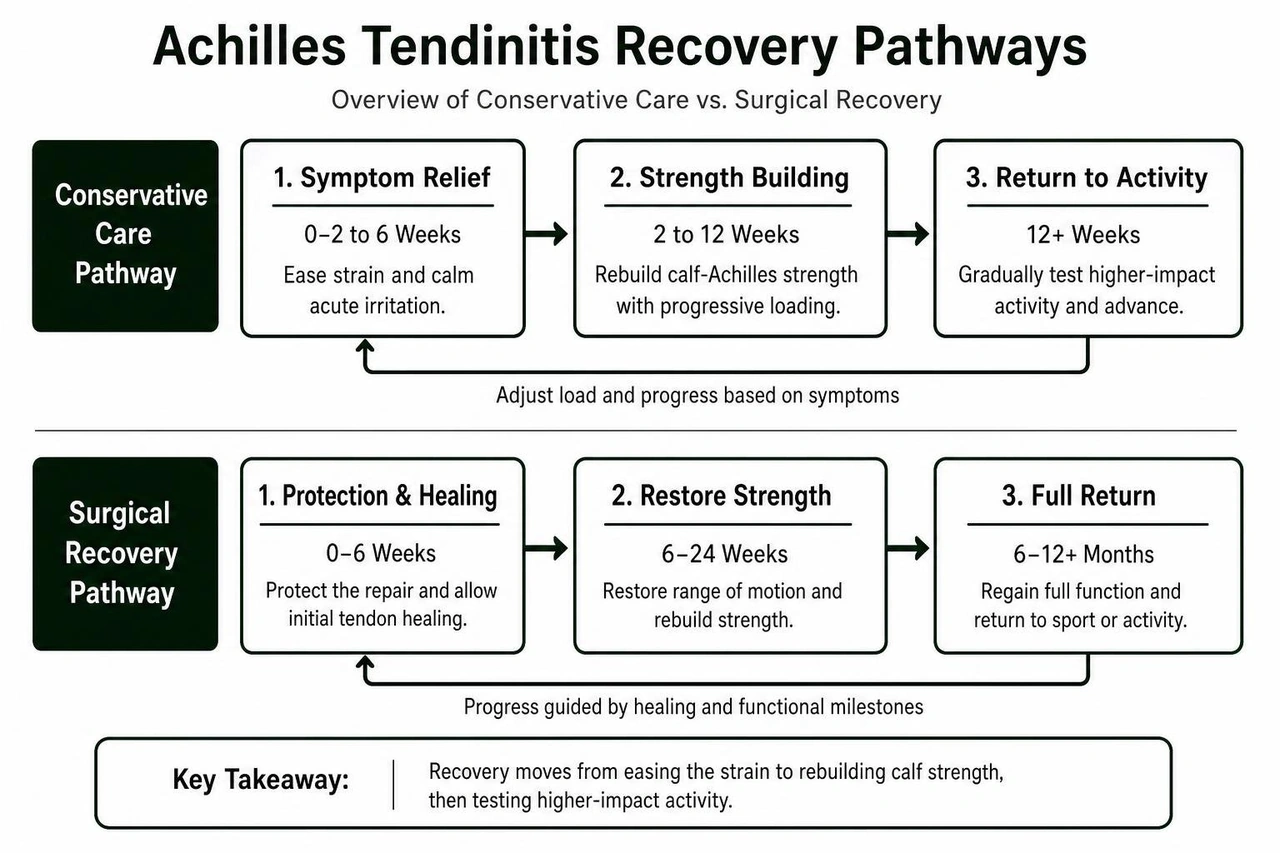
| Mild (Acute) | Reactive irritation / peritendinitis | 2 to 6 weeks | Calming acute irritation, modifying volume |
| Moderate | Early tendon disrepair | 6 to 12 weeks | Progressive loading, eccentric strength |
| Severe / Chronic | Degenerative tendinosis / partial tearing | 3 to 6+ months | Deep tissue remodeling, kinetic chain restoration |
Mild Achilles Tendinitis: How Long to Heal in the Acute Phase?
In mild or reactive cases, discomfort is typically confined to the sheath surrounding the tendon (peritendinitis) rather than deep structural breakdown. Symptoms often flare up after sudden unaccustomed hill sprints or new shoes. Temporary volume reduction, heel lifts, and modifying provocative workouts allow reactive tissue irritation to settle within two to six weeks when managed promptly.
Moderate Tendinopathy Timelines and Structured Loading
When tendon soreness lingers past several weeks without resolution, tissue enters a state of tendon disrepair. Addressing moderate irritation usually takes 6 to 12 weeks of structured loading protocols. Complete rest rarely resolves this stage because resting allows the tendon and calf complex to decondition further. Instead, the calf-Achilles complex needs progressive tension to rebuild tensile capacity and load tolerance. Integrating hands-on bodywork like structural integration with targeted movement helps release surrounding myofascial restrictions, balance joint alignment, and restore natural elasticity without placing excessive shear stress on recovering fibers.
Chronic Tendinosis and Severe Tears: How Long Does Achilles Tendinitis Take to Heal?
Chronic tendinosis develops when long-standing repetitive strain leads to neurovascular ingrowth, matrix degradation, and localized tendon thickening. According to clinical consensus from the American Academy of Orthopaedic Surgeons, conservative non-surgical management of chronic Achilles tendinitis often requires at least several months of diligent eccentric strengthening and movement re-education before symptoms fully resolve. If partial structural tearing occurs, full functional recovery often spans 6 to 12 months of progressive tissue rebuilding.
What Factors Influence Your Achilles Recovery Timeline?
Every individual heals at their own distinct pace based on underlying biology, lifestyle factors, and biomechanical demands. Tendon vascularity naturally declines with age, and systemic metabolic factors like elevated blood glucose can impair collagen cross-linking and tissue repair. Staying consistent with daily loading exercises, getting adequate deep sleep, maintaining proper hydration, and avoiding sudden spikes in overall training volume make the biggest difference in your recovery speed.
Biomechanics and Movement Patterns
Restricted ankle dorsiflexion, tight gastrocnemius-soleus complexes, weak hip abductors, or excessive foot pronation place uneven rotational torque across the Achilles tendon. The deeper soleus muscle acts as the primary shock absorber during endurance running and walking, taking on multiple times your body weight in force. When the calf muscles tighten or the arch collapses, the midportion of the tendon absorbs excessive shearing stresses instead of clean linear tension. Addressing these kinetic chain imbalances through customized personal training and corrective exercise ensures the entire lower body—from the pelvis down through the foot arch—works synergistically to absorb ground impact forces efficiently during movement.
Training Load and Early Interventions
Sudden increases in running mileage, switching abruptly to zero-drop minimalist footwear, or performing plyometric training on hard surfaces can quickly overwhelm sensitive tendon tissue. Tendons adapt more slowly to training demands than muscular tissue because of their lower metabolic rate. Catching tendon stiffness early and adjusting daily training parameters prevents minor reactive inflammation from developing into persistent, multi-month tendon disrepair.
What Are the Key Phases of Achilles Tendon Recovery?
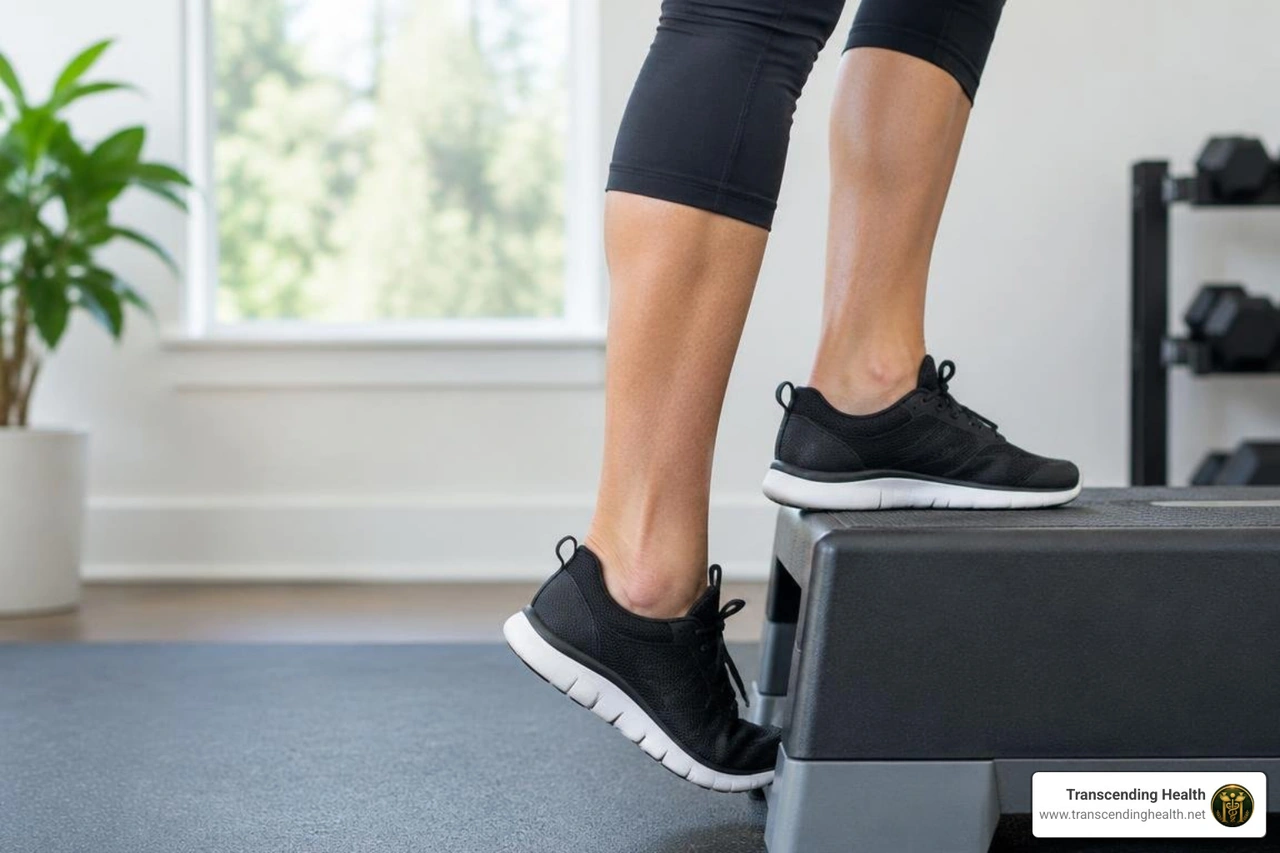
Comprehensive tendon rehabilitation follows a systematic three-stage progression: protect reactive tissue, rebuild tensile strength through load, and safely reintroduce dynamic elastic spring.
Phase 1: Acute Protection and Symptom Modulation
During the initial 1 to 2 weeks, the primary goal is settling severe pain while avoiding prolonged cast immobilization. Heavy isometric calf holds produce immediate analgesic effects on tendon pain pathways without creating irritating friction along the tendon sheath. Incorporating targeted modalities like focused cryotherapy for pain relief and recovery applies localized cold temperatures to rapidly soothe hot, irritated tissue and reduce acute swelling around the retrocalcaneal bursa.
Phase 2: Progressive Loading and Tissue Remodeling
From weeks 2 to 8, rehabilitation shifts into progressive eccentric loading and heavy slow resistance exercise. Controlled eccentric heel drops on a step stimulate tenocyte metabolic activity and guide collagen remodeling along lines of mechanical tension. Peer-reviewed research published in the National Library of Medicine indicates that structured eccentric loading protocols significantly improve clinical outcomes and tendon structure in Achilles tendinopathy. Combining this mechanical loading with advanced acoustic shockwave technology, such as SoftWave therapy for non-invasive recovery, stimulates microcirculation and cellular repair mechanisms in stubborn, poorly vascularized regions.
Phase 3: Energy Storage and Return to Sport
From week 8 onward, rehabilitation incorporates faster dynamic movements, skipping, jumping drills, and sport-specific running intervals. Athletes track pain levels carefully: discomfort during or immediately after exercise should remain mild (at or below 5 out of 10) and must return to pre-exercise baseline levels by the next morning before increasing training intensity.
How Can Advanced Non-Invasive Therapies Support Healing?
Achieving complete tendon recovery requires combining targeted tissue stimulation with precise tension management. When an Achilles tendon stays irritated for months, the surrounding fascia, calf musculature, and plantar connective tissues often develop chronic guarding patterns that restrict blood supply and normal joint mechanics.
Hands-on manual bodywork, including structural integration (Rolfing) and fascial counterstrain, releases restricted fascia throughout the calves, hamstrings, and plantar arches. Restoring pliability across the entire posterior chain relieves the constant baseline pulling force acting on the calcaneal attachment. Pairing these manual therapies with orthopedic laser therapy delivers therapeutic light wavelengths into deep tendon layers, boosting cellular ATP synthesis, reducing local inflammatory cytokines, and accelerating natural tissue regeneration in stagnant, hypovascular areas. When combined with progressive movement re-education, advanced restorative therapies help calm persistent discomfort and lay the groundwork for a safe return to full activity.
Frequently Asked Questions About Achilles Recovery
Can I walk or run while recovering from Achilles tendinitis?
You can typically continue walking, light cycling, and swimming, provided your pain stays at or below a mild level (5 out of 10) and does not increase the following morning. High-impact running and jumping should be paused until you can comfortably perform repeated single-leg calf raises and walk briskly for 30 minutes without morning soreness.
What happens if I return to activity too soon?
Returning to sprinting, jumping, or long-distance running before tendon fibers have remodeled increases the risk of chronic degeneration or complete tendon rupture. Rushing the healing process frequently causes compensations in the knees, hips, and lower back while resetting your recovery timeline back to square one.
When should I seek advanced evaluation for heel and tendon pain?
You should seek an immediate medical evaluation if you hear or feel a sudden pop in your calf, experience severe inability to push off your foot, or notice visible swelling and a palpable gap along the tendon.
At Transcending Health, we help you understand your body, restore joint mobility, and rebuild long-term physical resilience through our comprehensive assessment and tailored restoration plans. If you are struggling with persistent heel pain, calf stiffness, or Achilles discomfort in Charlottesville, schedule an appointment through our online calendar to begin your recovery today, or contact our team directly at 434-465-2905 or info@transcendinghealth.net.