
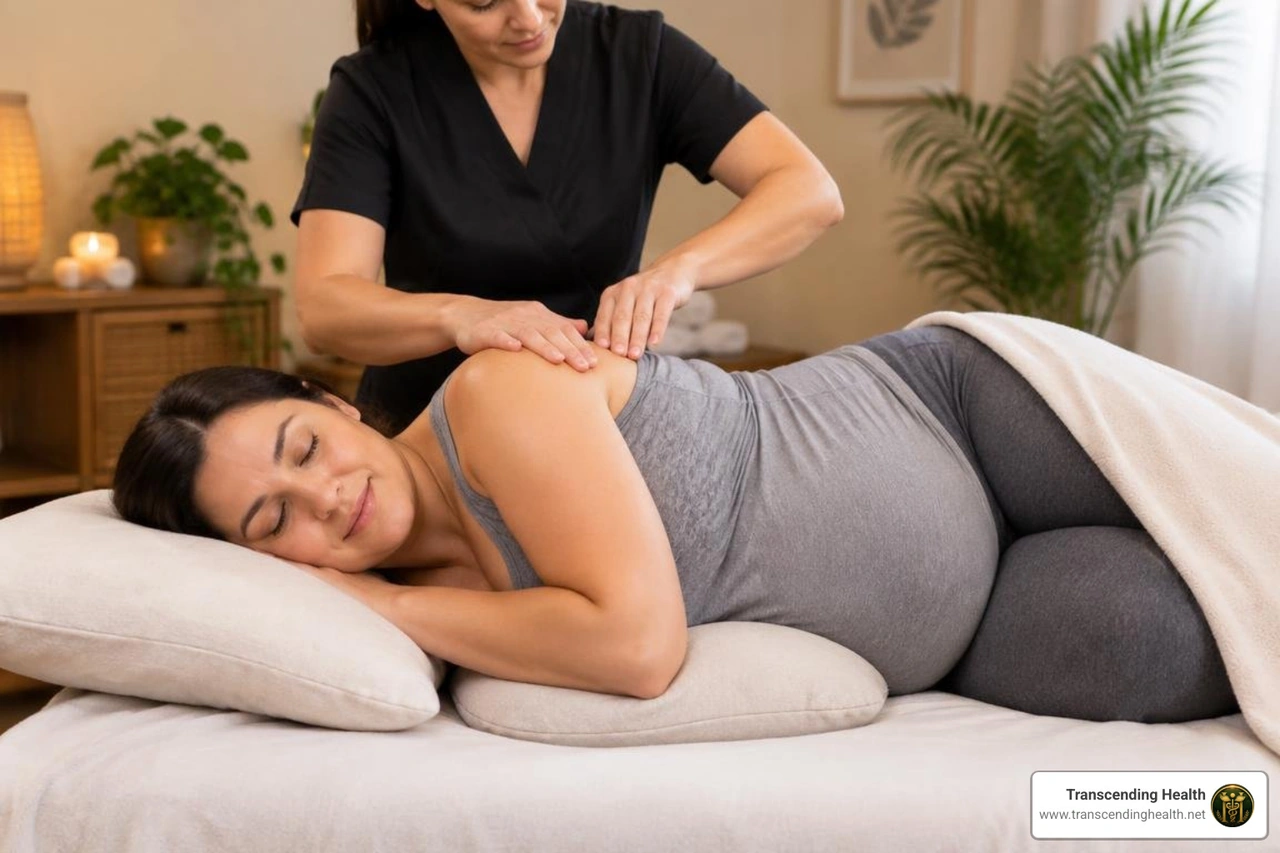
Prenatal Massage: Relief With Pregnancy-Specific Care
Prenatal massage is bodywork adapted to the changes of pregnancy. It may ease back and leg pain, reduce stress, and help you relax. A trained therapist uses supportive pillows, adjusts pressure to your comfort, and avoids deep pressure on your legs. If your pregnancy is high-risk or you have new symptoms, check with your prenatal care provider before booking.
I'm Drew Edmondson, owner of Transcending Health, a human restoration and performance center at 1445 Rio Road East, Suite 201 F, Charlottesville, VA 22901. My work brings hands-on care into personalized plans for pain relief and movement; here, I'll explain what to look for when considering prenatal massage and where the evidence has limits.
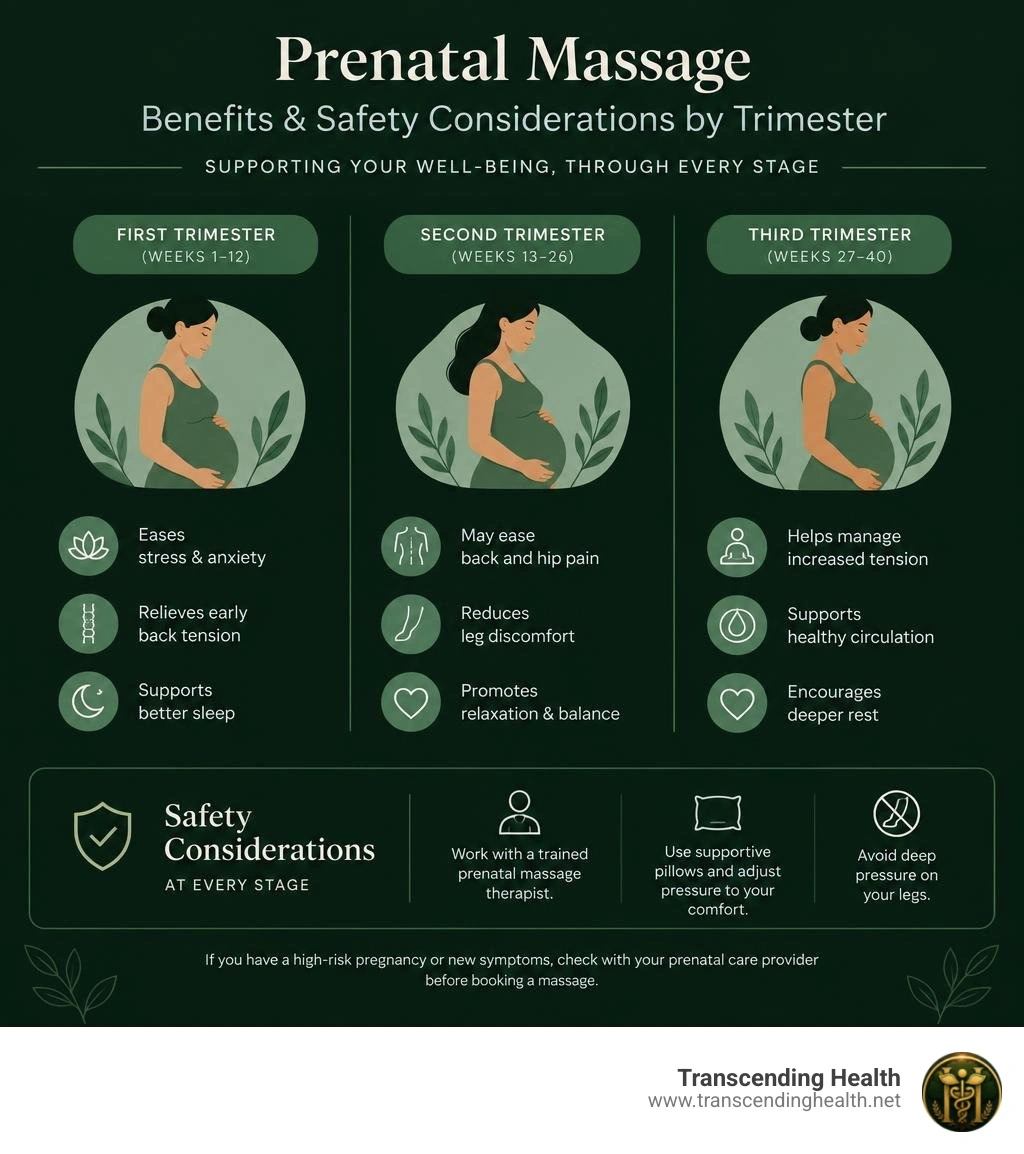
Pregnancy changes your center of gravity, ligament tension, and circulatory load. Those shifts can show up as low back strain, hip tightness, restless legs, and trouble sleeping. Bodywork that respects those changes can help you feel more like yourself while supporting the structural and nervous-system demands of carrying a baby. In the sections below, I'll walk through how prenatal bodywork differs from standard massage, what the research actually shows, and how we keep sessions safe across each trimester.
What Is a Prenatal Massage and How Does It Work?
Prenatal massage modifies traditional bodywork techniques to accommodate the anatomical and physiological shifts of pregnancy. As your center of gravity moves forward and hormones alter ligament tension, your muscular system works overtime to keep you balanced. While standard massage in Charlottesville addresses general tension and athletic recovery, our specialized prenatal massage in Charlottesville, VA focuses on relieving this structural strain while prioritizing safety for both parent and baby.
| Feature | Standard Bodywork | Prenatal Bodywork |
|---|---|---|
| Primary Positioning | Prone (face-down) and supine (flat on back) | Side-lying with ergonomic bolster support |
| Pressure Depth | Light to very deep tissue work | Light to firm, avoiding deep friction on lower limbs |
| Primary Focus Areas | Full-body muscle tension, athletic recovery | Lumbar spine, pelvis, hips, and fluid circulation |
| Joint Mobilization | Standard passive stretching | Gentle mobilization respecting relaxin-induced joint laxity |
Specialized Techniques and Safe Side-Lying Positioning
Lying flat on your back after the mid-second trimester can allow the weight of the uterus to compress the inferior vena cava, decreasing blood return to your heart and lowering blood pressure. To prevent this hemodynamic strain, we position you comfortably on your side using body pillows, wedges, and bolsters.
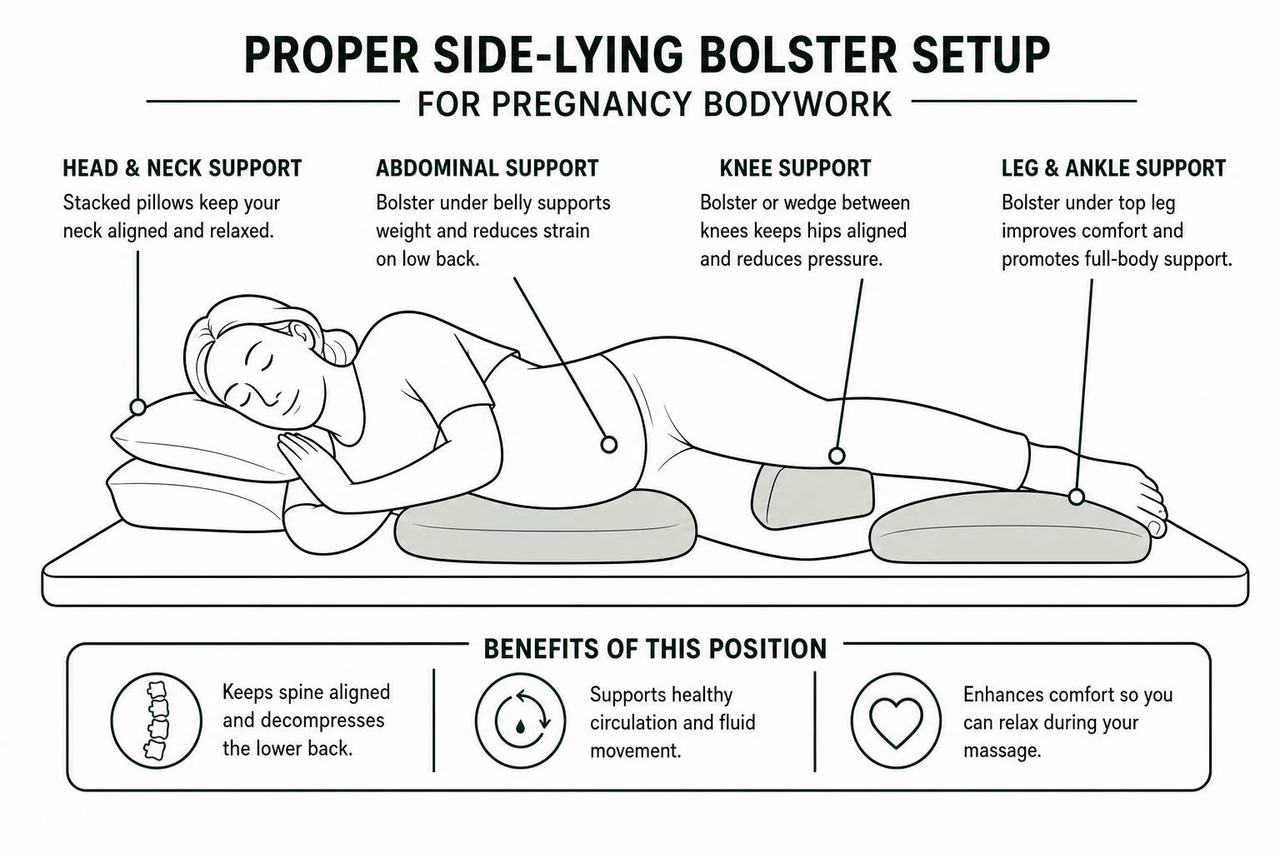
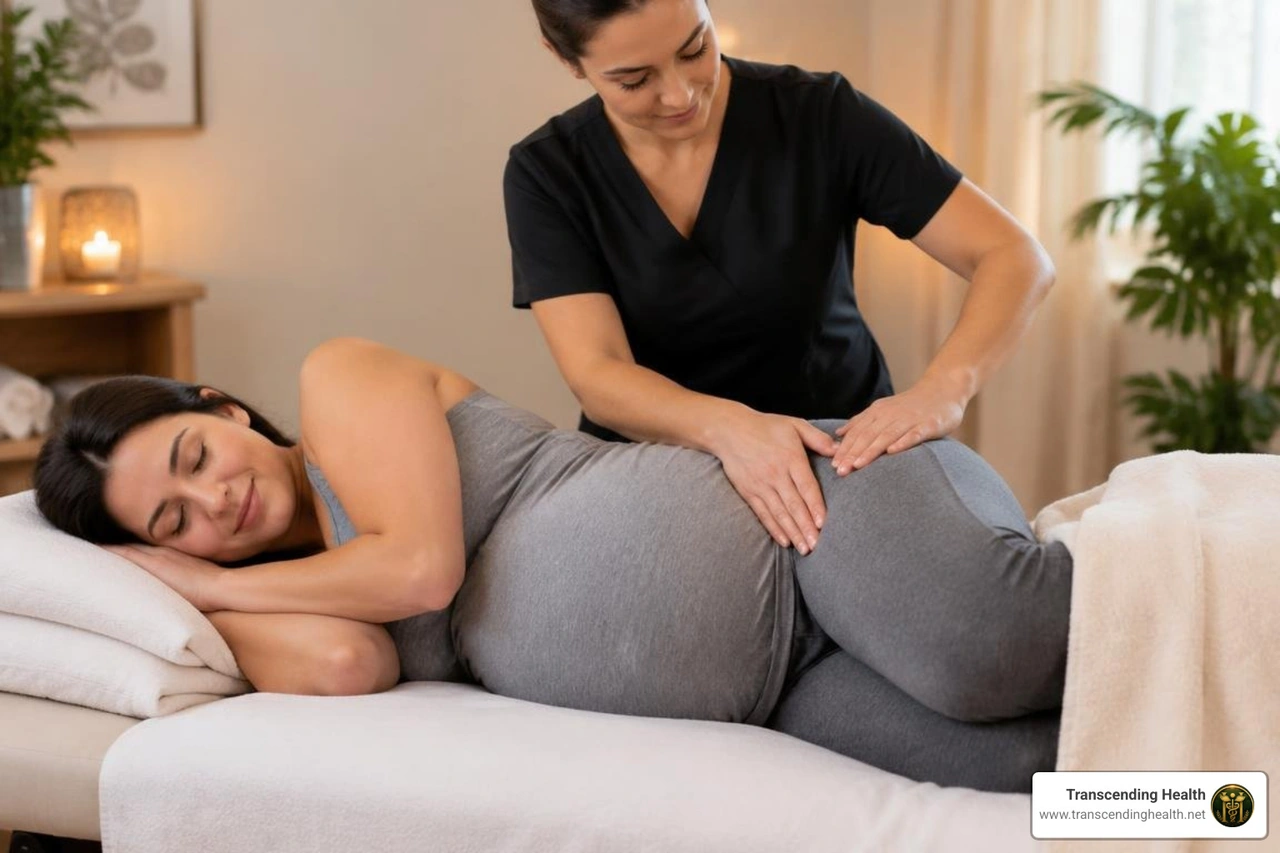
This stable side-lying position supports your abdomen, decompresses your lower back, and keeps your spine aligned from neck to sacrum. From here, a trained therapist can safely perform gentle myofascial release, craniosacral holds, or rhythmic soothing strokes reminiscent of gentle relaxation massage to calm an overstimulated nervous system.
Prenatal Care vs. Standard Bodywork
During pregnancy, your body produces relaxin, a hormone that softens pelvic ligaments in preparation for birth. Because your joints are naturally less stable during this period, aggressive passive stretching or deep, forceful cross-fiber friction is contraindicated.
Therapists follow established American Pregnancy Association safety guidelines to tailor their pressure and avoid tables with central cutouts that can place excessive stress on uterine ligaments. At Transcending Health, we also consider how pregnancy shifts neuromuscular patterns, utilizing gentle fascial counterstrain and positional release concepts to release protective muscle guarding without forcing joints beyond their comfortable range.
What Are the Proven Maternal and Fetal Benefits?
Clinical research shows that maternal massage provides clear neuroendocrine benefits. Regular bodywork helps down-regulate the sympathetic nervous system, lowering circulating stress hormones like cortisol while promoting the release of serotonin and dopamine.
Science-Backed Benefits of Prenatal Massage for Parent and Baby
In a systematic review of 12 randomized controlled trials, relaxation massage during pregnancy was shown to reduce back and leg pain, decrease depression and anxiety, and improve immune markers. Maternal stress reduction also correlates with healthier fetal birth weights and a lower risk of preterm delivery. Lowering systemic stress during pregnancy supports overall maternal vascular health and creates a calmer biological environment for fetal development.
Relief for Sciatica, Pelvic Tension, and Fluid Retention
As the pelvis tilts forward to accommodate growth, the piriformis and deep gluteal muscles can compress the sciatic nerve, sending sharp, radiating pain down the hip, buttock, and leg. Targeted soft-tissue work offers practical relief for these common pregnancy-related discomforts:
- Lumbar and sacral support: Gentle myofascial unwinding eases persistent strain on the erector spinae, quadratus lumborum, and sacrotuberous ligaments.
- Sciatic decompression: Specific gluteal and piriformis release relieves mechanical pressure around the greater sciatic notch.
- Circulatory and fluid balancing: Broad, gentle strokes encourage venous return and direct excess fluid away from swollen ankles and feet, mirroring the gentle mechanics of lymphatic drainage massage.
Many clients also notice substantial improvements in sleep quality following sessions. Sleep disruption during pregnancy can amplify pain sensitivity, elevate blood pressure, and contribute to daytime fatigue. By reducing sympathetic nervous system arousal and easing the physical aches that make finding a comfortable position in bed difficult, prenatal bodywork supports deeper, restorative rest without pharmacological intervention.
Is Prenatal Bodywork Safe Throughout Every Trimester?
For low-risk pregnancies, therapeutic touch is safe when delivered by a qualified, educated practitioner. However, the timing and physiological adaptations of each trimester determine the appropriate techniques, positioning, and clinical precautions.
Second and Third Trimester Timing Guidelines
Most practitioners recommend beginning regular sessions at the start of the second trimester (around week 12) and continuing into the third trimester. A bi-weekly cadence helps manage progressive postural changes, relieving thoracic tightness and pelvic girdle stress. Sessions can be increased to once a week in late pregnancy as joint laxity and pelvic pressure peak.
During the first trimester, many practitioners exercise extra caution due to the higher baseline incidence of early pregnancy complications and heightened morning sickness. While gentle touch is generally safe, focusing on light grounding work or waiting until the second trimester ensures maximum comfort.
When to Avoid Prenatal Massage: Contraindications and Risks
Adverse side effects from pregnancy massage are rare, with only a small percentage of participants reporting mild, temporary fatigue. However, bodywork must be avoided or cleared by an obstetric provider in the presence of specific medical conditions:
- Preeclampsia or sudden, severe gestational hypertension
- Deep vein thrombosis (DVT) or high risk for blood clots
- Placental complications (placenta previa or placental abruption)
- Unexplained vaginal bleeding or active preterm labor contractions
- Severe, sudden edema in the hands or face
If you are carrying multiples, have a history of preterm labor, or are managing gestational diabetes, your prenatal care provider may still clear you for bodywork with specific modifications. We always ask you to bring any guidance from your medical team to your first session so we can adjust positioning, pressure, and session length accordingly.
What Should You Expect During a Typical Session?
Your session starts with an intake conversation to review your gestational stage, comfort preferences, and any guidance from your medical team. You can read more about what to expect during prenatal bodywork to prepare for your appointment.
Personalized Intake and Comfort Setup
During your session:
- You disrobe to your comfort level under secure, professional draping that ensures modesty and warmth.
- The therapist arranges specialized pillows and bolsters to support your head, belly, and knees in a side-lying posture.
- Pressure is regularly checked and adjusted to your immediate feedback.
Safe Pressure Guidelines for Legs and Lower Body
Maternal blood volume increases substantially during pregnancy, accompanied by elevated clotting factors. This natural physiological adaptation protects against postpartum hemorrhage but also increases the baseline risk of blood clots in the lower extremities. As a safety precaution, therapists avoid deep-tissue techniques, intense elbow work, or heavy friction on the calves and inner thighs, opting instead for broad, light strokes that encourage gentle venous return.
We also keep sessions unhurried. Pregnancy can make it harder to change positions quickly, so we build in time for you to shift from one side to the other without feeling rushed. If you need a bathroom break mid-session, that is always fine. The goal is to work with your body's current needs, not against them.
Frequently Asked Questions About Pregnancy Bodywork
Can massage help with pregnancy-related anxiety and sleep issues?
Yes. Clinical trials demonstrate that massage therapy lowers maternal cortisol and raises serotonin and dopamine levels, supporting emotional regulation, autonomic balance, and better sleep quality.
How often should you schedule sessions during late pregnancy?
Many expectant mothers find that scheduling sessions once every two weeks provides consistent physical relief, transitioning to weekly sessions during the final month of the third trimester as pelvic strain increases.
Is antenatal perineal massage recommended before delivery?
Yes. A systematic review on antenatal perineal massage indicates that performing digital perineal massage from 34 weeks of pregnancy onward helps improve tissue elasticity and reduces the likelihood of severe perineal trauma and episiotomies during vaginal birth.
Ready to feel more comfortable as your pregnancy progresses? Book your prenatal massage appointment online and we will build a session around your body's current needs.