A Practical Path to Lasting Pain Relief With Medical Massage Charlottesville VA
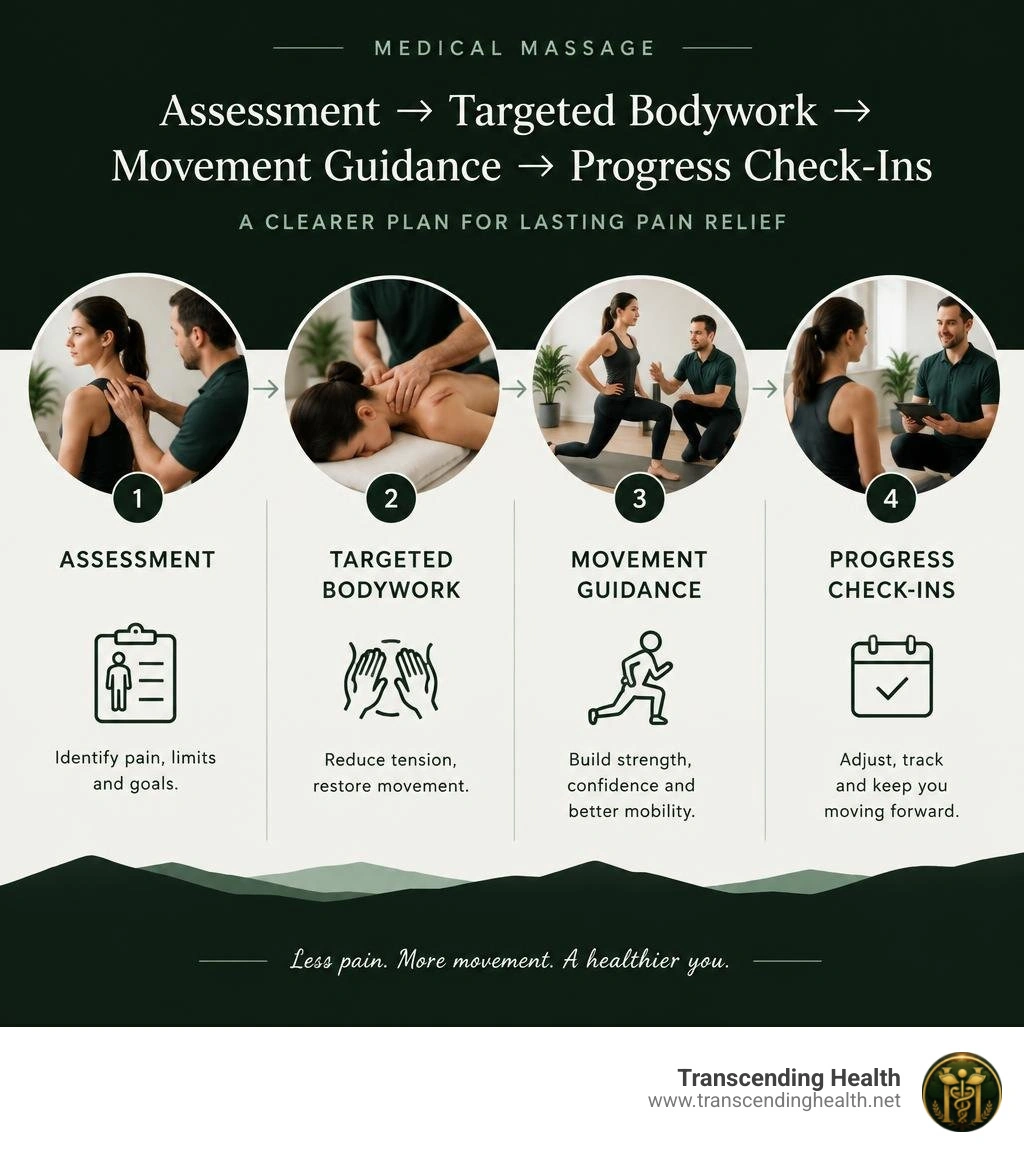
Medical massage Charlottesville VA can help address ongoing back, knee, and shoulder pain when it is part of a clear recovery plan. Start with an in-person assessment, explain what movements hurt or feel limited, and work with a trained provider who can pair targeted hands-on treatment with movement and recovery guidance.
Unlike a spa-focused massage, clinical massage is goal-driven. Your session may use focused soft-tissue work, myofascial release, trigger point therapy, stretching, or joint-focused techniques to reduce muscle guarding, improve comfortable movement, and support recovery. It is not a replacement for medical diagnosis, physical therapy, or urgent care when those are needed, but it can be a useful part of coordinated nonsurgical pain care.
At Transcending Health, we provide integrative pain-relief and wellness care at 1445 Rio Road East, Suite 201, Charlottesville, VA 22901. Our approach looks beyond the painful spot, combining clinical bodywork with corrective exercise and other recovery tools when appropriate, so active adults can return to hiking, golf, training, and daily life with more confidence.
I am Drew Edmondson, owner of Transcending Health, and I help Central Virginia adults use medical massage Charlottesville VA within a coordinated plan for pain relief, injury recovery, and stronger movement. Our work connects hands-on care with practical next steps, rather than treating each appointment as an isolated fix.
Understanding Clinical Bodywork vs. Spa Massage
When most people think of massage, they picture dimmed lights, soft music, and essential oils designed to melt away daily stress. While that type of relaxation serves an important purpose for nervous system regulation, clinical bodywork operates on an entirely different premise. Medical massage is outcome-oriented, focused on diagnosing tissue dysfunction, restoring structural balance, and addressing specific musculoskeletal pathology.
Understanding the differences between relaxation massage and clinical bodywork helps patients choose the right care for their specific physical needs:
| Feature | Relaxation / Spa Massage | Medical / Clinical Massage |
|---|---|---|
| Primary Objective | General relaxation, stress reduction, systemic calm | Targeted pain relief, functional restoration, injury recovery |
| Assessment Process | Minimal intake; focused on general comfort and pressure preferences | Detailed orthopedic intake, postural analysis, range-of-motion testing |
| Treatment Scope | Full-body routine utilizing standardized flow | Targeted treatment of specific anatomical structures and compensation patterns |
| Techniques Used | Long gliding strokes (effleurage), kneading (petrissage) | Myofascial release, trigger point therapy, cross-fiber friction, neuromuscular therapy |
| Integration | Standalone wellness service | Often integrated with physical therapy, chiropractic care, and movement coaching |
| Outcome Tracking | Subjective feeling of relaxation post-session | Measurable changes in mobility, pain scores, and functional capacity |
Medical Diagnosis vs. General Relaxation
In a traditional spa setting, the therapist focuses on delivering a soothing, full-body experience. In contrast, clinical massage therapy begins with a clinical evaluation of your posture, movement limitations, and tissue quality. When a client arrives with a physician's referral or prescription for a specific condition, the bodywork is customized to address the underlying biomechanical dysfunction rather than simply rubbing where it hurts.
Our primary focus is functional recovery. If a desk worker presents with chronic shoulder tightness, we assess the entire kinetic chain—evaluating pec minor tightness, thoracic spine immobility, and scapular dyskinesis. By treating the specific tissue pathology and releasing compensatory tension patterns, medical massage facilitates structural balance and sustainable tissue remodeling.
Conditions Treated with Medical Massage Charlottesville VA
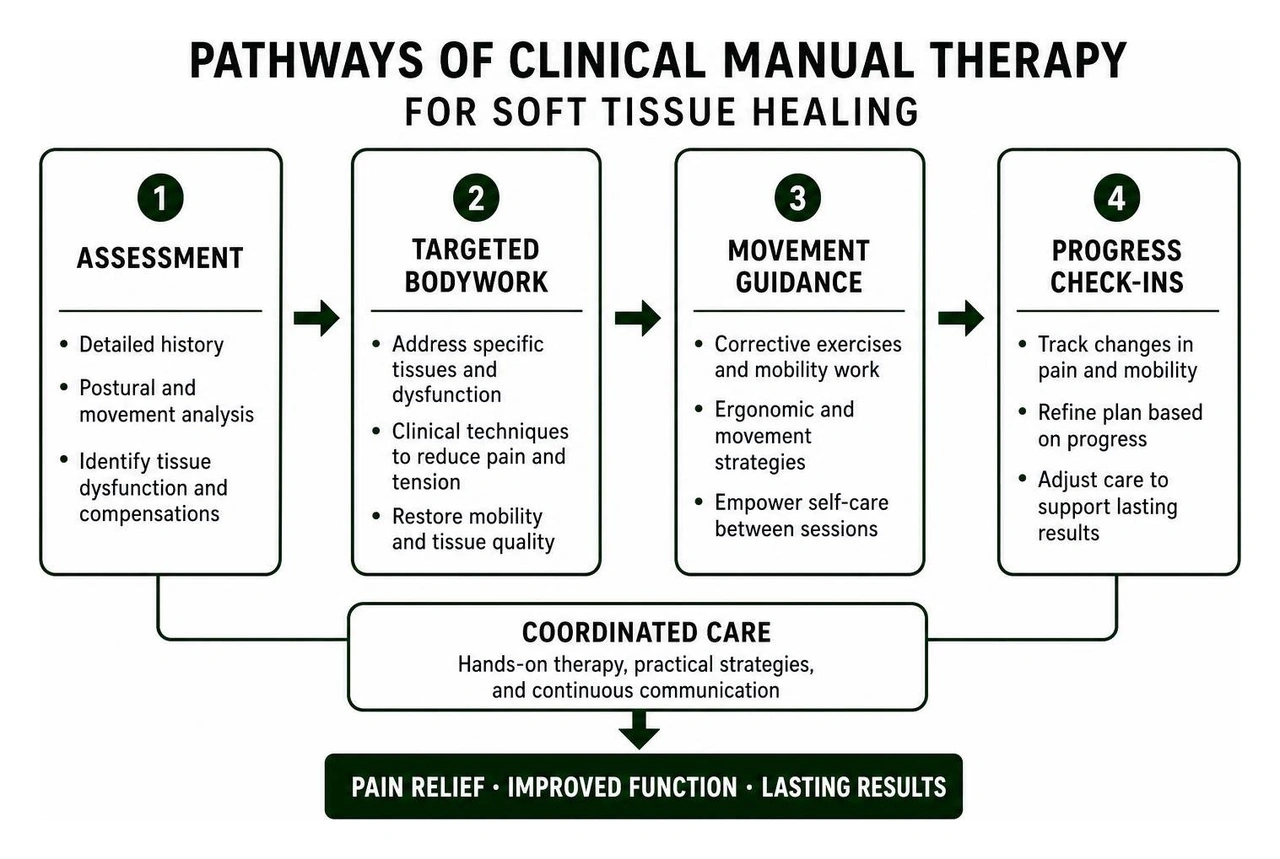
Clinical manual therapy addresses a broad range of acute and chronic musculoskeletal conditions. By applying targeted force vectors, ischemic compression, and fascial mobilization, we help restore compromised tissues across the body.
Common conditions that respond well to targeted pain relief include:
- Sciatica and Piriformis Syndrome: Decompressing the sciatic nerve path through deep gluteal release, pelvic balancing, and targeted work on the piriformis and obturator muscles.
- Chronic Lower Back Pain: Alleviating hypertonic quadratus lumborum, psoas, and erector spinae musculature that destabilizes the lumbar spine.
- Cervical Strain and Tech Neck: Releasing deep suboccipital tension, levator scapulae restrictions, and anterior neck musculature contributing to tension headaches.
- Rotator Cuff Injuries & Shoulder Impingement: Treating subscapularis, supraspinatus, and infraspinatus adhesions to restore pain-free overhead mechanics.
- Carpal Tunnel Syndrome: Addressing median nerve entrapment points along the forearm flexors, pronator teres, and thoracic outlet.
- Temporomandibular Joint (TMJ) Dysfunction: Applying gentle intra-oral and extra-oral myofascial work to the masseter, temporalis, and pterygoid muscles.
- Plantar Fasciitis: Mobilizing the plantar aponeurosis while releasing upstream tension in the gastrocnemius, soleus, and posterior tibialis.
For patients seeking comprehensive strategies for natural pain management, clinical bodywork serves as a non-invasive, drug-free cornerstone for long-term recovery.
Core Techniques in Medical Massage Charlottesville VA
Medical massage is not a single rigid protocol; it is a clinical toolkit of specialized manual therapies applied systematically based on your body's presentation.
.webp "Practitioner performing targeted myofascial release on shoulder tissues")
During a session, a therapist might blend neuromuscular therapy, joint mobilization, and deep tissue therapy to break up cross-linked collagen fibers and down-regulate pain signaling. Rather than using brute force, effective clinical work uses precise angle, depth, and duration to coax tissues into releasing.
Myofascial Release and Trigger Point Therapy
Fascia is the continuous, three-dimensional web of connective tissue that envelopes every muscle, bone, nerve, and organ in the human body. When trauma, inflammation, or poor posture occurs, fascia loses its pliability, becoming dense and restricted. Through sustained, gentle pressure, myofascial release bodywork elongates these restricted fascial planes, rehydrating the ground substance and restoring structural freedom.
Simultaneously, practitioners identify hyperirritable nodules within taut bands of skeletal muscle—known as myofascial trigger points. These "knots" restrict local microcirculation, leading to an accumulation of metabolic waste products and referred pain patterns. By applying precise ischemic compression through trigger point therapy, we restore blood flow, normalize neuromuscular junction activity, and eliminate radiating pain patterns.
Specialized Clinical Modalities: Oncology and Prenatal Bodywork
Clinical massage also encompasses highly specialized protocols tailored for vulnerable populations requiring modified physiological approaches.
- Oncology Massage: Designed for individuals undergoing cancer treatments or recovering from surgery. Certified practitioners adjust pressure, pacing, and positioning to avoid compromised lymph nodes, medical devices, and fragile tissue, helping manage treatment-related neuropathy, fatigue, and pain.
- Manual Lymphatic Drainage (MLD): A gentle technique utilizing light, rhythmic strokes to stimulate fluid dynamics. MLD is effective for post-surgical recovery, reducing acute edema, assisting axillary cording management, and speeding recovery following orthopedic procedures. Learn more about our approach to lymphatic drainage therapy.
- Prenatal Clinical Massage: Pregnancy brings rapid biomechanical shifts, altering the center of gravity and placing heavy strain on the sacroiliac joints, lower back, and feet. Specialized prenatal massage care uses side-lying positioning and focused techniques to relieve sciatic irritation, reduce peripheral swelling, and ease pelvic girdle discomfort safely.
Integrating Manual Therapy with Whole-Body Recovery Systems
While hands-on soft tissue work provides immediate pain relief and increases local range of motion, manual therapy alone is rarely a permanent fix for chronic issues. If you release a tight muscle but fail to correct the dysfunctional movement pattern that caused it to tighten in the first place, the restriction inevitably returns.
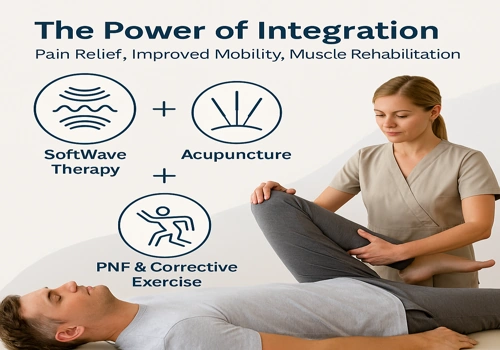
Understanding why musculoskeletal tension returns is essential for anyone dealing with recurrent pain. By bridging manual therapy with active rehabilitation and restorative technologies, we build lasting resilience rather than temporary relief.
Multimodal Rehabilitation and Movement Restoration
At Transcending Health, our care model combines hands-on therapies like Rolfing / structural integration, deep tissue, and trigger point work with modern recovery modalities:
- Acoustic Wave Therapy (SoftWave / Shockwave): Delivers electrohydraulic acoustic sound waves deep into damaged soft tissues, stimulating local biological repair, improving microcirculation, and accelerating cellular turnover in chronic tendinopathies and joint pain.
- Targeted Cryotherapy and Infrared Therapy: Down-regulates systemic inflammatory pathways, speeds post-session tissue recovery, and primes hypertonic muscles for deeper manual intervention.
- Corrective Exercise & Movement Coaching: Retrains motor control, strengthens stabilizing musculature, and ensures that newly unlocked range of motion is integrated into everyday movement patterns like walking, bending, and lifting.
Preparing for Your First Medical Massage Charlottesville VA Session
Preparing for a clinical bodywork session is straightforward, but it differs slightly from visiting a day spa:
- Comprehensive Health Intake: You will complete a detailed intake form outlining your pain history, surgical background, current medications, and functional limitations.
- Attire and Draping: Professional draping is strictly maintained throughout the session. You may undress to your comfort level; some targeted assessments and mobility drills may be performed with athletic clothing on.
- Pressure Calibration and Communication: Clinical massage should feel productive, not agonizing. Your therapist will maintain open dialogue to ensure pressure stays within a therapeutic, tolerable window without triggering defensive muscle guarding.
- Session Length and Local Rates: In the Charlottesville area, clinical massage sessions typically range from 45 to 90 minutes. Area cash rates generally average $60 to $95 for 30–60 minute sessions and $140 to $195+ for comprehensive 60–90 minute specialized evaluations, reflecting the advanced clinical training required.
Frequently Asked Questions About Clinical Bodywork
Does insurance cover medical massage therapy in Virginia?
Direct insurance billing for massage therapy varies significantly in Virginia. While some commercial insurers, workers' compensation programs, and auto injury policies cover prescribed massage therapy, many clinical providers operate on a fee-for-service cash model.
However, if you have a physician's prescription detailing medical necessity and specific diagnosis codes, your provider can furnish an itemized superbill (containing standard CPT codes such as 97124 for massage therapy or 97140 for manual therapy). You can submit this superbill directly to your insurance company for potential out-of-network reimbursement. Additionally, Health Savings Accounts (HSA) and Flexible Spending Accounts (FSA) can be used to pay for medically prescribed clinical massage.
How does medical massage differ from deep tissue massage?
Deep tissue massage is a specific modality that uses firm, sustained pressure to reach deeper layers of muscle and connective tissue. It can be applied purely for relaxation or general tension relief.
Medical massage, by contrast, is defined by its clinical intent and assessment-driven focus. A medical massage session might incorporate deep tissue mobility techniques, but it will also integrate myofascial release, joint mobilizations, positional release, and neuro-reset strategies targeted at resolving a documented functional impairment.
How many sessions are typically required for chronic pain relief?
Because soft tissue remodeling is cumulative, long-standing chronic pain rarely disappears in a single appointment. Most clinical care plans follow a phased framework:
- Acute Phase (Weeks 1–3): 1 to 2 sessions per week focused on down-regulating acute pain signaling, reducing inflammation, and breaking up major tissue adhesions.
- Subacute / Restoration Phase (Weeks 4–6): Weekly or bi-weekly sessions paired with corrective exercises to restore normal joint kinematics and tissue glide.
- Maintenance / Performance Phase: Monthly tune-ups or as-needed visits to maintain soft tissue health, prevent reinjury, and support active athletic pursuits.
Conclusion
Living with chronic pain, stiffness, or post-injury restrictions can limit your ability to enjoy the active Charlottesville lifestyle—whether that means running the Rivanna Trail, playing a round of golf, or simply working at your desk without discomfort. Medical massage provides a targeted, clinical path toward restoring pain-free movement by addressing the true root causes of soft tissue dysfunction.
Transcending Health, an integrative pain relief and wellness clinic located at 1445 Rio Road East, Suite 201, Charlottesville, VA 22901, provides advanced clinical care focused on nonsurgical pain relief, functional mobility, and long-term vitality. For a broader look at our local offerings, explore our comprehensive guide to massage in Charlottesville.
Take the first step toward lasting pain relief today. Schedule an initial clinical assessment with our team, and let us design a customized, multimodal recovery plan tailored to your body's specific needs.