Cupping Sports Massage: What It Can Do for Recovery
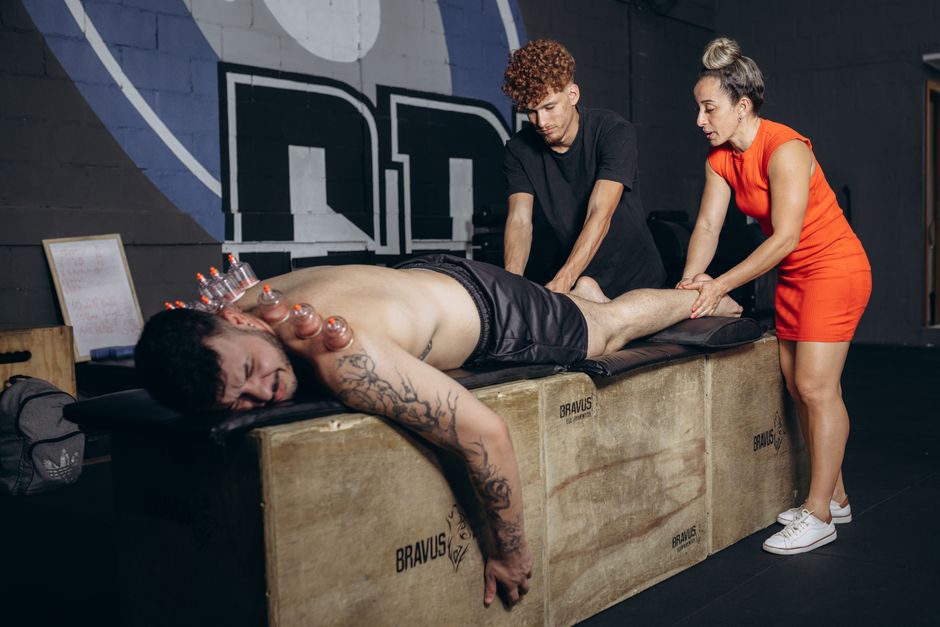
Cupping sports massage combines hands-on soft-tissue bodywork with specialized suction cups that gently pull the skin, superficial fascia, and muscle layers upward. Unlike standard athletic massage techniques that compress into restricted tissue, cupping utilizes negative pressure to decompress tight structures, ease chronic muscle tension, improve fluid dynamics, and encourage functional movement. While scientific research into athletic recovery outcomes demonstrates mixed results, negative-pressure decompression serves as an exceptional complementary therapy when combined with active movement, joint mobilization, and targeted neuromuscular coaching rather than standing as a standalone cure for acute structural injuries.
I’m Drew Edmondson, owner of Transcending Health in Charlottesville, where I bring hands-on restorative care, corrective exercise, and athletic restoration protocols together for active adults, runners, and lifters across Albemarle County. In this guide, I will explore how cupping sports massage fits into a structured training program, what clinical research confirms about its physiological mechanisms, and how to safely utilize decompression therapy to support your athletic performance. Whether you are managing post-race soreness, working through stubborn fascial restrictions, or simply looking for a way to recover more completely between training blocks, understanding how negative-pressure work complements other recovery tools can help you make more informed decisions about your body.
Helpful resource for deeper context:
What Is a Cupping Sports Massage and How Does It Work?
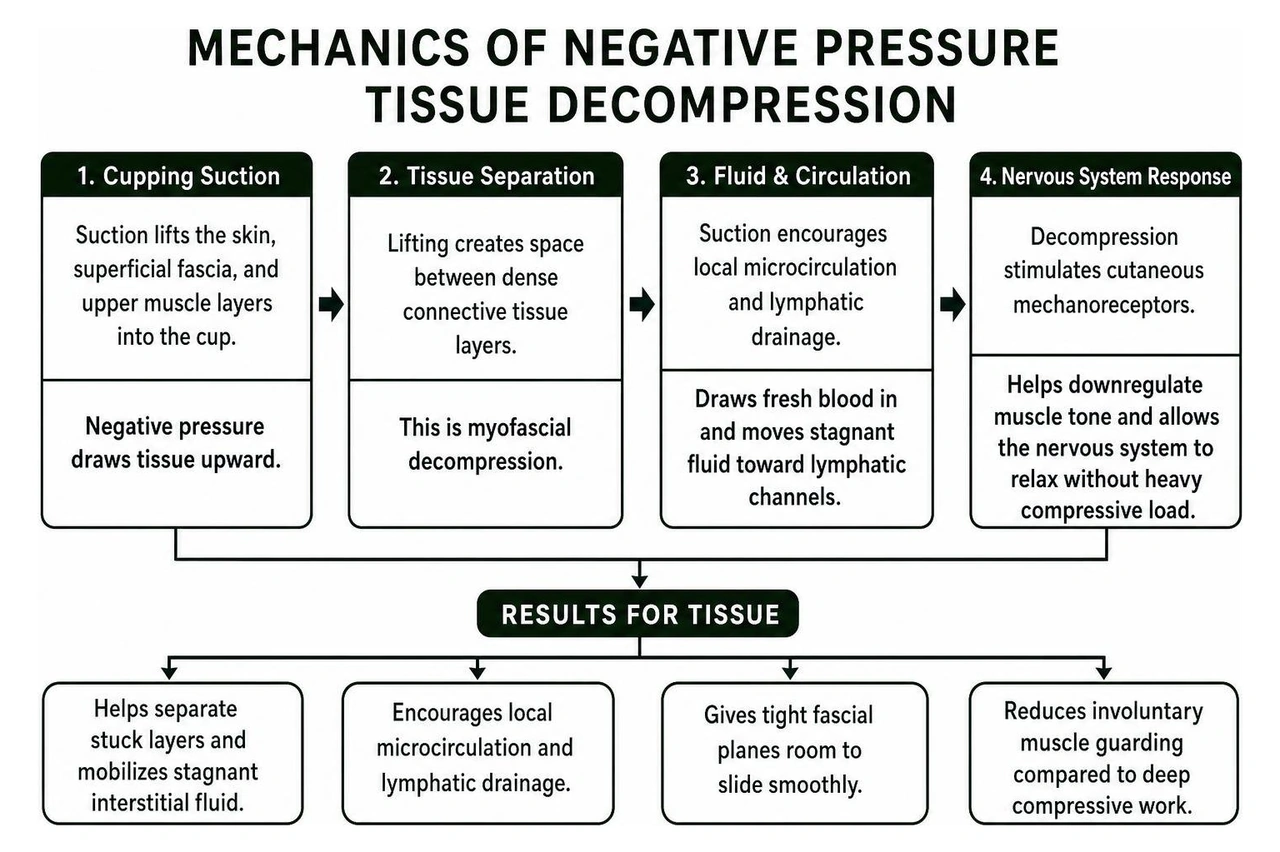
A cupping sports massage merges traditional soft-tissue manipulation with negative-pressure suction to address persistent muscular tightness and fascial adhesions. In conventional sports bodywork, therapists apply positive compressive force into the muscle beds using palms, thumbs, forearms, and elbows. Cupping reverses this dynamic entirely by lifting the skin, superficial fascia, and upper muscle layers into a specialized glass, plastic, or medical-grade silicone cup.
This upward lifting action is recognized in modern sports training and rehabilitation as myofascial decompression. By pulling tissues away from the underlying bone and muscle frame, suction creates temporary space between dense, bound connective tissue layers. This mechanical separation encourages local microcirculation, enhances capillary exchange, and facilitates lymphatic drainage, drawing nutrient-rich blood into stagnant, restricted areas while giving bound fascial planes room to slide smoothly against one another. For athletes training across Central Virginia, incorporating this modality within specialized sports massage services provides a balanced, comprehensive way to target deep restrictions without relying solely on aggressive downward pressure that can trigger defensive guarding.
Negative Pressure vs. Compressive Deep Tissue Work
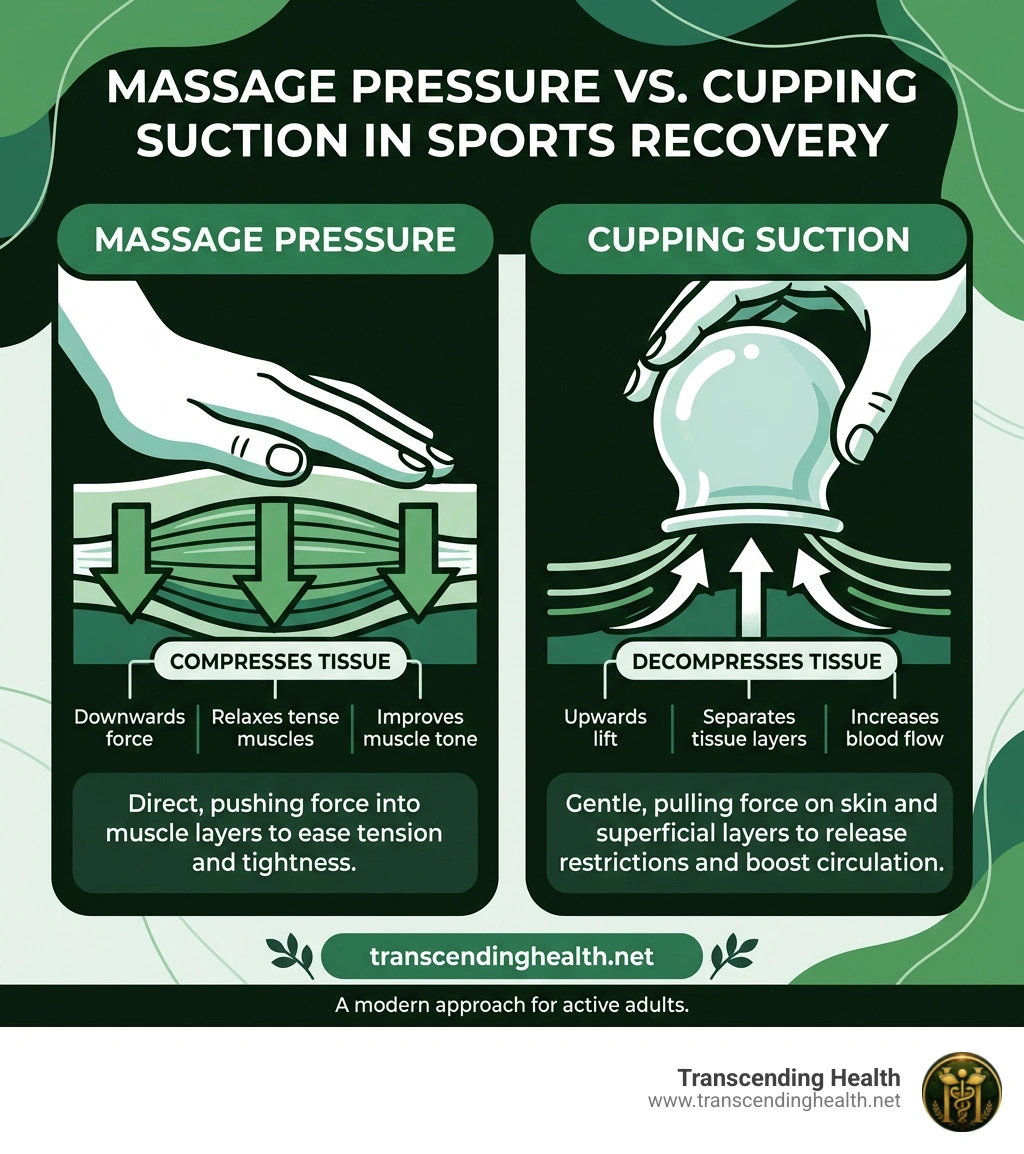
Most manual bodywork modalities rely on positive pressure—pressing down through superficial tissues to spread tight muscle fibers, release trigger points, and alter neuromuscular tone. While positive compression remains highly valuable, heavily fatigued, hypertonic, or inflamed tissues can sometimes resist deep downward force. When an athlete feels guarded, compressive pressure can inadvertently provoke muscular resistance, limiting the therapeutic depth of the session.
Negative pressure decompresses the tissue instead. By lifting the skin and superficial fascia, suction separates bound layers and mobilizes stagnant interstitial fluid toward regional lymphatic channels. This upward mechanical decompression stimulates cutaneous mechanoreceptors, which downregulates localized resting muscle tone and allows the central nervous system to relax without resisting heavy compressive load. In practice, this means an athlete who arrives with a heavily guarded hamstring or a chronically tight iliotibial band may tolerate decompressive work more comfortably than deep compressive stripping, allowing us to address restrictions that might otherwise remain inaccessible during a single session.
Dynamic vs. Static Cupping Sports Massage Techniques
We typically use two primary styles of cupping application depending on an athlete's training phase, tissue quality, and recovery goals:

- Dynamic (Sliding) Cupping: We apply a light layer of organic massage lotion and glide pliable silicone or vacuum cups along the length of muscle groups. This mimics rhythmic kneading while decompressing broad fascial sheets across the hamstrings, iliotibial bands, calves, and spinal extensors.
- Static Cupping: Cups remain fixed over specific trigger points, high-tone muscle bellies, or dense adhesions for several minutes. We frequently pair static placement with active joint movement to retrain soft tissue through functional ranges.
What Are the Key Benefits of Cupping in Sports Massage for Athletes?
Integrating negative-pressure suction into an athletic recovery routine offers several distinct physiological benefits designed to support training demands:
- Enhanced Local Blood Flow: The localized vacuum creates hyperemia (increased capillary blood flow), bringing oxygen and nutrient-rich fluids into overworked, ischemic muscle fibers while flushing metabolic waste products.
- Improved Fascial Mobility and Glide: Lifting the superficial fascial layers softens dense connective tissue restrictions, breaking cross-links between fascial sheaths and restoring smooth, frictionless tissue glide.
- Nervous System Sedation: Gentle sensory stimulation from sustained negative pressure activates low-threshold cutaneous mechanoreceptors, helping downregulate sympathetic nervous tone and reduce localized muscular guarding.
- Accelerated Metabolic Clearance: A study published in SPORT TK-EuroAmerican Journal of Sport Sciences showed that combining sports massage with cupping after high-intensity interval exercise resulted in significantly lower heart rates and faster lactic acid clearance than passive rest or single modalities alone.
Integrating Cupping Sports Massage with Movement and Active Recovery
Applying cups while an athlete moves through active ranges of motion creates dynamic myofascial release. When we anchor a vacuum cup over a restrictive adhesion and guide the limb through active elongation, we create a targeted shear force between fascial layers that cannot be replicated through passive stretching alone.
As highlighted in a narrative review on sports injuries, complementary soft-tissue therapies provide powerful non-pharmacological relief by stimulating neuroendocrine pathways and improving local tissue perfusion. Combining gentle decompression with active pin-and-stretch techniques helps clear movement restrictions, reduce subjective post-exercise soreness, and restore functional recruitment patterns faster than stationary rest. For athletes in Charlottesville and Albemarle County who train consistently, this combination can be especially useful during high-volume training blocks when passive recovery alone no longer keeps pace with accumulated tissue stress.
What Does the Clinical Research Say About Cupping Therapy?
Clinical literature regarding cupping therapy demonstrates tangible therapeutic utility alongside clear methodological considerations. A comprehensive systematic review in the Journal of Back and Musculoskeletal Rehabilitation analyzed 22 clinical studies and found moderate evidence supporting cupping for increasing soft-tissue flexibility and low-to-moderate evidence for reducing non-specific low back and cervical pain. The review also confirmed that the risk of adverse events is remarkably low when performed by trained professionals.
| Modality | Primary Mechanical Action | Main Recovery Target | Typical Sensation |
|---|---|---|---|
| Cupping Sports Massage | Negative-pressure decompression (lifting) | Fascial glide, superficial blood flow, flexibility | Warm, localized pulling sensation |
| Deep Tissue Massage | Positive-pressure compression (kneading) | Deep muscle knots, structural alignment, muscle tone | Firm, focused pressure |
| Focused Cryotherapy | Localized thermal cooling | Acute inflammation, targeted joint pain, neural numbing | Crisp, intense cold sensation |
While cupping is not a cure-all, it serves as an effective, low-risk tool within a structured recovery plan. The key is understanding that research supports cupping as a complementary modality rather than a replacement for progressive loading, sleep, nutrition, and other foundational recovery habits.
What Should You Expect Before, During, and After a Session?

Every session begins with an initial movement assessment to examine your current biomechanics, joint range of motion, and training load. During treatment, your therapist applies specialized cups to targeted muscle groups using manual hand pumps or flexible silicone cups. You will feel a firm pulling or stretching sensation on the skin, but it should never feel sharp or pinching.
After the cups are removed, you will likely notice circular pink, red, or light purple marks. These discolorations occur when superficial capillaries expand under negative suction. They are not muscular impact bruises and generally fade within a few days to two weeks. Following your appointment, stay well-hydrated, engage in light mobility work, and avoid maximal-effort training until the next day to allow your tissues to adapt.
Frequently Asked Questions About Cupping Sports Massage
Do cupping marks indicate tissue damage or bruising?
No. Unlike traditional bruises caused by blunt impact trauma that damages muscle fibers, cupping marks are superficial discolorations caused by capillary expansion and drawing stagnant fluid toward the skin surface. They resolve naturally on their own without structural tissue damage.
Who should avoid cupping therapy during athletic training?
Cupping should be avoided over open skin lesions, acute muscle tears, fractures, or areas with active infections. Individuals with bleeding disorders, those taking anticoagulant medications, or pregnant athletes should consult their physician before receiving cupping therapy.
Can you work out immediately after a cupping sports massage?
We recommend sticking to light active recovery, gentle mobility, or walking on the day of your session. Allow your soft tissues 24 hours to recover before returning to high-intensity interval sessions or heavy resistance training.
Restoring Athletic Performance Through Integrated Recovery
At Transcending Health in Charlottesville, we treat the whole person by pairing hands-on manual care with advanced restoration technologies. Rather than relying on a single technique, our approach begins with a comprehensive body assessment to understand your biomechanics, movement restrictions, and training demands.
From there, we design an individualized plan integrating modalities such as restorative massage therapy options, structural integration, fascial counterstrain, and corrective exercise, alongside targeted tools like SoftWave therapy and focused cryotherapy. If you are ready to resolve persistent tightness and support your training, you can schedule an athletic recovery appointment with us today.