Sports Massage Benefits: What to Expect
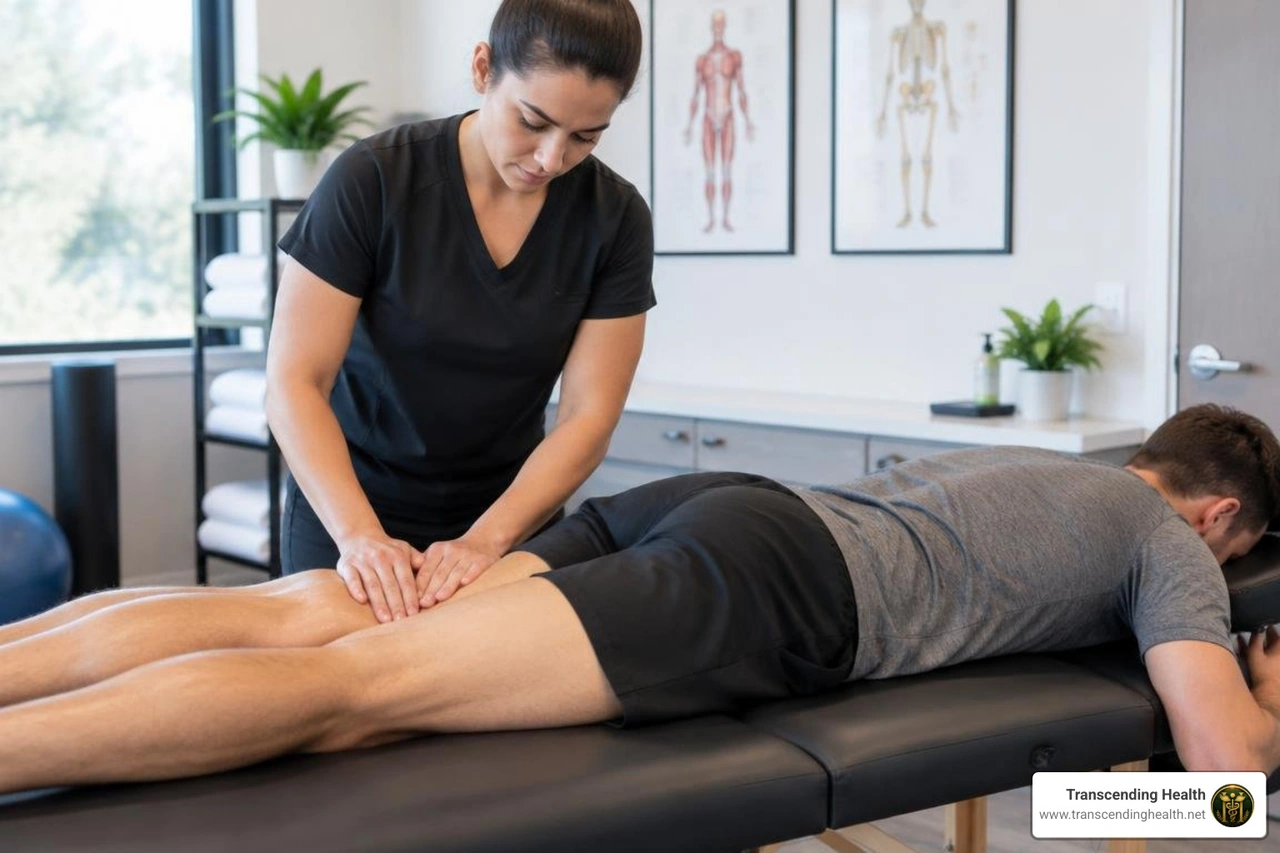
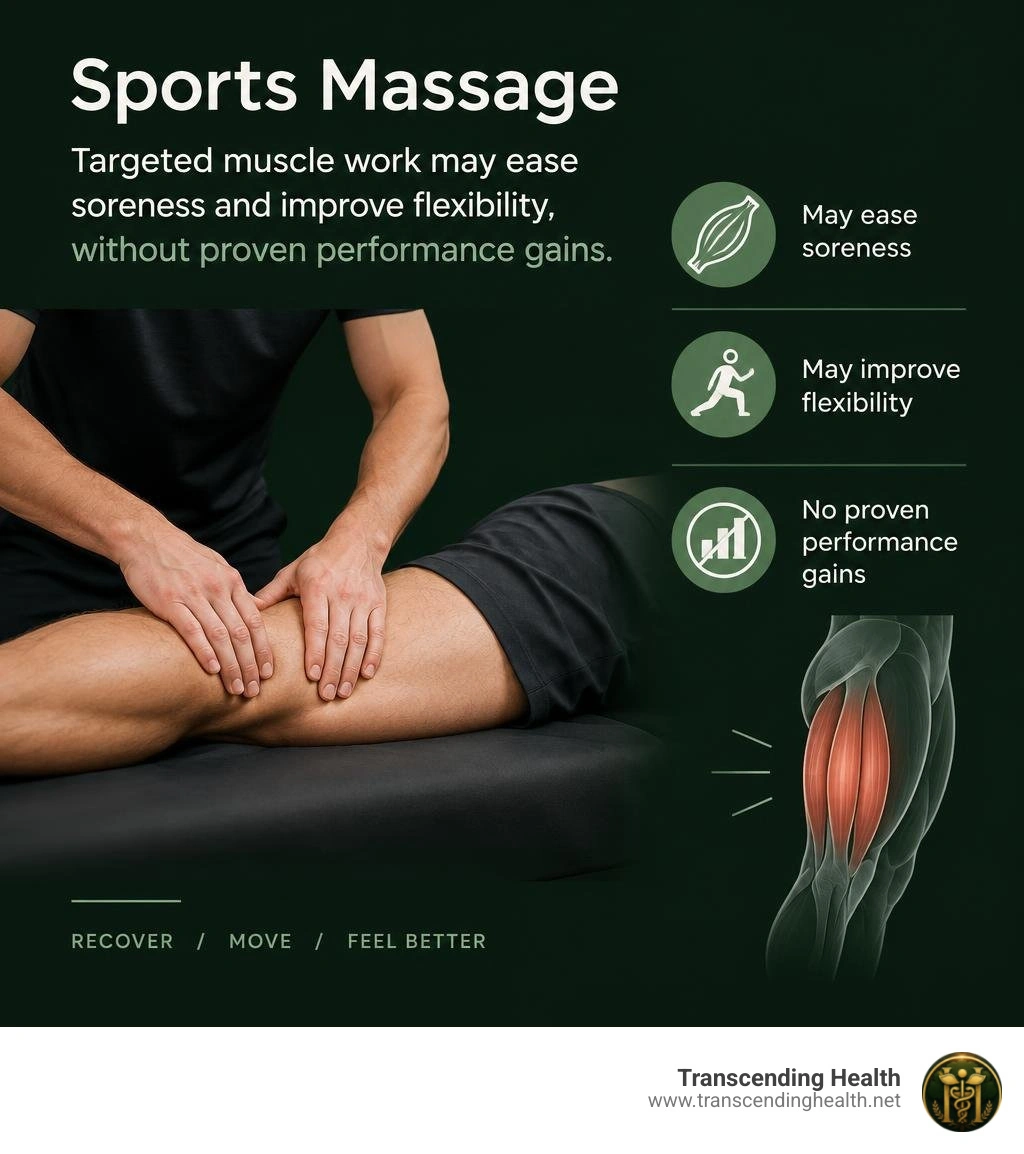
Sports massage is targeted hands-on work for muscles used in exercise and sport. It may ease post-workout soreness and briefly improve flexibility, but research has not shown a consistent boost in strength, speed, or endurance. The pressure and focus should match your activity, comfort, and recovery goals, whether you train hard or simply want to keep moving well. A review of sports massage studies supports those modest benefits while showing why performance claims deserve caution.
I'm Drew Edmondson, owner of Transcending Health, a human restoration and performance center at 1445 Rio Road East, Suite 201 F, Charlottesville, VA 22901. My work brings sports massage together with hands-on care and corrective exercise to support active adults dealing with pain or movement limits.
What Is Sports Massage and How Does It Work?
Sports massage is a goal-oriented form of bodywork tailored specifically to the physical demands of athletic training, exercise, and repetitive movement patterns. Unlike general relaxation therapies, it zeroes in on the soft tissues—muscles, tendons, and fascia—that bear the brunt of your workload.
When you engage in intense training, micro-trauma occurs within muscle fibers, leading to localized inflammation, fluid accumulation, and metabolic waste buildup. A skilled therapist applies mechanical pressure to improve local blood circulation and stimulate lymphatic drainage. This manual flush helps clear cellular debris while delivering fresh oxygen and nutrients to recovering tissues.
Beyond fluid dynamics, sports massage engages your autonomic nervous system. Firm, rhythmic strokes downregulate sympathetic "fight-or-flight" tone and activate the parasympathetic "rest-and-digest" response. This shift lowers systemic cortisol levels, calms hyperactive motor neurons, and allows guarded muscle fibers to relax. Whether you are addressing repetitive strain or fine-tuning your movement quality, scheduling dedicated sports massage helps your body transition efficiently from high-output exertion into restorative rebuilding.
Primary Techniques in Sports Massage Therapy
A comprehensive sports session blends several distinct manual techniques depending on tissue quality, pain thresholds, and training schedules. As outlined by the Cleveland Clinic, therapists often mix multiple stroke methods to tailor treatment to an individual's biomechanical needs.
| Technique | Stroke Mechanics | Primary Clinical Goal |
|---|---|---|
| Effleurage | Long, gliding strokes toward the heart using palms or forearms | Warms surface tissue, increases circulation, and promotes venous return |
| Petrissage | Kneading, lifting, and squeezing muscle bellies | Mobilizes deeper fibers, breaks adhesions, and relieves muscle hypertonicity |
| Cross-Fiber Friction | Short, transverse strokes across the direction of muscle or tendon fibers | Breaks down chronic scar tissue and remodels disorganized collagen |
| Tapotement | Rhythmic percussive tapping or cupping | Stimulates neural drive and awakens muscle spindles before competition |
| Trigger Point Therapy | Sustained, targeted ischemic compression on hyperirritable knots | Deactivates taut bands to relieve localized and referred pain patterns |
| Myofascial Mobilization | Slow, shear-force stretching across fascial planes | Restores tissue sliding and frees restricted fascial sheets |
How Is Sports Massage Tailored to Athletic Goals?
No two athletes move the same way, which means no two sports massages should look identical. A road runner training through rolling Albemarle County hills places heavy repetitive loads on calves, hamstrings, and the IT band. In contrast, an Olympic weightlifter or CrossFit athlete requires deep thoracic spine mobilization, shoulder girdle work, and hip capsule release.
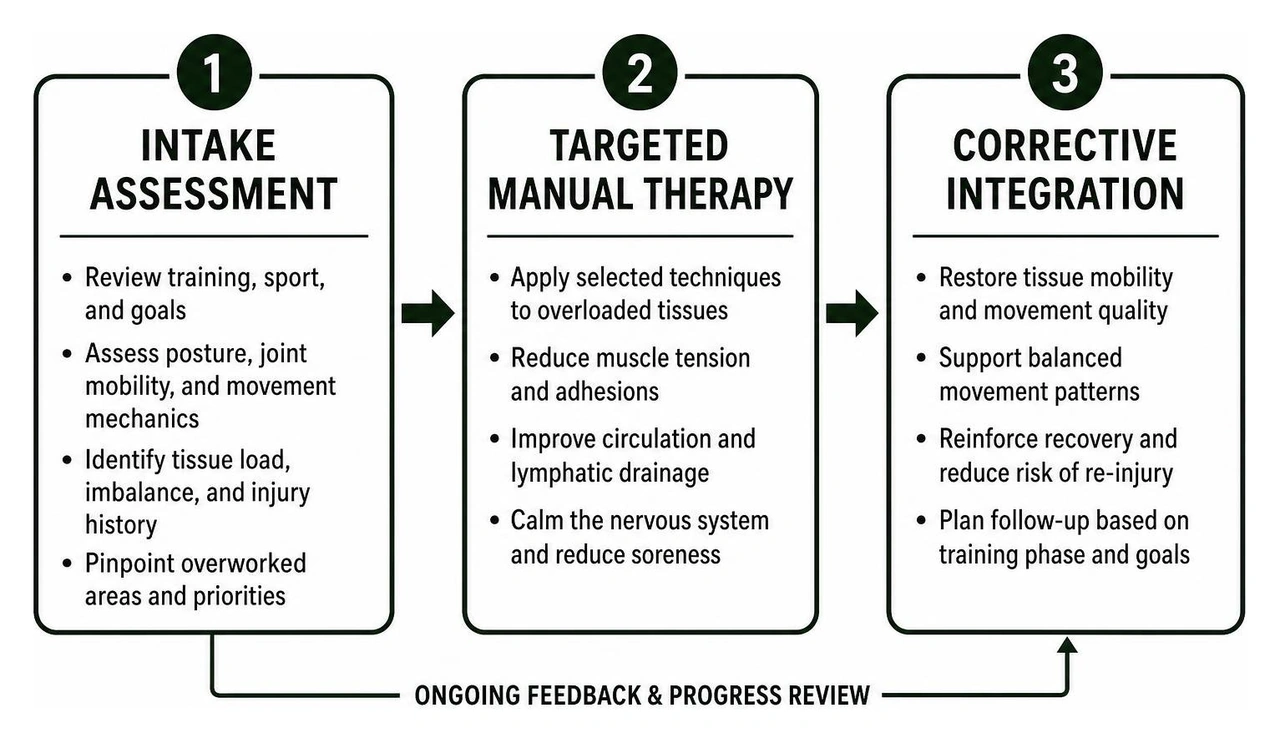
Therapists assess posture, joint mobility, and movement mechanics during an initial intake. By understanding your specific sport, training phase, and past injury history, we apply targeted pressure to overloaded areas while leaving stable stabilizers undisturbed.
What Are the Evidence-Based Benefits for Athletes and Active Individuals?
While sports massage has long been a staple in athletic training rooms, modern scientific inquiry provides a clear picture of what manual therapy does—and does not—accomplish. Athletes frequently report feeling looser, lighter, and less fatigued following bodywork.
A systematic review in Sports Medicine analyzed randomized trials involving over a thousand participants and found no statistically significant direct improvements in raw strength, jump height, sprint speed, or endurance performance. However, manual therapy consistently demonstrated notable improvements in flexibility and a meaningful reduction in delayed onset muscle soreness (DOMS).
How Can Sports Massage Help With Delayed Onset Muscle Soreness and Perceived Fatigue?
Delayed onset muscle soreness typically peaks 24 to 72 hours after unaccustomed or eccentric-heavy workouts. The systematic review on sports massage performance and recovery documented a measurable improvement in DOMS ratings among participants receiving sports massage compared with those who did not.
In real-world endurance settings, the psychological and perceptual relief is substantial. Research on post-race recovery in endurance athletes has found that soft tissue therapy can reduce perceived muscle pain and fatigue compared to passive rest, and athletes in team sports often report less post-exercise soreness when massage is integrated into their schedule. Manual therapy may also help modulate circulating creatine kinase levels—a key blood marker of muscle damage—while influencing pain signaling within the central nervous system, according to a review of massage therapy in sport. When paired with smart recovery habits like proper sleep and hydration, massage softens the uncomfortable edges of hard training cycles.

Can Sports Massage Improve Flexibility and Joint Range of Motion?
Flexibility gains are among the most consistently documented physical benefits of sports massage. The same systematic review on athletic performance found a measurable increase in joint flexibility following treatment.
A broader systematic review examining massage therapy in sport, published in Frontiers in Physiology, confirmed that while massage rarely alters immediate explosive power, it regularly increases tissue compliance and range of motion. In field tests with collegiate hockey players, targeted manual work significantly increased hamstring length compared to passive resting controls.
Mechanically, hands-on pressure stretches shortened fascial envelopes and frees restrictions between adjacent muscle layers. This improved sliding capacity allows joints to move through their full active ranges without compensatory movement patterns. For athletes looking to build on these gains, mobility training can further support tissue elasticity and joint kinematics between sessions.
When Should You Schedule a Session Around Training?
Timing your bodywork around your training calendar ensures you reap the maximum recovery benefits without compromising competition performance.
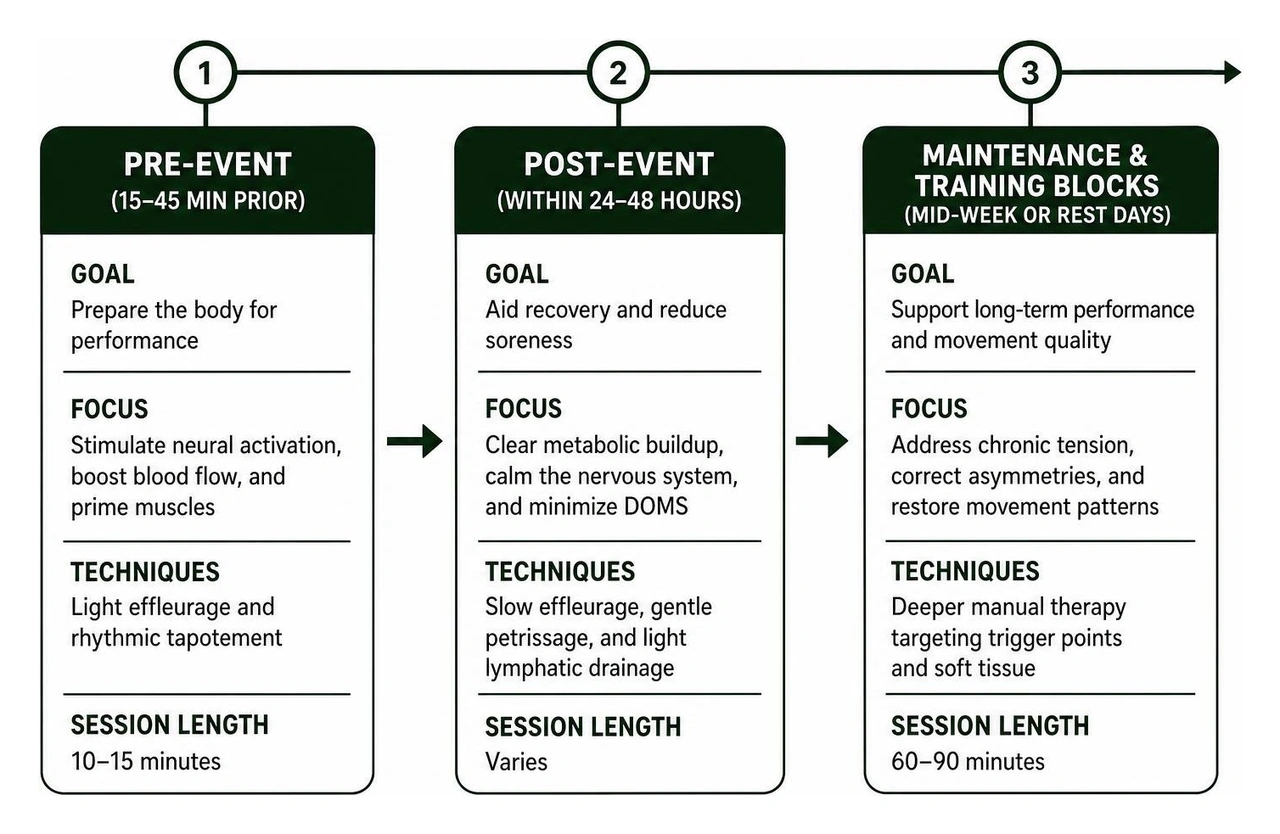
What Is the Difference Between Pre-Event and Post-Event Massage?
- Pre-Event (15–45 minutes prior): This session is brief (10–15 minutes), upbeat, and invigorating. The therapist uses light effleurage and rhythmic tapotement to stimulate neural activation, boost blood flow, and prepare muscles for rapid contraction without causing fatigue.
- Post-Event (Within 24–48 hours after): This session focuses on soothing exhausted tissues. Techniques shift toward slow effleurage, gentle petrissage, and light lymphatic drainage to clear metabolic buildup, calm down the central nervous system, and minimize DOMS.
- Maintenance & Training Blocks (Mid-week or rest days): These deeper, 60- to 90-minute sessions address chronic trigger points, correct structural asymmetries, and restore movement patterns between hard workouts.
How Can You Integrate Other Recovery Tools?
While manual therapy is exceptionally powerful, combining it with complementary technologies creates an ideal healing environment. At Transcending Health, we frequently bundle therapies into a broader recovery plan.
For example, pairing focused cryotherapy with sports massage allows us to numb acute joint inflammation before gently mobilizing surrounding soft tissues. Following up with orthopedic laser therapy or an infrared sauna session stimulates cellular ATP production and deep tissue vasodilation. Integrating these modalities with personalized corrective exercise ensures that mobility gains turn into stable, long-lasting movement patterns.
What Are the Risks, Side Effects, and Contraindications?
Sports massage is generally safe, non-invasive, and well-tolerated. However, applying deep, targeted pressure into fatigued tissues can produce mild, temporary reactions.
Common Mild Side Effects:
- Short-term soreness after massage, usually resolving within 24 to 48 hours
- Mild post-treatment fatigue or lethargy as the parasympathetic system activates
- Minor skin redness or light bruising over areas with dense fibrotic adhesions
Clinical Contraindications (When to Avoid or Modify Massage):
- Acute muscle tears, ligament ruptures, or unhealed bone fractures
- Deep vein thrombosis (DVT) or a history of blood clots
- Open wounds, active skin infections, or local burns
- Systemic fever, infectious illnesses, or acute inflammatory flare-ups
Clear communication with your practitioner is vital. If pressure feels sharp, pinchy, or causes you to tense up and hold your breath, speak up so your therapist can adjust immediately.
Frequently Asked Questions About Athletic Recovery and Bodywork
Will a targeted bodywork session cause lingering muscle soreness?
Mild tenderness lasting 24 to 48 hours is completely normal, especially after deeper trigger point release or cross-fiber friction. Staying hydrated, taking a warm Epsom salt bath, and doing light walking helps ease this temporary post-treatment response.
How frequently should runners and strength athletes receive manual therapy?
Athletes in peak training blocks generally benefit from bi-weekly or weekly sessions to manage accumulating tissue fatigue. For baseline maintenance, active individuals often find that a focused session every 3 to 4 weeks keeps movement patterns fluid and prevents minor tightness from compounding.
How do you choose a qualified practitioner for athletic recovery?
Look for a state-licensed massage therapist who possesses specialized training in sports rehabilitation, orthopedics, or biomechanics. An experienced practitioner will always perform a thorough movement assessment and adapt their pressure and techniques to your personal training goals.
Ready to optimize your training and relieve persistent muscle tightness? Book your next session through our appointment calendar at Transcending Health in Charlottesville today.