Partner Massage for Gentle Sciatica Relief
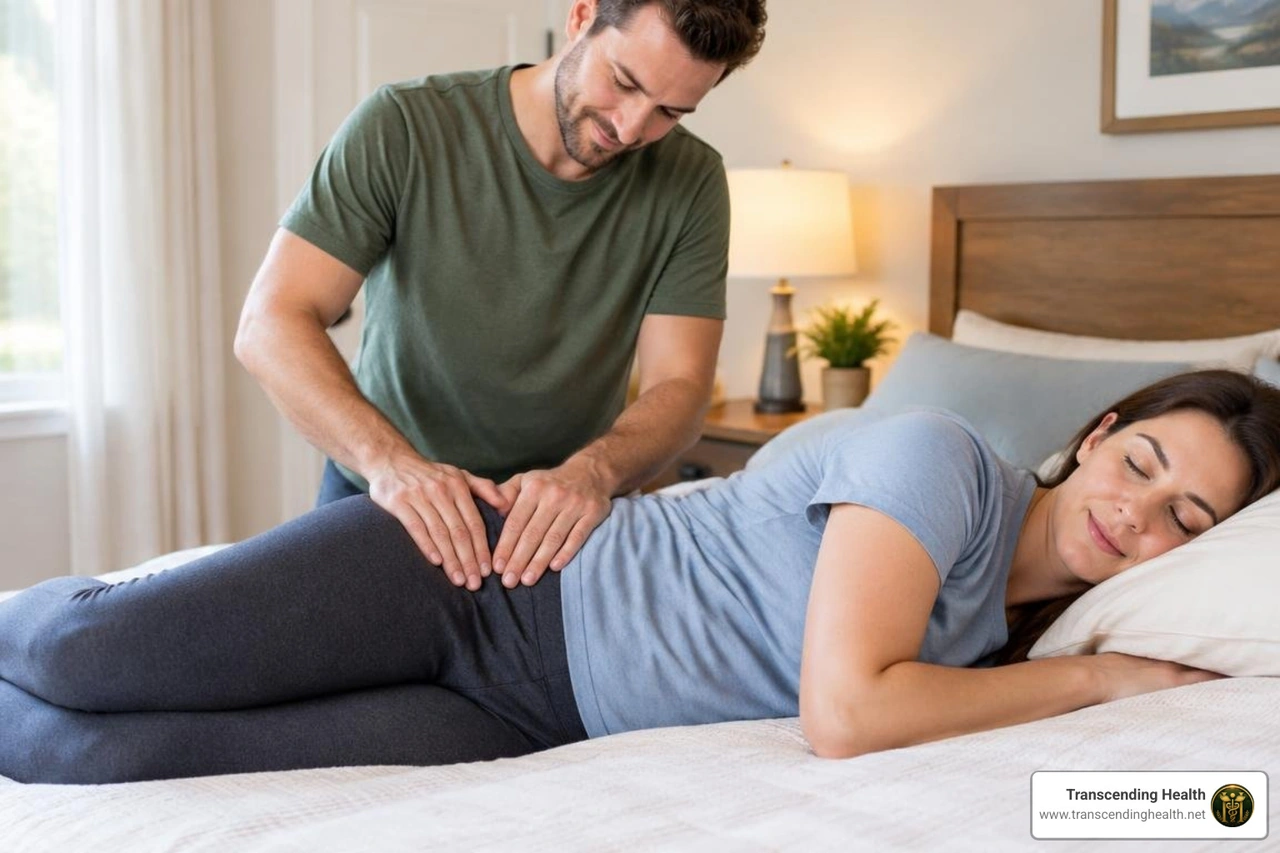
For couples sciatica relief, start with calm, light massage to the painful-side glute and outer hip, not direct pressure on the spine. Have the receiving partner lie on their side or stomach in a comfortable, supported position. Use broad palm strokes and slow circles for 2 to 5 minutes, checking in often. Stop if pain shoots down the leg, numbness increases, or the pressure feels sharp.
Sciatica can cause burning, tingling, or aching that travels from the low back into one leg. A partner cannot massage away the underlying cause, but gentle work may help relax tight glute and hip muscles that can add to discomfort. Pair it with short walks, comfortable positioning, and professional care when symptoms linger or worsen.
At Transcending Health, our integrative pain-relief and wellness clinic at 1445 Rio Road East, Suite 201, Charlottesville, VA 22901, helps Central Virginia adults improve movement with hands-on care and corrective exercise. I am Drew Edmondson, and my work in clinical massage, recovery care, and movement coaching informs this practical approach to couples sciatica relief and when to seek a more complete assessment.
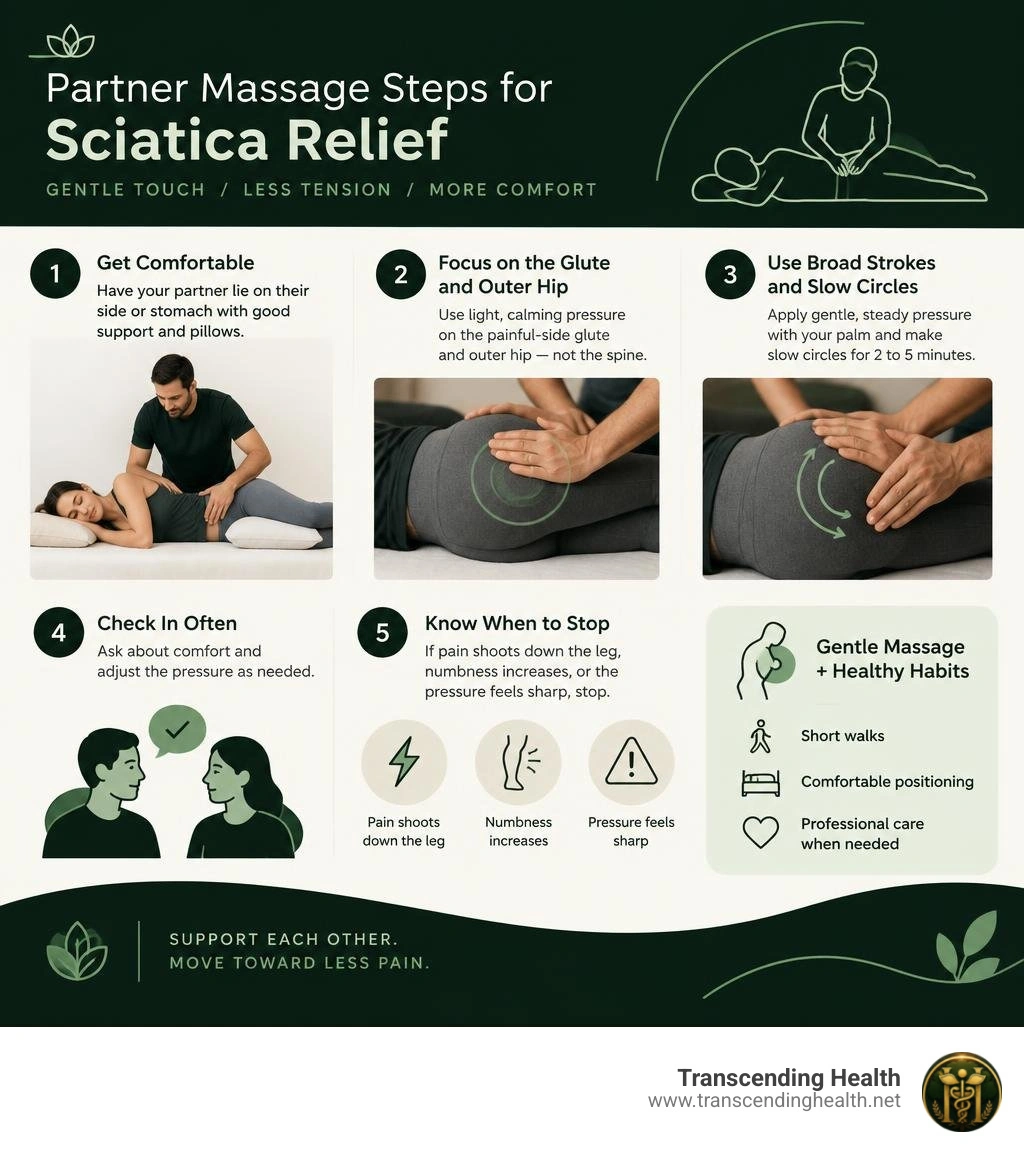
Discover more about couples sciatica relief:
Hands-On Partner Massage Techniques for Couples Sciatica Relief
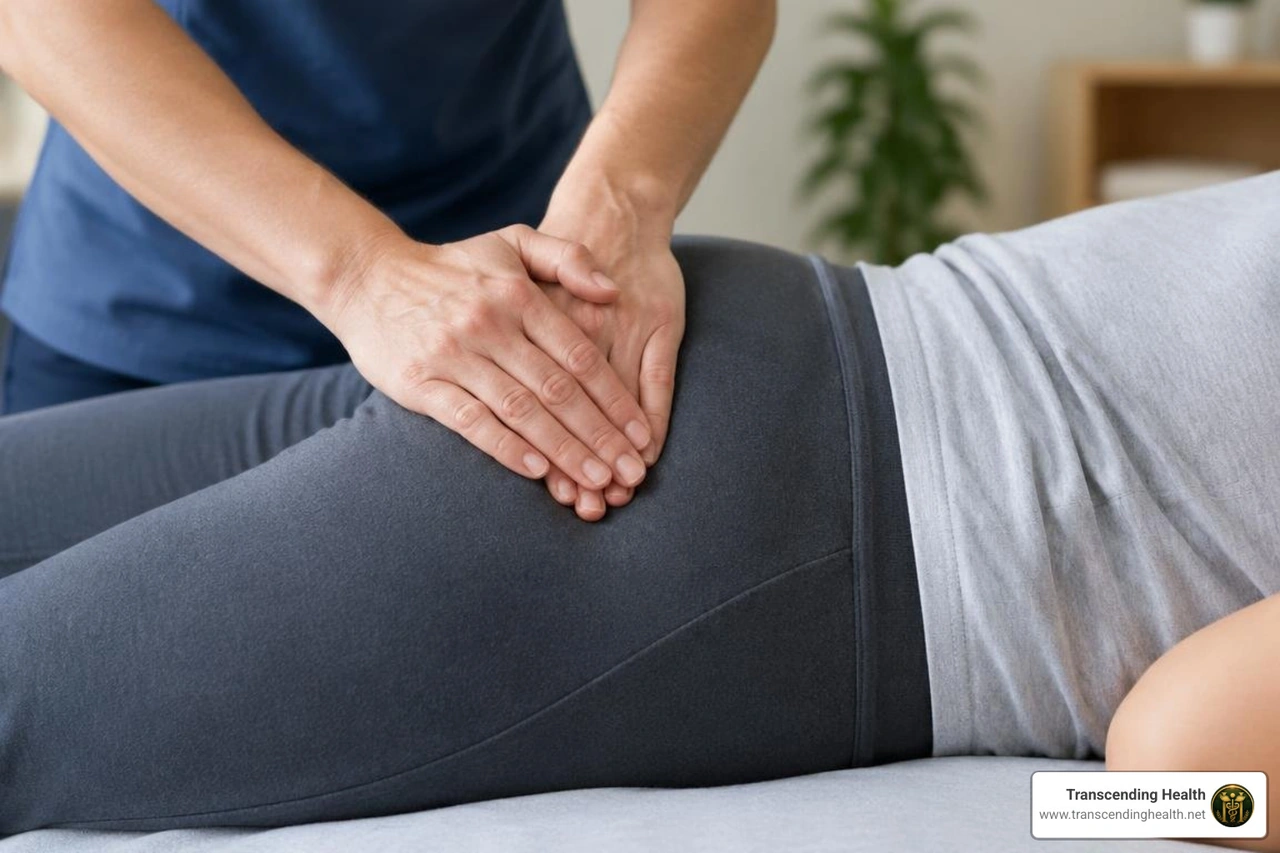
When someone experiences sciatic nerve irritation, the muscular system reflexively guards the area. Surrounding tissue—including the gluteal complex and lumbar stabilizing muscles—tightens to protect the spine, which often increases compressive forces on the nerve pathway. Partner-assisted bodywork is not meant to aggressively force tissue to relax, but rather to soothe the nervous system, downregulate muscle tone, and encourage healthy circulation.
Practicing mindful myofascial release at home relies on moderation, constant feedback, and broad contact surfaces. While at-home massage can provide fast symptomatic comfort, chronic or recurrent compression often benefits from targeted clinical massage therapy that systematically evaluates pelvic alignment and fascial strain patterns.
To begin an at-home session:
- Position for Comfort: Have your partner lie prone (on their stomach) with a pillow tucked under their hips to keep the lumbar spine flat. If lying face down aggravates their back, have them lie on their unaffected side with a pillow between their knees to keep the pelvis neutral.
- Warm the Tissue with Effleurage: Place warm hands or a small amount of massage oil on the gluteal area of the painful side. Use slow, broad palm strokes moving upward toward the lower back, avoiding direct pressure on the spine.
- Apply Palm Rolling: Use the heel of your hand to make gentle, rhythmic circular compressions over the meat of the buttocks. This warms the superficial fascia without poking or irritating deeper nerve structures.
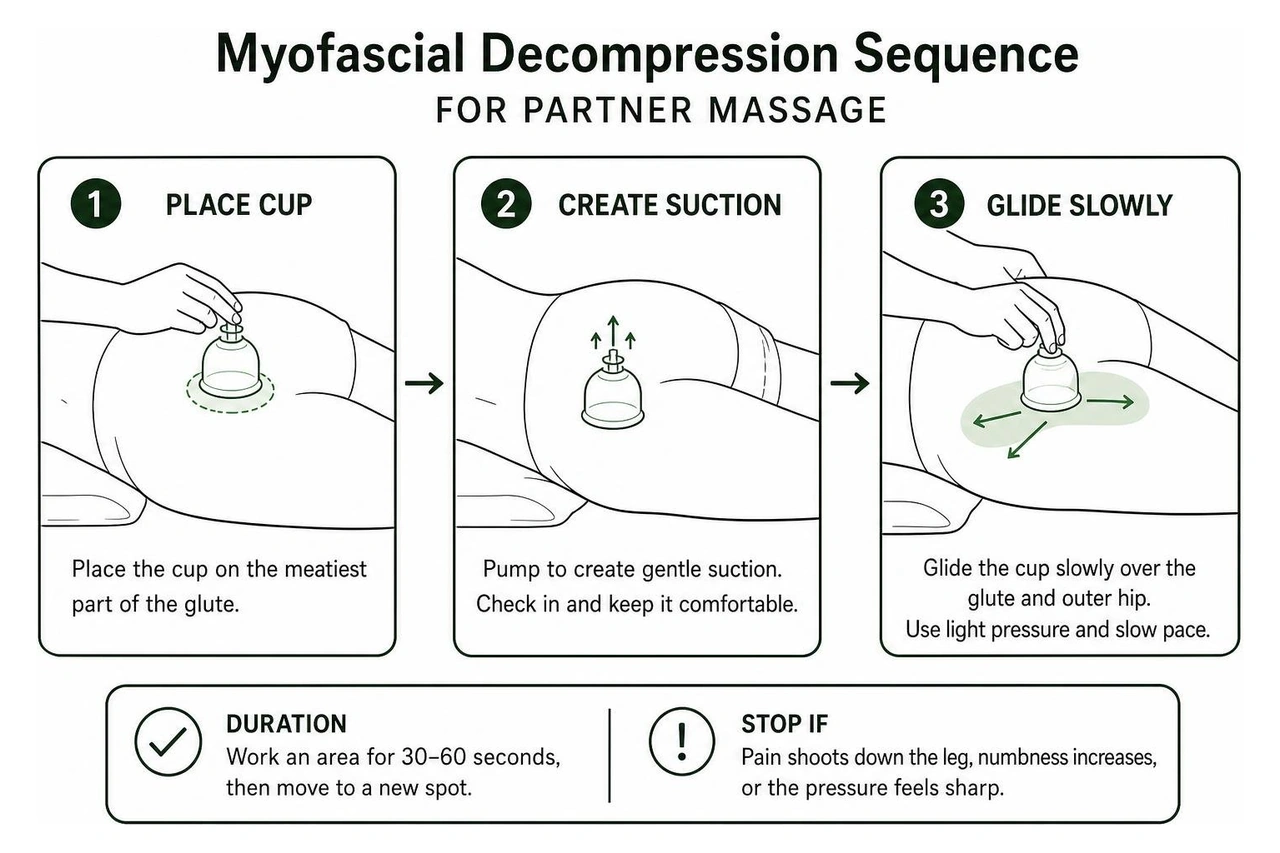
Gluteal and Piriformis Release
The piriformis muscle lies beneath the gluteus maximus, running from the sacrum to the top of the femur. Because the sciatic nerve travels directly adjacent to (and in some anatomical variations, through) this muscle, piriformis hypertonicity is a frequent contributor to radiating buttock and leg pain.
To gently release tension around the piriformis and gluteus medius:
- Locate the fleshy center of the buttock, roughly halfway between the tailbone and the bony protrusion on the side of the hip (the greater trochanter).
- Use the flat pads of your thumbs or the base of your palm to apply slow, gentle compressions. Never jab with pointed elbows or sharp fingertips.
- Make small, slow circular friction motions over tight trigger points.
- Keep communication continuous. Ask your partner to rate sensation on a scale of 1 to 10; the pressure should never exceed a comfortable 4 or 5.
- If your partner reports localized muscle soreness easing up, sustain gentle pressure for 20 to 30 seconds. If they report shooting sensations, electric shocks, or spreading numbness down the leg, release immediately.
For deeper fascial restrictions that do not yield to gentle home care, specialized clinical modalities such as deep tissue massage or Rolfing / structural integration can help rebalance structural compensations throughout the entire pelvic girdle.
Lower Back and Sacrum Compression
Direct, heavy downward force on the lumbar vertebrae can aggravate disc bulges and worsen nerve impingement. Instead, partner bodywork for the lower back should emphasize broad decompression and gentle fascial release around the sacroiliac (SI) joint and the lumbar erector muscles running parallel to the spine.
To perform safe sacral and lower back compressions:
- Stand or kneel beside your partner's hip.
- Place one flat palm on the sacrum (the flat, triangular bone at the base of the spine) with your fingers pointing toward their feet.
- Place your other hand higher up on the lower rib cage or mid-back, avoiding the lumbar curve.
- Lean your body weight gently into your palms, pressing downward and subtly separating your hands by a millimeter or two to create gentle, calming traction along the lower back.
- Hold this broad compression for 3 to 5 deep breaths, allowing your partner's exhalations to soften their lower back muscles before releasing slowly.
Complementary Home Care: Ice, Heat, and Partner-Assisted Stretching
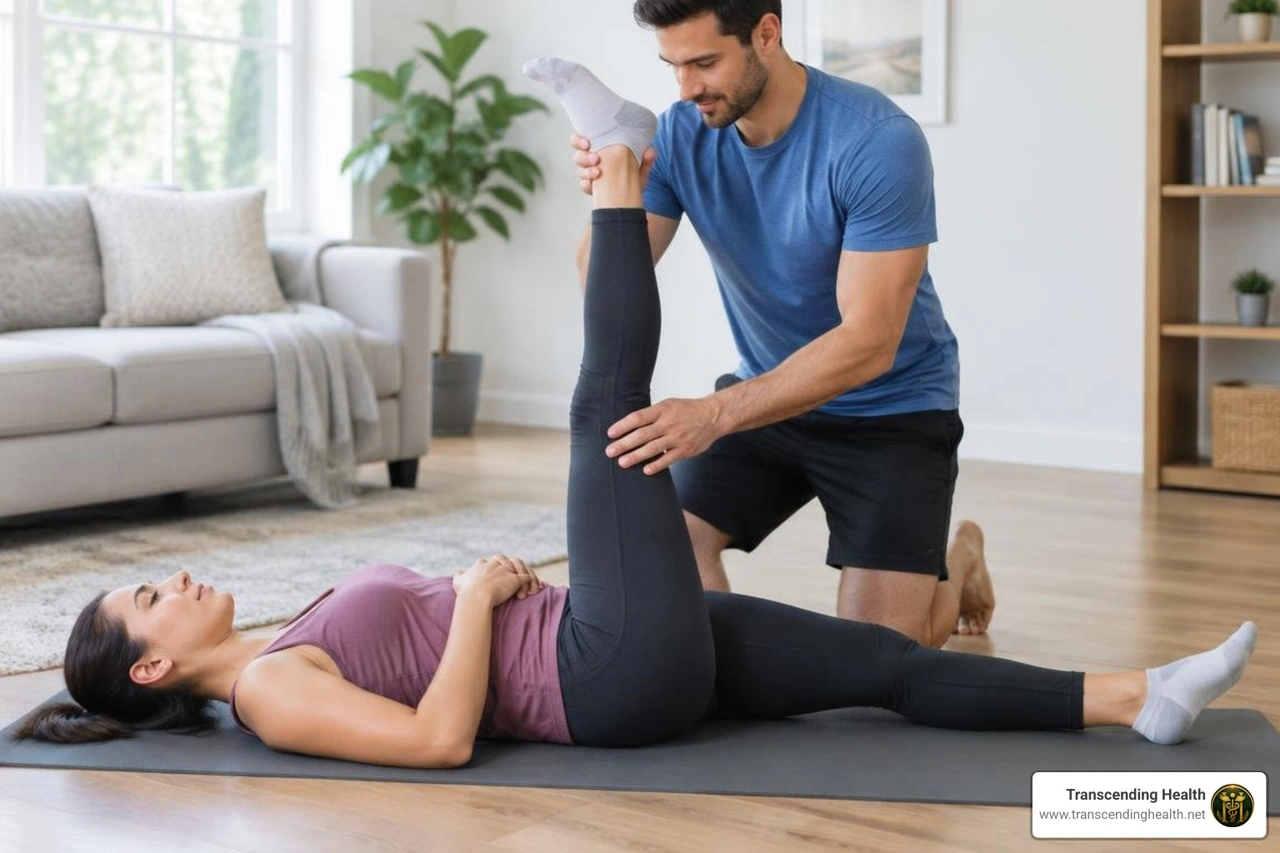
Hands-on massage works best when paired with gentle mobility work and contrast thermal therapy. Combining passive movement with temperature modulation helps calm peripheral nerve sensitivity and reduces regional inflammation.
Integrating Gentle Stretches into Couples Sciatica Relief Routines
Partner-assisted stretching utilizes passive positioning and reciprocal inhibition—where contracting or stabilizing one muscle group allows the opposing group to relax deeply without defensive guarding.
Couples can explore several safe partner-assisted stretching methods at home:
- Assisted Supine Hamstring Stretch: The recovering partner lies flat on their back. The assisting partner lifts the affected leg, supporting the heel and calf, keeping the knee soft (not locked). Slowly raise the leg until a mild, comfortable stretch is felt along the hamstring. Hold steadily for 20 to 30 seconds while the receiving partner breathes deeply.
- Supported Figure-Four Stretch: The partner on their back crosses the ankle of the affected leg over the opposite knee. The assisting partner gently supports the uncrossed leg, guiding it toward the chest to deepen the hip stretch without twisting the pelvis.
- Passive Pelvic Traction: With the partner lying on their back with knees bent and feet flat, the assisting partner can gently cup the shins just below the knees, leaning back slightly to provide mild, linear decompression to the lumbar spine.
Techniques derived from assisted modalities like Thai massage for sciatica demonstrate how rhythmic, passive body movements can lengthen tight musculature without placing active compressive strain on irritated nerve roots.
Alternating Thermal Therapy
Thermal therapy is one of the most effective, low-risk tools couples can manage together at home. When managing acute flare-ups, following structured timelines ensures safety and prevents skin irritation, as detailed in many practical caregiving strategies:
- Cold Application (First 48–72 Hours or During Sudden Spikes): Ice reduces localized inflammation and numbs sharp pain signals. Wrap a gel pack or ice bag in a thin cloth barrier and apply it to the lower back and upper glute for 15 to 20 minutes. Remove the pack for at least 20 minutes before reapplying, up to 3 to 5 times daily.
- Heat Application (Subacute and Chronic Tightness): Once the sharpest pain subsides, moist heat or a heating pad helps dilate blood vessels, wash away metabolic waste, and relax hypertonic muscles. Apply heat for 15 to 20 minutes at a time.
- Sequential Contrast: Alternating 15 minutes of ice followed an hour later by 15 minutes of warmth can provide significant relief for stubborn muscular spasms.
Maintaining Intimacy and Relationship Health During Sciatica Recovery
Sciatica affects more than just physical movement; it can disrupt emotional connection, sleep routines, and physical intimacy. Because the sciatic nerve is sensitized during a flare, routine movements that involve spinal flexion or twisting can trigger protective spasms. Open communication and biomechanical adaptations allow couples to stay close while keeping the lower spine completely supported.
Safe Intimacy and Comfort Strategies for Couples Sciatica Relief
Adjusting body alignment during physical intimacy helps avoid mechanical nerve pinching. Research into spine mechanics highlights several comfortable positioning during sciatica flares that minimize spinal load:
- Side-Lying (Spooning Technique): Both partners lie on their sides facing the same direction. Placing a pillow or high-density wedge between the knees prevents the pelvis from rotating and keeps the lumbar spine in a neutral posture. If only one leg is affected, having the symptomatic partner lie with the painful leg on top keeps the nerve slack.
- Neutral Spine with Support Wedges: Using a firm, high-density foam wedge (angled at 25 to 30 degrees) placed under the hips or lower back helps maintain pelvic tilt without requiring muscle strain.
- Avoiding Deep Lumbar Flexion: Positions that force the knees tightly toward the chest or require unsupported forward bending should be avoided during an active flare, as flexion often increases pressure on lumbar discs.
Clear Communication and Support Habits
Recovering from nerve pain requires patience from both partners. Daily habits that support recovery include:
- Establishing a Direct "Stop" Signal: Agree on a clear verbal cue to pause or shift positions immediately if pain spikes, eliminating hesitation or fear of hurting each other's feelings.
- Optimizing the Sleep Environment: Sleep quality directly impacts tissue repair. Place a supportive contour pillow between the knees for side sleeping, or place a firm pillow beneath the knees when resting on the back to flatten the lumbar spine.
- Incorporating Joint Walking Habits: Sciatica often worsens with prolonged bed rest. Taking short, gentle 10-minute walks together throughout the day promotes circulation, lubricates spinal joints, and prevents stiffness.
When to Seek Professional Care and Red Flag Symptoms
While roughly 90% of sciatica cases resolve without surgery within 4 to 6 weeks, partner care is a supportive tool, not a replacement for clinical intervention. Up to 40% of adults experience sciatic nerve irritation at some point in their lives, most commonly tracing to a herniated disc or spinal degenerative change compressing a nerve root.
If lower back and leg symptoms fail to improve after a couple of weeks of home care, scheduling a professional evaluation for low back pain treatment or hip pain treatment ensures underlying structural issues are properly addressed.
Recognizing Nerve Compression Warning Signs
Certain symptoms indicate severe or progressive neural compromise that requires prompt medical evaluation rather than home massage:
- Cauda Equina Syndrome Signs: Sudden loss of bowel or bladder control, or numbness in the groin and saddle area.
- Progressive Motor Weakness: Inability to lift the front of the foot ("foot drop"), difficulty standing on toes, or sudden buckling of the knee.
- Intractable, Worsening Pain: Severe, relentless pain that does not change with position and disrupts sleep entirely.
- Rapidly Spreading Bilateral Symptoms: Numbness, weakness, or tingling spreading rapidly down both legs simultaneously.
Partner Advocacy and Clinical Support
A partner can provide vital support during clinical visits by helping track symptom patterns, documenting triggers, and assisting with prescribed home rehabilitation protocols.
When home massage reaches its limit, comprehensive clinical care options include:
- Acoustic Wave Therapy / SoftWave / Shockwave: High-energy sound waves that stimulate cellular repair, reduce chronic inflammation, and accelerate tissue recovery around irritated nerves.
- Acupuncture: Fine-needle stimulation that modulates pain signaling, releases endogenous endorphins, and calms irritated peripheral nerves. For those exploring alternative relief, acupuncture in Charlottesville VA provides targeted neuromuscular downregulation.
- Corrective Movement and Personal Training: Restoring balanced movement patterns through targeted stabilization and personal training corrective exercise prevents future flare-ups by addressing core weakness and hip imbalances.
Consulting an experienced sciatica specialist allows couples to transition from temporary symptom management to a definitive, personalized recovery plan.
Frequently Asked Questions About Sciatica Relief for Couples
How can a partner safely massage someone experiencing a sciatica flare-up?
Focus on broad, gentle compressions across the fleshy gluteal muscles and outer hips rather than pressing directly onto the lower spine. Use the flats of the hands, maintain light to moderate pressure, and check in constantly. Stop immediately if any sensation radiates further down the leg.
Which sleeping or resting positions best support sciatica recovery together?
Side-lying with a firm pillow placed between the knees is generally the most comfortable position because it prevents pelvic rotation and keeps the spine neutral. Resting on the back with a supportive wedge or pillow under the knees also unloads pressure from the lumbar discs and sciatic nerve root.
Can partner massage and stretching cure sciatica permanently?
Partner massage and stretching help relax protective muscle spasms, improve circulation, and reduce daily discomfort, but they do not cure structural disc herniations or spinal stenosis. Permanent resolution often requires targeted corrective exercise, clinical bodywork, and lifestyle modifications to correct underlying movement dysfunctions.
Conclusion
Sciatica flare-ups can test physical comfort and emotional connection, but managing pain does not have to be a solitary challenge. By practicing gentle, safe massage techniques, incorporating assisted stretching, utilizing contrast thermal therapy, and maintaining open communication, couples can work together to ease muscle guarding and support natural recovery.
When symptoms linger, worsen, or require advanced clinical care, our team at Transcending Health in Charlottesville, VA is here to support you. We integrate hands-on bodywork, massage services in Charlottesville, acoustic wave therapy, acupuncture, and corrective exercise to resolve chronic pain at the root.
If you or your partner are struggling with persistent nerve pain, visit our clinic at 1445 Rio Road East, Suite 201, Charlottesville, VA 22901, or schedule your in-person assessment today at our appointment calendar.