
The Hidden Burden: How Chronic Migraines Impact Relationships
Couples migraine relief starts with a simple, shared game plan: recognize early warning signs, control the sensory environment, and divide responsibilities before pain peaks. When an attack begins, the supporting partner can dim lights, reduce noise, offer cold therapy and hydration, and take over urgent household tasks while the person with migraine rests in a quiet, dark space. Between attacks, couples can track triggers together, protect low-stimulus intimacy, and schedule restorative bodywork or nervous-system care as a team. These practical steps reduce guilt, prevent caregiver burnout, and keep migraine from becoming an uninvited third party in the relationship.
Chronic migraine does not simply affect the person experiencing the physical pain; it alters the emotional architecture of a relationship. When one partner retreats into a pitch-black room for hours or days at a time, the other partner is often left navigating a unique combination of helplessness, administrative overload, and emotional isolation.
Sociologists and family therapists refer to this dynamic as a form of "ambiguous loss." This occurs when a partner is physically present in the home, but their illness renders them emotionally and cognitively unavailable. Over time, the unpredictability creates a persistent baseline of stress. The landmark CaMEO (Chronic Migraine Epidemiology and Outcomes) study—which analyzed over 13,000 respondents and more than 4,000 migraineur-spouse pairs—demonstrated significant family and marital burden. In fact, between 24% and 40% of people with episodic migraine reported feeling that their spouse did not understand the true severity of their attacks.
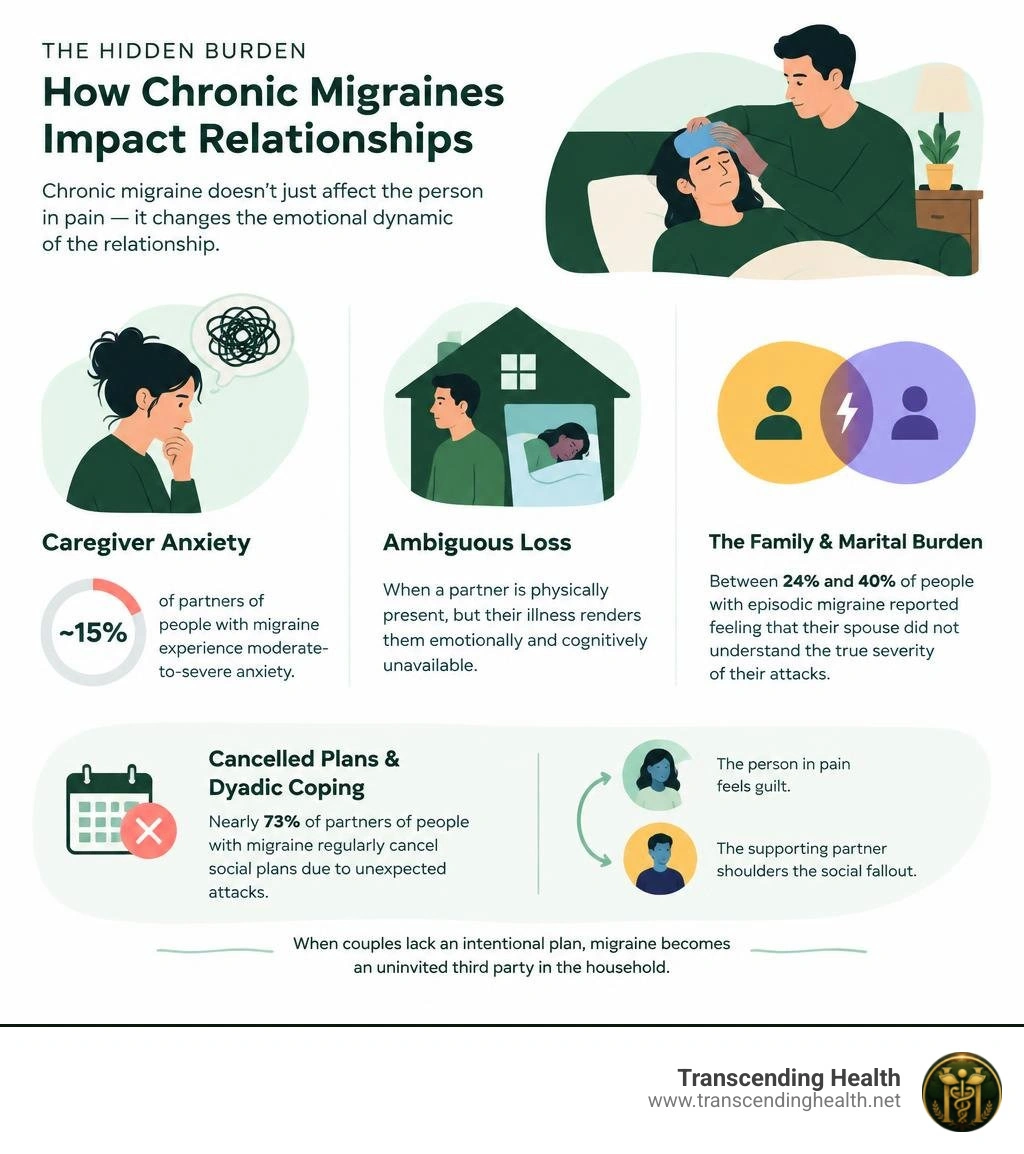
At the same time, about 15% of partners of people with migraine experience moderate-to-severe anxiety—a rate substantially higher than that of the general population. Groundbreaking research on partner burden and dyadic coping illustrates that caring for a chronically ill spouse without a shared framework often breeds unspoken resentment and caregiver burnout. When couples lack an intentional plan, migraine becomes an uninvited third party in the household.
Navigating Cancelled Plans and Dyadic Coping
One of the most immediate relational friction points is the disruption of shared social lives. Studies show that nearly 73% of partners of people with migraine regularly cancel social plans due to unexpected attacks. This repeated cancellation can trigger an exhausting cycle: the person in pain feels profound guilt, while the supporting partner shoulders the social fallout.
To survive this strain, couples must transition toward what psychologists call dyadic coping—the capacity of both partners to manage stress collaboratively rather than individually. Dyadic coping explains between 30% and 40% of the variance in relationship satisfaction for couples living with chronic health conditions.
Handling cancelled commitments becomes vastly easier when couples establish a clear, guilt-free protocol:
- Use concise, unapologetic cancellation messaging: The well partner should send short, factual updates to friends or hosts (e.g., "We won't be able to make dinner tonight after all, but let's reschedule soon!"). Avoid lengthy medical explanations that invite back-and-forth texting while your partner needs quiet.
- Pre-agree on solo attendance: Establish clear rules in advance for major social events such as weddings, family reunions, or dinner parties. Knowing that the non-migraine partner has full permission to attend alone eliminates guilt and preserves the couple's broader social network.
- Adopt proactive rescheduling: As noted in clinical insights on relationship dynamics and chronic migraine, shifting from spontaneous high-stress outings to flexible, low-stimulus dates preserves connection without setting unrealistic expectations.
Protecting Intimacy and Emotional Presence
The ripple effects of migraine on physical closeness run deep. A quarter of patients in clinical surveys report that migraine headaches have substantially changed the frequency and quality of their sexual intimacy, and roughly 5% cite migraine as a central factor in relationship breakdown or divorce. Furthermore, recent survey data on relationship strain and migraine attacks revealed that 78% of people with migraine have pushed through physical pain in an attempt to remain intimate, while 89% reported difficulty feeling emotionally present with their partner during an episode.
Navigating this delicate dynamic requires decoupling intimacy from demanding physical performance:
- Separate affection from sex: During high-risk windows or recovery days, lean into low-stimulus contact—such as resting together quietly, gentle hand-holding, or soothing foot rubs—that does not pressure the nervous system.
- Respect sensory thresholds: During an episode, even light touch on the head or neck can cause intense discomfort due to allodynia (a condition where normal sensory input is perceived as painful). Always ask before offering physical contact.
- Communicate around hormonal rhythms: Because drops in estrogen often trigger attacks for women, tracking cycle patterns together allows couples to schedule date nights and intimate time during lower-risk windows.
Practical Strategies for Couples Migraine Relief
When an acute attack strikes, teamwork must replace guesswork. Effective support relies on swift, organized intervention across the different phases of a migraine episode.
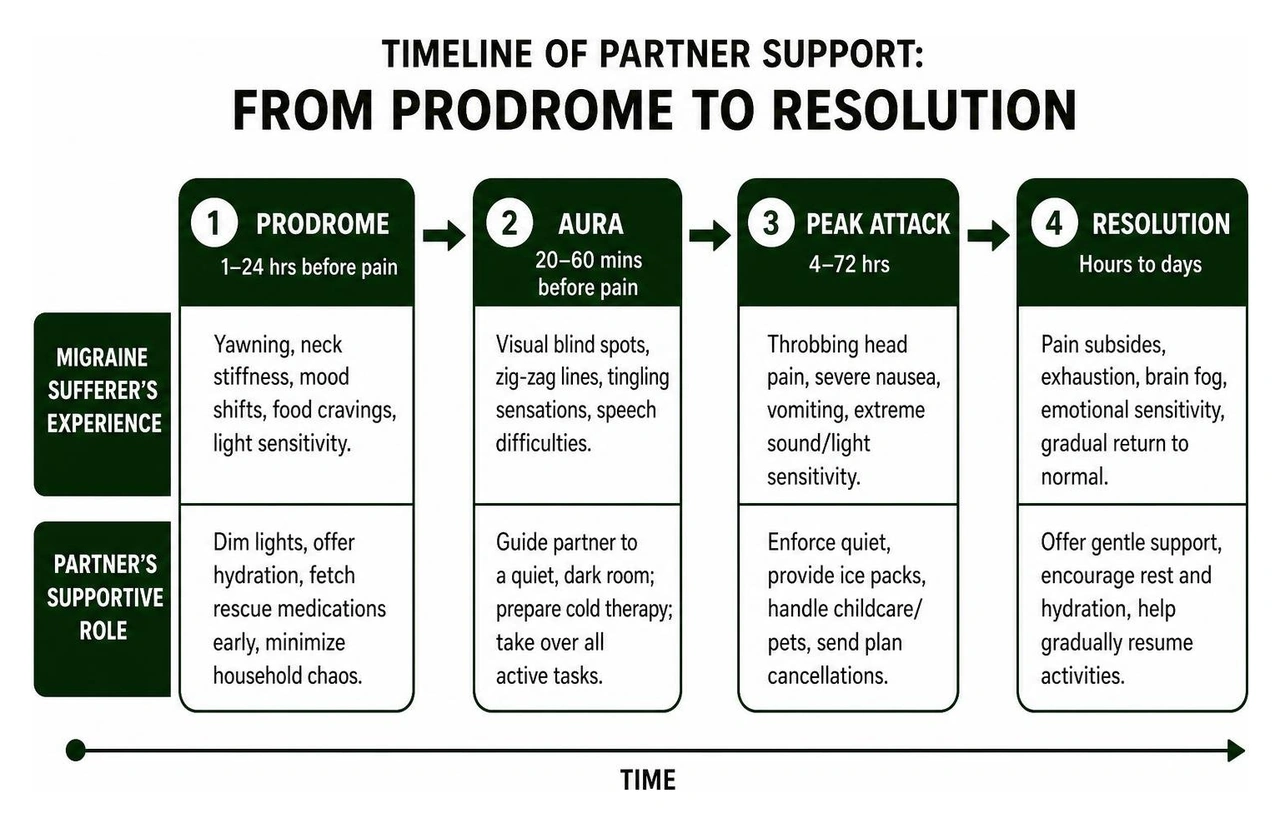
| Phase | Migraine Sufferer's Experience | Partner's Supportive Role |
|---|---|---|
| Prodrome (1–24 hrs before pain) | Yawning, neck stiffness, mood shifts, food cravings, light sensitivity | Dim lights, offer hydration, fetch rescue medications early, minimize household chaos. |
| Aura (20–60 mins before pain) | Visual blind spots, zig-zag lines, tingling sensations, speech difficulties | Guide partner to a quiet, dark room; prepare cold therapy; take over all active tasks. |
| Peak Attack (4–72 hrs) | Throbbing head pain, severe nausea, vomiting, extreme sound/light sensitivity | Enforce quiet, provide ice packs, handle childcare/pets, send plan cancellations. |
| Postdrome ("Migraine Hangover") | Brain fog, exhaustion, muscle aches, mild head tenderness | Provide nourishing, light meals; offer electrolyte drinks; allow unhurried recovery. |
Immediate In-Attack Comfort and Sensory Control
During an acute episode, the supporting partner can serve as an invaluable "task rabbit," managing the surrounding environment to prevent sensory overload. The central nervous system of someone having a migraine is in a state of hyperexcitability; external stimuli directly amplify their physical suffering.
Key environmental adjustments include:
- Total light restriction: Draw blackout shades and turn off overhead lighting. Even small indicator lights on electronics should be covered or turned away.
- Sound dampening: Move active children or pets to another area of the home, keep doors closed, and use white noise machines outside the bedroom door if necessary.
- Scent elimination: Extinguish scented candles, avoid cooking pungent foods, and refrain from wearing perfumes, colognes, or strongly scented body lotions.
- Targeted physical comforts: Keep a dedicated kit readily accessible with gel cooling caps, a soft weighted eye mask, insulated ice water, and electrolyte packets.
Following structured, evidence-based caregiver guidance for chronic migraine allows the supporting spouse to act decisively without hovering or demanding executive decisions from a partner whose brain is struggling to process information.
Essential Non-Medication Protocols for Couples Migraine Relief
Alongside clinician-prescribed abortive medications, partner-assisted non-pharmacological techniques can provide substantial physical comfort. A 2022 systematic review demonstrated that targeted cold therapy applied to the neck or forehead can significantly reduce vascular throbbing and blunt migraine pain signals within 30 minutes.
Partners can safely administer several comfort-focused modalities together:
- Guided diaphragmatic breathing: When pain spikes, anxiety naturally follows. Lying side-by-side while the supporting partner softly guides slow, paced breathing (four seconds in, six seconds out) helps down-regulate the sympathetic "fight-or-flight" response. Learning the power of slowing down for nervous system healing creates an internal environment where chronic muscular tension can release.
- Acupressure for nausea and tension: Gently applying firm, circular pressure to the Large Intestine 4 (LI4) point—located in the webbing between the thumb and index finger—or the Pericardium 6 (P6) point on the inner wrist can assist in easing head pressure and systemic nausea.
- Suboccipital cooling and gentle traction: Placing a flexible ice pack at the base of the skull while lightly cradling the neck helps soothe irritated occipital nerves.
- Integrative breath practices: Incorporating structured breathwork and meditation therapy into your regular weekly routine builds shared resilience, training both partners to shift out of physiological fight-or-flight states.
Collaborative Prevention and Professional Wellness Therapies

While acute management is critical, the long-term goal of couples migraine relief is decreasing the frequency and severity of attacks through collaborative lifestyle habits and integrative wellness therapies.
A joint approach to prevention includes:
- Shared trigger tracking: Maintain a unified journal (using a smartphone app or a simple kitchen calendar) noting sleep disruptions, skipped meals, weather shifts, and dietary triggers. A consistent record provides valuable data for your medical providers.
- Sleep and meal synchronization: Maintaining consistent sleep-wake cycles and balanced meal times stabilizes metabolic and circadian rhythms, which are notorious migraine triggers.
- Nutritional and biochemical considerations: Research indicates that cellular energy pathways and nutrient balances—including adequate magnesium, riboflavin, and healthy methylation cycles—play substantial roles in neurological function. Disrupted methylation, which regulates neurotransmitter synthesis and detoxification, can heighten pain vulnerability.
For Central Virginia residents seeking hands-on, non-pharmacologic clinical support, exploring structured headache and migraine relief in Charlottesville provides an evidence-informed path to sustainable physical relief.
Integrative Bodywork and Nervous System Regulation
Chronic physical strain in the upper back, shoulders, and suboccipital region often acts as a major contributing factor for both tension headaches and migraine episodes. A 2024 clinical study revealed that structured massage therapy reduced average migraine pain scores from 7.2 to 3.5 on a 10-point scale over a four-week period.
At Transcending Health, we utilize an integrated, whole-person approach to address somatic tension patterns:
- Targeted Soft Tissue Release: Applying specialized neuromuscular techniques and Rolfing / structural integration helps unwind deep-seated fascial restrictions through the cervical spine and thoracic outlet. When combined with advanced modalities like SoftWave therapy (also known as acoustic wave therapy or shockwave), these sessions promote local microcirculation and tissue restoration.
- Autonomic Decompression: Targeted nervous system regulation sessions help recalibrate an overstimulated vagal nerve, shifting the body out of hyperarousal into deep parasympathetic rest.
- Acupuncture & Meridians: Decades of clinical literature support the healing benefits of acupuncture for moderating pain pathways, releasing neurochemical blockages, and reducing attack frequency.
- Therapeutic Bodywork: Receiving regular, clinical massage therapy for pain relief alleviates myofascial trigger points in the trapezius and levator scapulae muscles that frequently refer pain upward into the skull.
Exploring In-Clinic Couples Migraine Relief and Care Plans
Preventative wellness does not have to be an individual endeavor. Couples can attend shared wellness and recovery sessions to decompress together, manage collective life stress, and support mutual restorative health.
Integrating in-person modalities creates a comprehensive recovery ecosystem:
- Vibroacoustic Resonance: Immersive sound healing therapy utilizes therapeutic sound frequencies and vibrational beds to lower physiological stress markers and induce restorative brainwave states.
- Clinical Acupuncture: Incorporating acupuncture for natural pain relief assists in regulating central sensory processing systems, decreasing systemic inflammation, and supporting hormonal balance.
- Stress-Mitigating Bodywork: Scheduling regular relaxation massage therapy allows both the migraine sufferer and the supportive caregiver to release chronic physical strain and reset their baseline stress levels.
Preventing Caregiver Burnout and Resentment
One of the least discussed aspects of chronic illness within a relationship is the emotional fatigue experienced by the supporting partner. Witnessing someone you love endure intense physical pain is neurologically taxing. Brain imaging research demonstrates that observing a romantic partner in pain activates the exact same affective pain matrices within the observer’s own brain.
Over months and years, this empathetic distress can lead to compassion fatigue, anxiety, and silent frustration. To maintain a resilient relationship, couples must build healthy emotional boundaries:
- Externalize the migraine as a shared adversary: In narrative therapy, externalization means separating the medical condition from the person. Couples often benefit from naming the migraine (e.g., calling it "The Monster," "The Fog," or "Gerald"). When an attack forces a cancellation, you are not frustrated with your partner; both of you are frustrated with the migraine. This simple linguistic shift eliminates personal blame.
- Use humor as a coping valve: While migraine is debilitating, finding moments of gentle, shared humor can diffuse tension. Lighthearted jokes about sensory sensitivities or unexpected schedule pivots help take power away from the disease.
- Maintain separate hobbies and identities: The caregiver must not forfeit their entire personal life. Maintaining individual fitness routines, social connections, and creative outlets protects emotional reserves and prevents caregiver burnout.
- Voice resentment in safe spaces: Experiencing occasional feelings of frustration or unfairness is entirely normal. These feelings should be processed openly with a counselor, trusted friend, or support group rather than left to simmer inside the domestic dynamic.
Frequently Asked Questions About Couples Migraine Relief
What is the most effective way to help a partner during an acute migraine attack?
The single most effective strategy is early intervention combined with proactive environmental control. As soon as prodromal warning signs or aura appear, help your partner access their clinician-approved acute medications, draw the blinds, turn off household noise, fetch a cold compress or cooling cap, and provide water. Take ownership of urgent household tasks, pet care, or childcare without asking them to make administrative decisions.
How can couples maintain intimacy when migraines frequently disrupt plans?
Shift the definition of intimacy beyond spontaneous sexual activity. Focus on quiet physical closeness, low-stimulus date nights at home, and gentle affection during symptom-free intervals. Tracking menstrual and migraine patterns collaboratively allows couples to plan romantic evenings during windows when risk factors are lowest, reducing anxiety and performance pressure for both partners.
Can clinical massage and bodywork help reduce migraine frequency for both partners?
Yes. Clinical studies show that regular therapeutic massage targeting cervical, suboccipital, and shoulder musculature significantly decreases migraine frequency and intensity by reducing neuromuscular trigger points and calming the central nervous system. Receiving restorative massage therapy for stress reduction also benefits supporting partners by relieving chronic physical tension, lowering sympathetic stress responses, and restoring overall energy.
Conclusion
Living with chronic migraine presents genuine relational challenges, but it also offers an opportunity to build profound dyadic resilience. By replacing confusion and guilt with a structured, compassionate game plan, couples can successfully protect their emotional closeness, minimize household disruption, and face migraine attacks as a unified team.
At Transcending Health, we believe that true recovery and pain management require a whole-person, integrated perspective. Whether you are seeking hands-on neuromuscular therapies, acupuncture, acoustic wave therapy, or restorative nervous system care in Charlottesville, VA, our clinical team is dedicated to supporting your shared wellness journey. We invite you to explore our restorative Charlottesville couples massage services and custom wellness protocols.
Ready to build your personalized pain relief and wellness plan together in Central Virginia? Schedule an in-person consultation with Drew Edmondson and our integrative clinical team by visiting our appointment booking calendar.