When stress spikes, you can't think your way calm — but you can breathe your way there. Your breath is the one part of the nervous system you can consciously control, and using it well is like having a reset button you can press anywhere, in about two minutes.
Why breathing changes your state
Slow, extended exhales activate the vagus nerve and your parasympathetic "rest and digest" system. That physically lowers heart rate, relaxes bracing muscles, and signals to your brain that the threat has passed. Fast, shallow chest breathing does the opposite — it keeps you in "go" mode. So how you breathe isn't a side effect of stress; it's a lever on it.
The technique: longer out than in
Try this: breathe in gently through your nose for a count of four, then out slowly for a count of six or more. The key is making the exhale longer than the inhale — that's what tips your system toward calm. Repeat for about two minutes, letting the belly, not just the chest, do the work. That's the whole thing. No app, no equipment, no perfect posture required.
When to use it
Use it before a stressful conversation, in traffic, between meetings, or when you notice your shoulders creeping toward your ears. It's especially useful at night, when a racing mind won't let you sleep. The more you practice in calm moments, the faster it works when you actually need it — you're training the pathway.
A tool, not a cure
Breathwork manages stress beautifully in the moment. But when tension, poor sleep, and that wired-but-tired feeling keep returning, the body often needs hands-on help to release what it's holding and reset the system underneath. Quick tools and deeper care work best together.
Three simple variations to try
- Box breathing: in for four, hold for four, out for four, hold for four. Useful when you need to focus, like before a test or a presentation.
- The physiological sigh: two short inhales through the nose, then one long, slow exhale through the mouth. Repeat two or three times when you feel a wave of stress.
- Hand-on-belly breathing: rest one hand on your chest and one on your belly. Breathe so the lower hand rises more than the upper one. This is a great way to learn belly breathing if it feels unnatural at first.
How to build the habit
The easiest way to make breathwork stick is to attach it to something you already do. Do two minutes when you sit down in your car, before you open your laptop, or after you brush your teeth at night. Start with one anchor and add more once it feels automatic. A week of short practice usually does more than one long session.
Common mistakes
- Forcing big breaths. The breath should be slow and easy, not huge. Over-breathing can make you lightheaded.
- Lifting the shoulders. Let the belly and lower ribs move instead.
- Giving up after one try. It often takes a few sessions before you feel a clear shift.
Going further with guided sessions
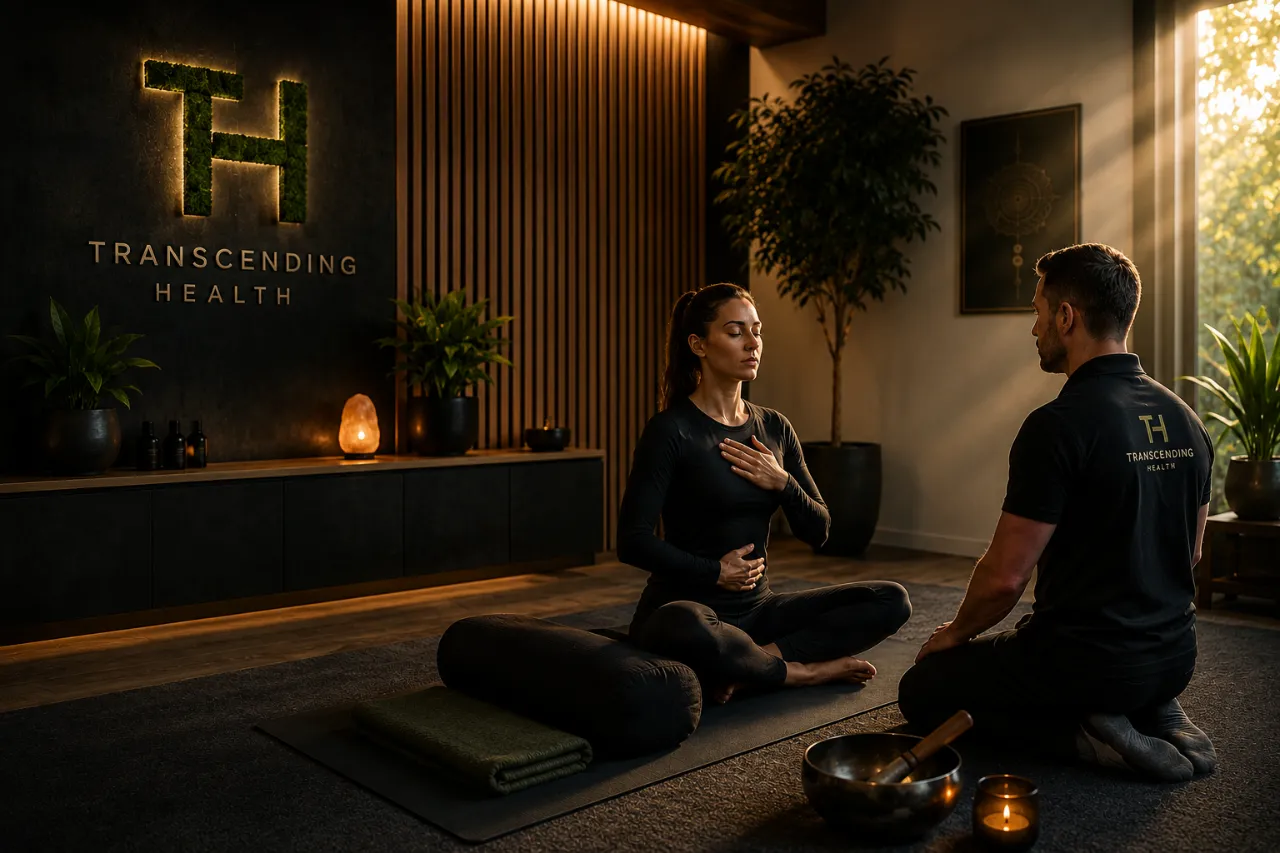
If you want help building a practice, our breathwork and meditation sessions in Charlottesville offer guided support. Some people also pair breathwork with our nervous system regulation services when stress has been high for a long time.
Frequently asked questions
Is breathwork safe for everyone?
Gentle slow breathing is safe for most people. If you feel dizzy, stop and breathe normally. If you are pregnant, have a heart or lung condition, or have a history of panic attacks, check with your doctor before trying stronger breathing techniques.
How long before I notice a difference?
Many people feel calmer within a minute or two. The bigger benefit, feeling less reactive to stress overall, usually builds over a few weeks of regular practice.
Can I do this lying down?
Yes. Lying on your back with your knees bent is a great position, especially at night.
What if my mind keeps wandering?
That is normal. When you notice your attention has drifted, gently bring it back to counting your breath. Each time you return is part of the practice, not a sign you are doing it wrong. Over time, it gets easier to stay with the breath for the full two minutes.
Ready to help your body find calm again? Explore our Wellness Program or book a first visit with our Charlottesville team.