
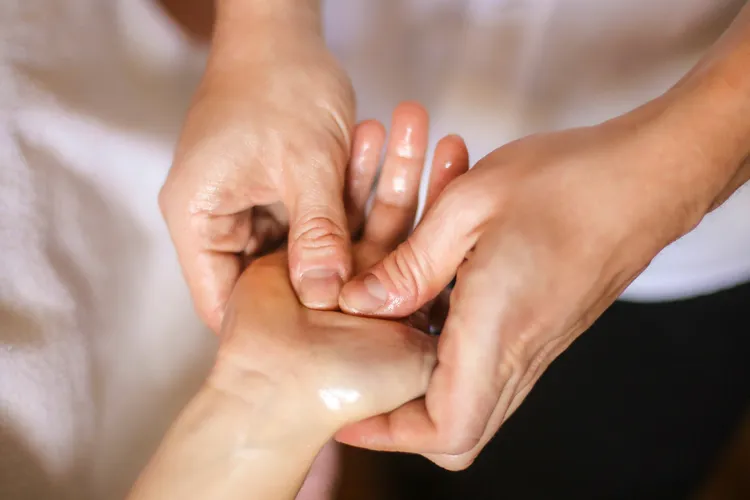
Where to Press for Hand Tension
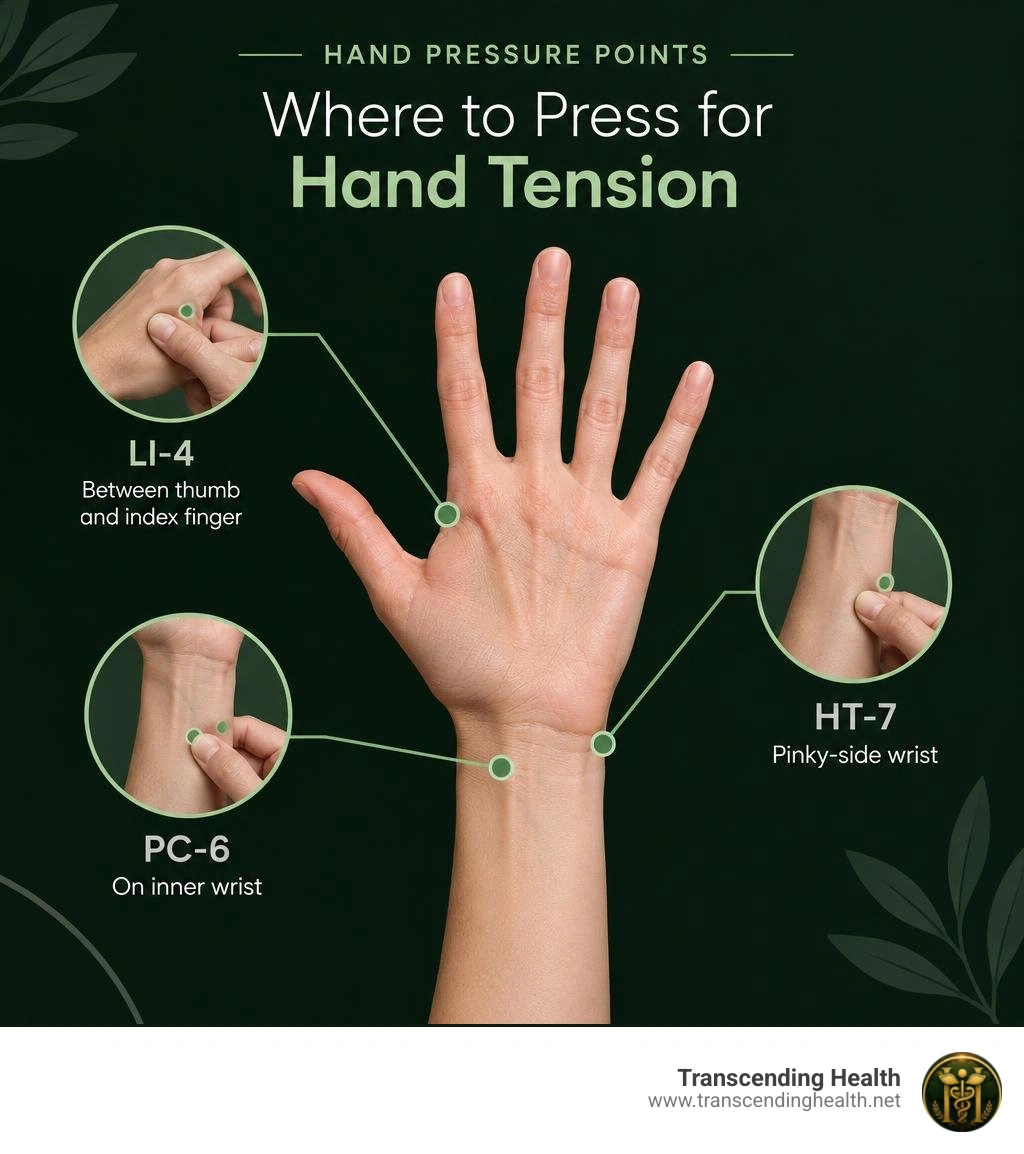
Start with the fleshy area between your thumb and index finger, on the back of your hand. Press it with your other thumb and make small circles for two to three minutes, keeping the pressure firm but comfortable. Repeat on the other hand. This spot is called LI-4, and it is commonly used for pain and headaches. Memorial Sloan Kettering Cancer Center explains how to find and use it.
Hand pressure may help you relax, but it should not feel sharply painful or replace care for ongoing hand symptoms. Below, I’ll show you where to find other useful points and when to leave a sore spot alone.
I’m Drew Edmondson, owner of Transcending Health, a human restoration and performance center at 1445 Rio Road East, Suite 201 F, Charlottesville, VA 22901. My work brings hands-on care and movement support together, and I’ll help you approach each pressure point for hand tension as one small part of that bigger picture. You can reach us at 434-465-2905 or info@transcendinghealth.net if you have questions before you begin.
What Are Hand Pressure Points and How Do They Relieve Tension?
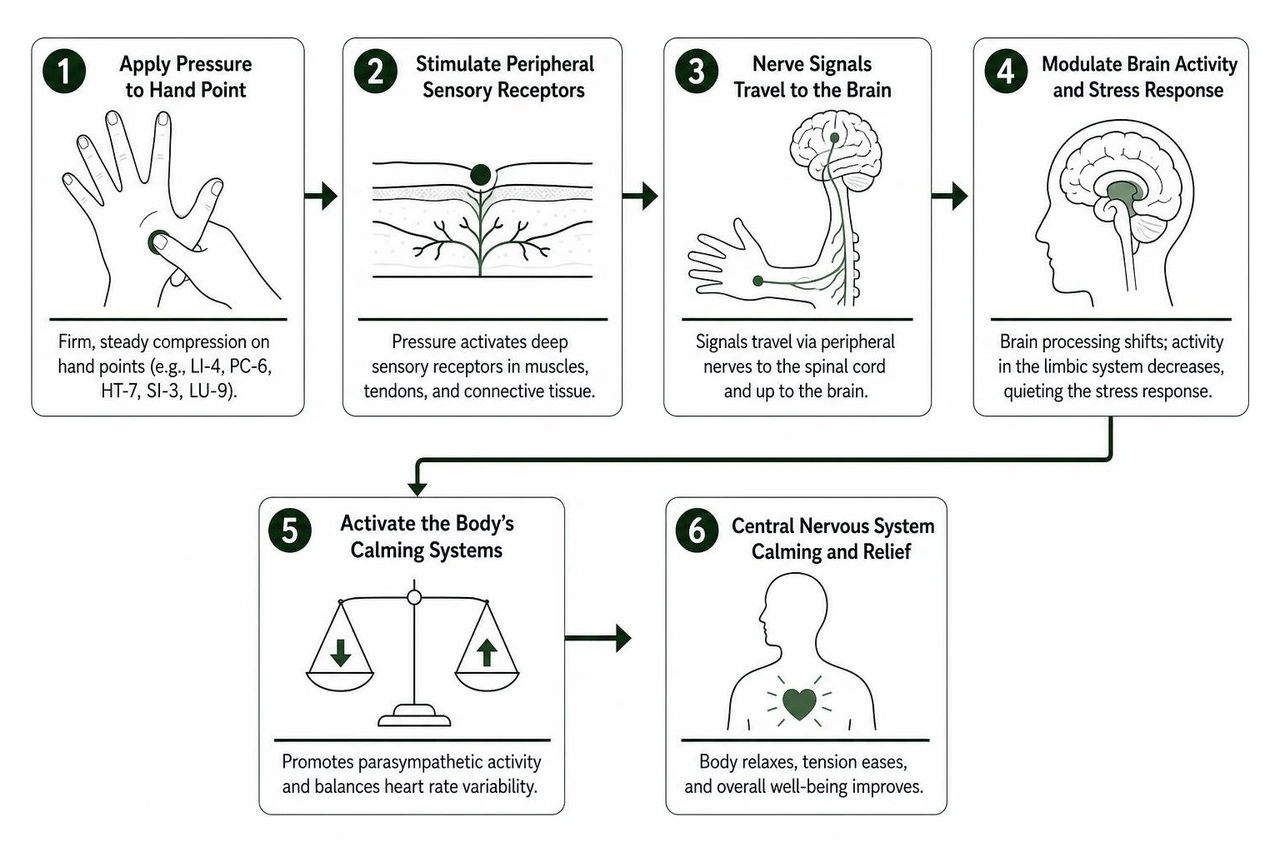
Hand pressure points are specific areas where dense networks of nerve endings, blood vessels, and connective tissue meet. When you compress these spots, you send mechanical signals through your nervous system that encourage tight muscle fibers to release and improve local circulation.
Targeting these areas activates the gate control mechanism of pain perception, interrupting dull ache signals traveling up the arm. Applying gentle, focused pressure stimulates sensory nerves that prompt your body to produce natural endorphins and shift into a calmer parasympathetic state.
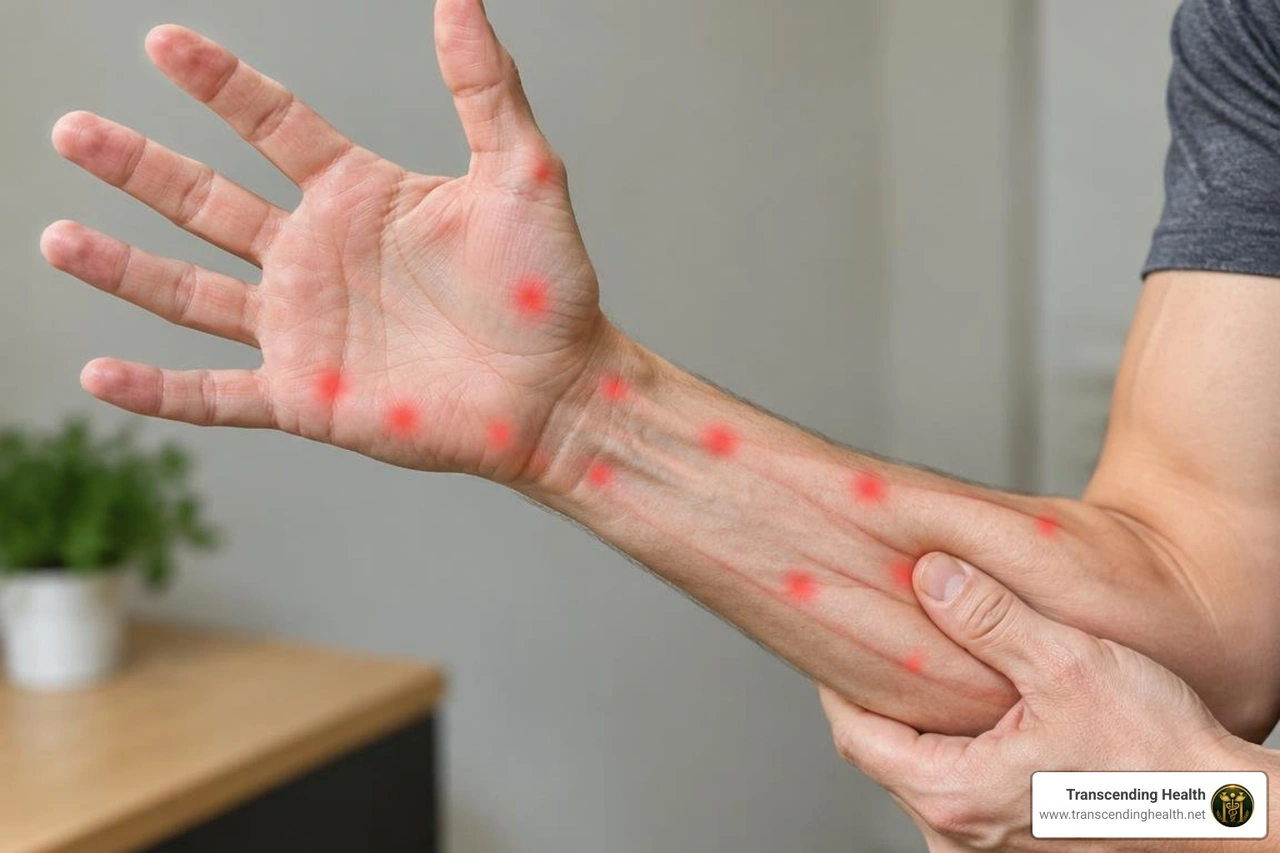
When chronic tension builds up in your hands from keyboard work or repetitive manual tasks, localized tightness can restrict blood flow and create tender knots. Integrating targeted self-care with professional massage therapy in Charlottesville helps release those stubborn restrictions and restores easy movement through your entire upper limb.
In my practice, I often see people who have spent months ignoring hand and forearm tightness. They assume it will fade on its own, but the body tends to protect a restricted area by asking neighboring muscles to work harder. That compensation pattern can travel up into the shoulder and neck. A few minutes of focused hand work can interrupt that cycle early, especially when you pair it with regular bodywork and movement.
How Do You Locate and Stimulate a Pressure Point for Hand Tension?
To stimulate a hand point safely, use the pad of your opposite thumb or your index knuckle to apply firm, steady compression without digging in your fingernails. Maintain comfortable pressure while taking slow, deep diaphragmatic breaths to help your nervous system downshift.
You can hold the spot statically or move your thumb in tiny circular motions. If you hit a tight knot, sustain the hold for 30 to 90 seconds until you feel the underlying muscle tissue soften beneath your finger.
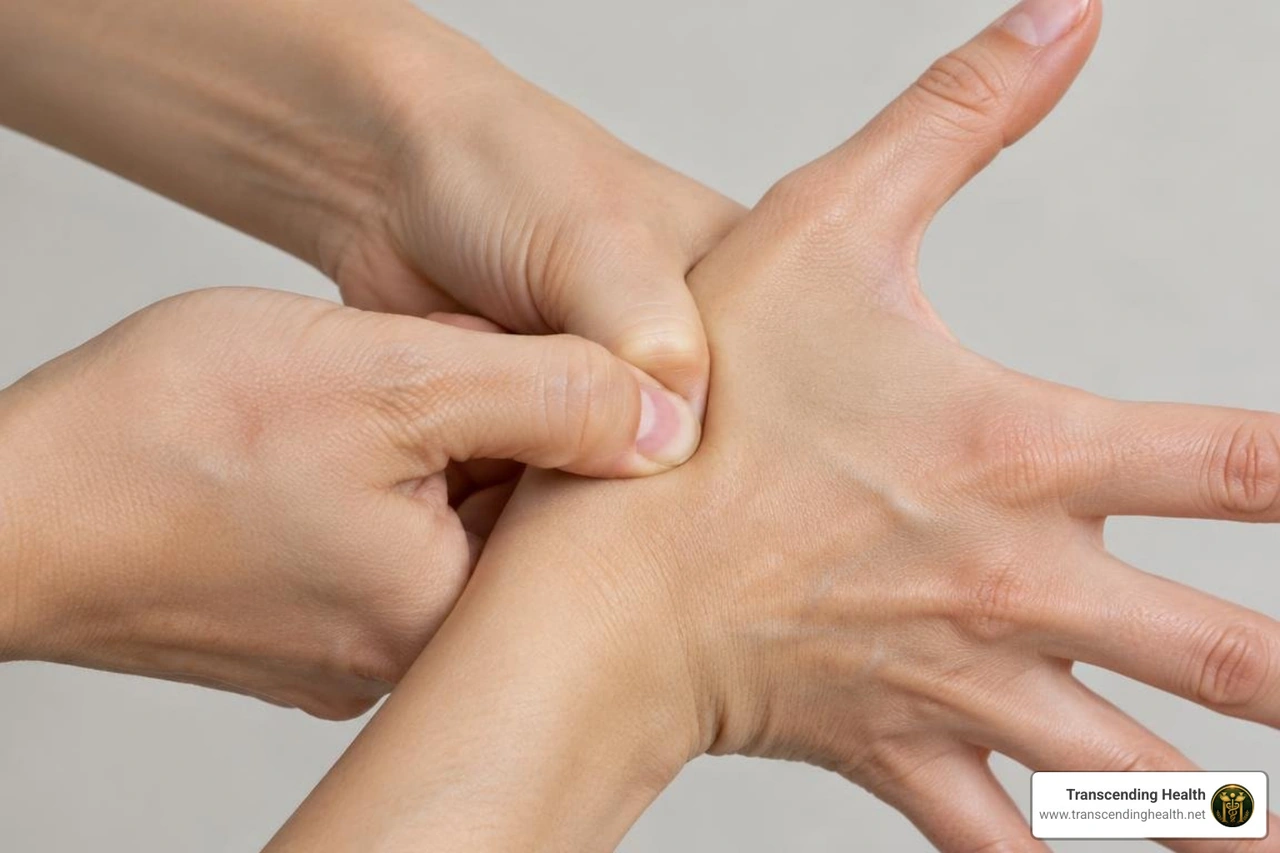
Large Intestine 4 (LI-4): The Primary Pressure Point for Hand and Headache Pain
Large Intestine 4, traditionally known as Hegu or Union Valley, sits in the muscular webbing on the back of the hand between the base of your thumb and index finger. You can find its center by gently squeezing your thumb against your index finger and locating the highest point of the muscle bulge.
This spot is widely used to relieve tension headaches, facial tightness, and stiff neck muscles. Sustained pressure here sends relaxing signals through the upper body, making it a great self-care tool when you notice yourself clenching your jaw during a demanding workday.
Pericardium 6 (PC-6) and Heart 7 (HT-7) for Calming and Circulation
Pericardium 6 (Neiguan) is located on your inner forearm, roughly three finger-widths below your wrist crease between the two prominent flexor tendons. According to MedlinePlus guidance on nausea acupressure, pressing this point helps calm nausea, reduce motion sickness, and steady an upset stomach.
Heart 7 (Shenmen) sits directly on the inner wrist crease along the pinky side, just inside the tendon. Stimulating Heart 7 helps quiet mental chatter, balance heart rate variability, and prepare your body for restful sleep after high-stress days.
Lung and Small Intestine Points for Grip Fatigue and Nerve Compression
Along the outer edge of your hand lies Small Intestine 3 (Houxi), located just below the pinky knuckle along the loose skin fold created when making a loose fist. Working this point relieves tightness caused by sustained gripping and reduces strain along the ulnar side of your wrist.
On the thumb side of the wrist crease, Lung 9 (Taiyuan) rests in the small groove right next to the radial artery. Gently pressing this area eases forearm tightness, restores grip endurance, and pairs well with focused trigger point massage to keep the forearm muscles moving freely.
If you are new to this kind of self-care, start with lighter pressure than you think you need. The goal is a deep, dull ache that feels productive, not a sharp or electric sensation. Breathe slowly through each hold, and notice whether the tissue begins to soften under your thumb. That softening is a good sign that your nervous system is responding.
How Does Science Explain the Relief from Hand Acupressure?
Modern research shows that mechanical pressure on peripheral points stimulates deep sensory receptors, altering how your brain processes pain and stress signals. Functional neuroimaging studies demonstrate that stimulating hand points like LI-4 reduces activity in the limbic system, quietening the central nervous system's stress response.
Clinical evaluations also support these calming effects across several conditions. For example, a 2022 systematic review and meta-analysis on acupressure found that acupressure is effective for mild to moderate symptoms of depression, while a 2024 meta-analysis on anxiety showed that acupressure provides instant relief from anxiety across varied clinical settings.
Choosing the Right Pressure Point for Hand Discomfort vs Full-Body Stress
When choosing where to press, distinguish between localized physical strain and broad systemic tension. Local points address tired hand muscles, while systemic points encourage full-body relaxation.
| Technique Focus | Primary Points Used | Best Used For | Mechanism of Action |
|---|---|---|---|
| Localized Hand Relief | LI-4, SI-3, LU-9 | Grip fatigue, hand stiffness, typing strain | Releases tight fascia and restores local blood flow |
| Systemic Calm & Sleep | HT-7, PC-6 | Stress overload, restlessness, mild nausea | Stimulates the vagus nerve and downshifts sympathetic tone |
| Deep Tissue Mobilization | Forearm flexor & extensor points | Chronic arm tightness, restricted range of motion | Breaks down stubborn myofascial adhesions |
If you notice chronic burning, pins and needles, or hand numbness, surface acupressure alone may not solve the underlying issue. In those situations, full-body postural work, targeted bodywork, and deeper fascial care provide lasting relief.
At Transcending Health, we often combine this kind of self-care with hands-on treatment and movement coaching. A new-client consultation typically starts with a body assessment, then we build a plan that may include massage, structural integration, corrective exercise, and recovery tools like SoftWave or focused cryotherapy. That broader approach matters because hand tension rarely exists in isolation.
What Safety Precautions and Contraindications Should You Know?
While hand acupressure is gentle and safe for most people, certain precautions apply. Avoid strong pressure on LI-4 if you are pregnant, as traditional guidelines suggest deep stimulation of this point can encourage uterine contractions.
Never apply pressure over open wounds, rashes, bruises, or inflamed skin. If you have been diagnosed with advanced carpal tunnel syndrome, avoid pressing heavily on the central wrist crease where the median nerve is compressed.
Complex hand conditions require specialized medical guidance. For instance, Complex Regional Pain Syndrome (CRPS) affects between 5 and 26 new cases per 100,000 people annually in Europe and North America, with limb fractures accounting for 40% of cases and women between ages 30 and 60 most affected at a 3-to-1 ratio. In cases involving severe hypersensitivity or nerve trauma, always partner with your healthcare team before beginning manual self-care.
If you take blood thinners or have a condition that makes you bruise easily, use a lighter touch and shorter holds. The same applies if you have peripheral neuropathy that reduces sensation in your hands; you may not feel when pressure becomes too intense. When in doubt, work with a practitioner who can guide you through safe pressure levels and help you understand what you are feeling.
Frequently Asked Questions About Hand Pressure Points
How long should I hold a hand pressure point for optimal relief?
Hold each point with steady, comfortable pressure for 30 to 90 seconds while breathing slowly. You can repeat the sequence two to three times per session across both hands.
Can working hand pressure points help with carpal tunnel symptoms?
Gentle pressure on surrounding forearm muscles and points like PC-6 can relieve muscular tension around the wrist, but you should avoid hard compression directly over the median nerve if your wrist is inflamed.
What is the difference between hand acupressure and hand reflexology?
Acupressure focuses on specific points along traditional meridian lines and muscular trigger zones to release local and systemic tension, whereas hand reflexology maps zones of the hand to corresponding internal organs and body systems.
Conclusion
Working hand pressure points gives you a simple, practical way to release daily tension, ease headaches, and support your nervous system wherever you are. To get the best results, treat these self-care techniques as one part of a comprehensive recovery routine that includes healthy posture, mobility work, and regular bodywork.
At Transcending Health in Charlottesville, we help you uncover the root causes of chronic pain and tension through personalized body assessments, hands-on therapies, and advanced recovery tools. When you are ready to relieve persistent hand, arm, or neck tightness, you can book your session on our appointment calendar to build a custom restoration plan with our team.