
Massage for Pain Between the Shoulder Blades: A Safe Place to Start
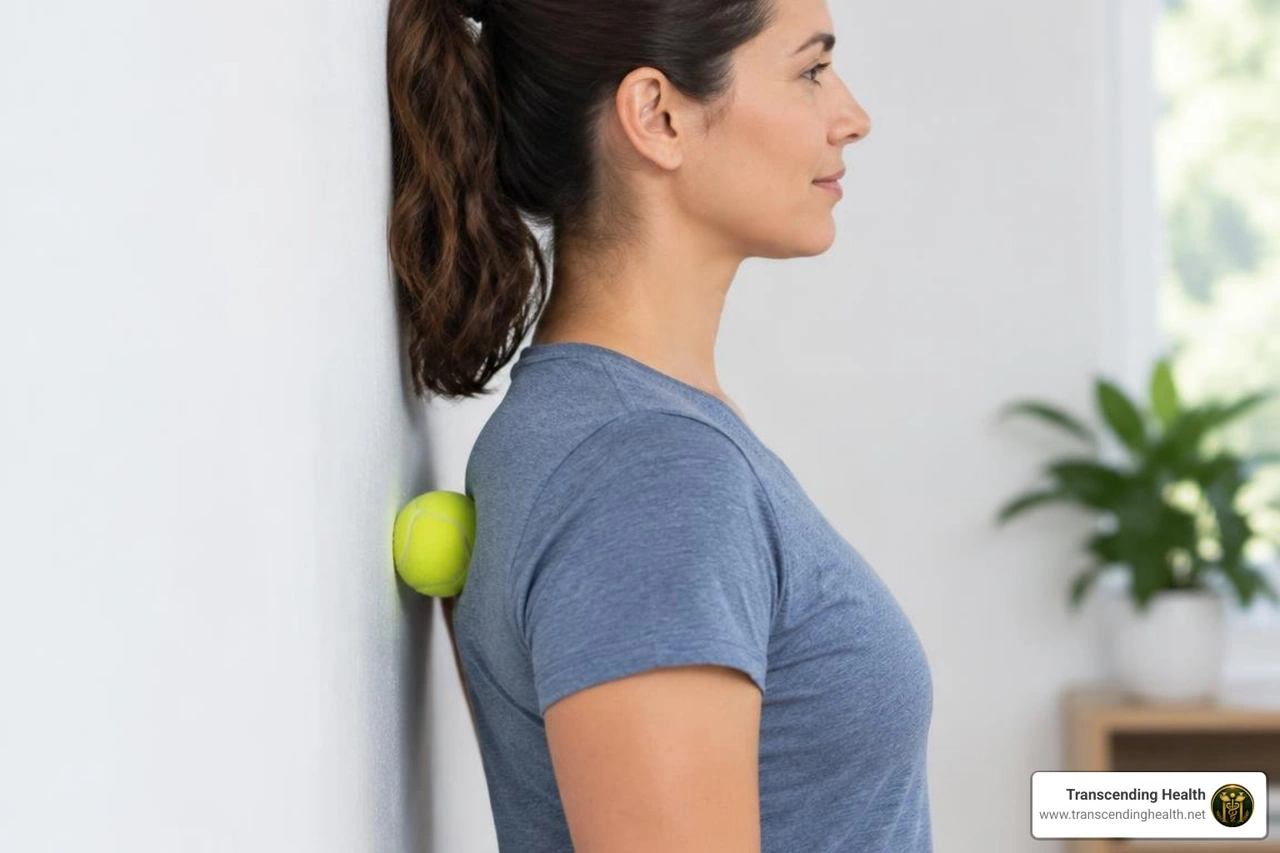
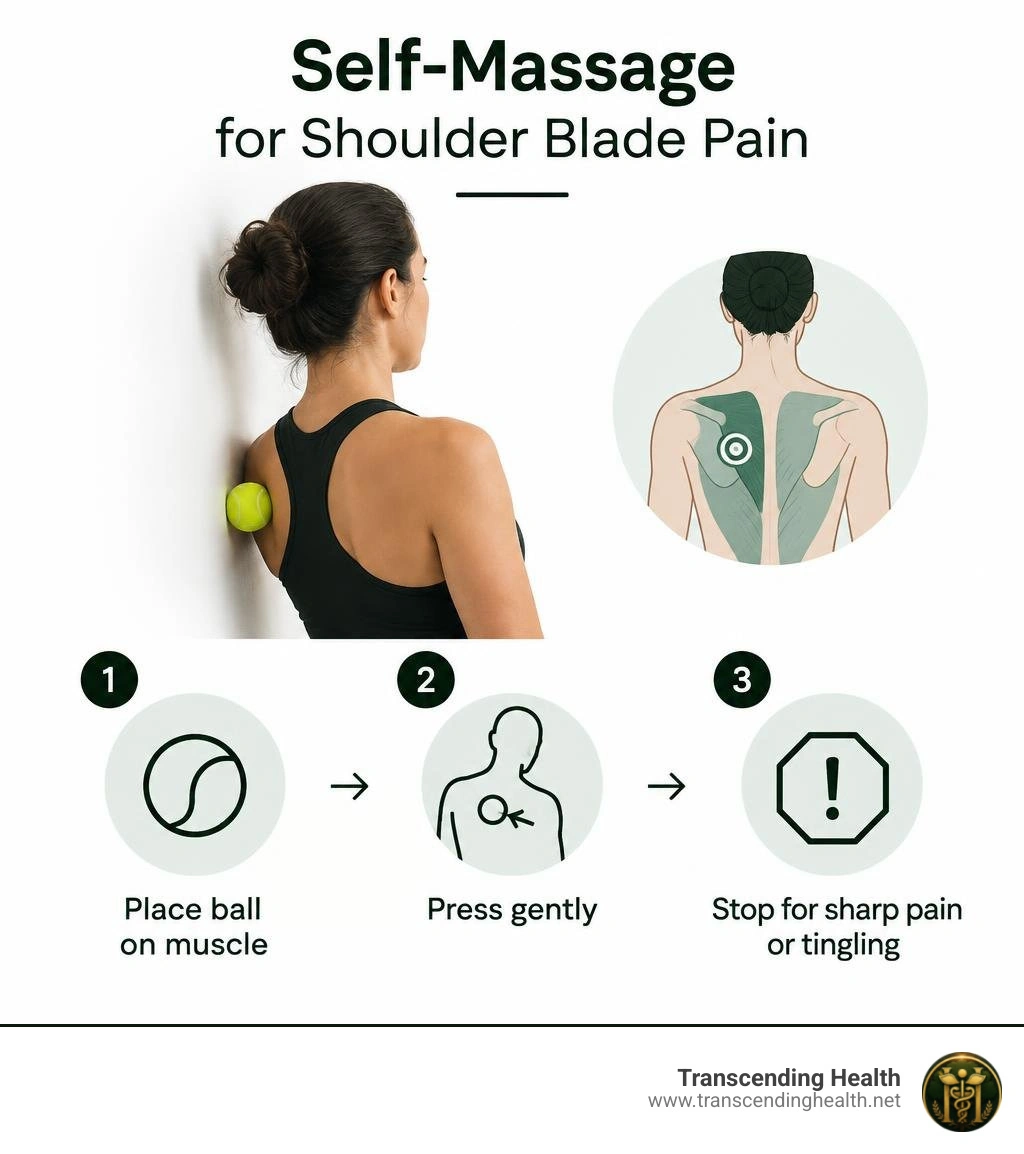
A simple way to try massage for pain between shoulder blades is to place a tennis ball between your upper back and a wall. Lean gently into a tender muscle beside your spine or shoulder blade, pause, then move to another spot. Keep the pressure comfortable. Stop if you feel sharp pain, tingling, or numbness.
Muscle tension from long periods of sitting, stress, or repeated movement can contribute to this ache. Massage may ease it, but lasting relief may also call for changes in how you move and use your shoulders.
I'm Drew Edmondson, owner of Transcending Health at 1445 Rio Road East, Suite 201 F, Charlottesville, VA 22901. My work connects massage for pain between shoulder blades with hands-on care and corrective exercise, so the steps below cover both relief and prevention.
Why Does Pain Develop Between the Shoulder Blades?
Upper back tightness rarely happens without a reason. When dull, burning discomfort sets in between your shoulder blades, it is usually tied to sustained postural strain or myofascial trigger points in the surrounding musculature. According to the Mayo Clinic overview of myofascial pain syndrome, repetitive motions or chronic muscle contraction can cause hyperirritable spots to form within taut bands of muscle tissue.
When these fibers stay contracted, localized circulation slows down, metabolic waste products build up, and tissues become sensitive to everyday movement. This creates a cycle where muscles guard themselves by tightening further, producing that familiar, heavy ache across the upper back.
Which Muscles Cause Upper Back Knots?
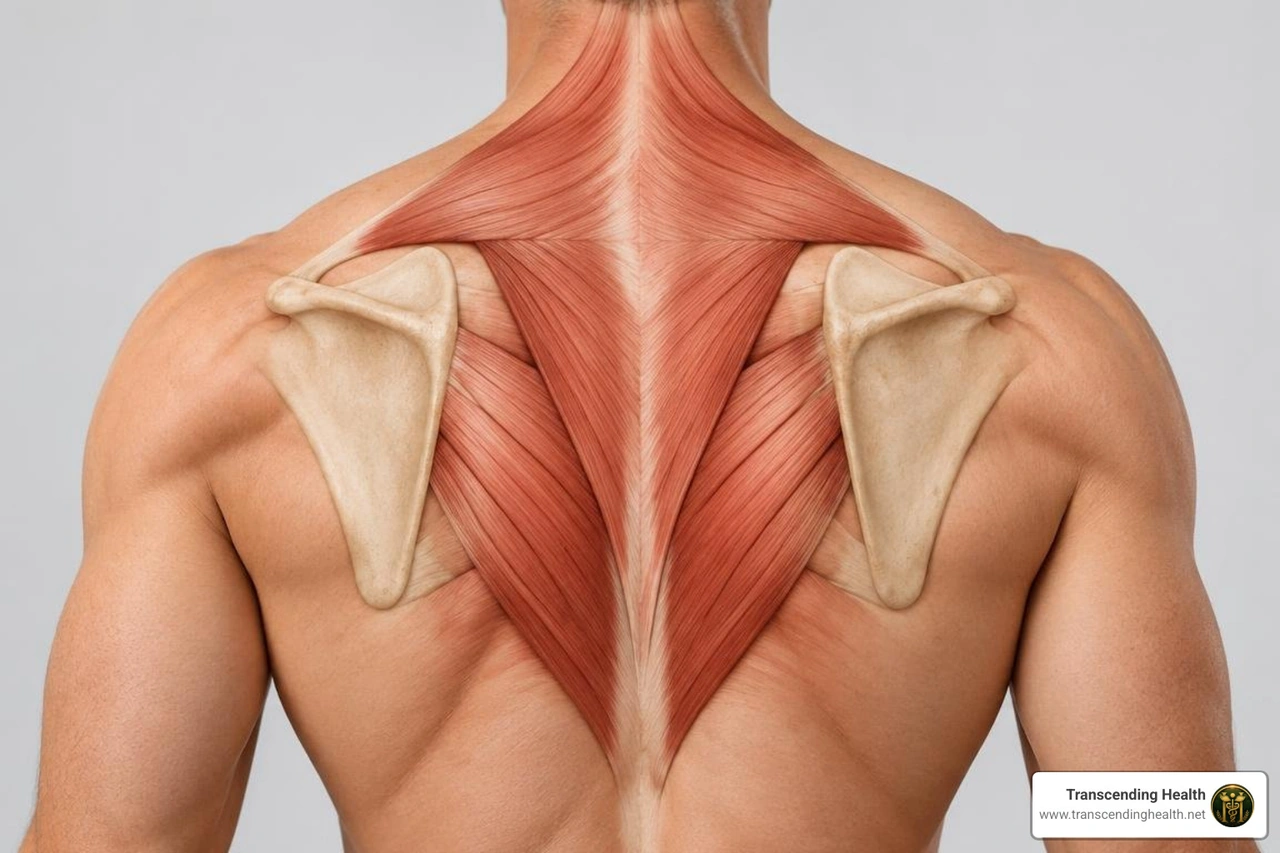
Several distinct muscle layers stabilize your scapula and rib cage. Irritation in any of these tissues can refer discomfort directly into the interscapular region:
- Rhomboid Major and Minor: Running from your spine to the inner edge of each shoulder blade, these muscles pull your scapulae together. When overworked, they develop painful, pinpoint spots that make deep breathing or sitting upright uncomfortable.
- Middle and Lower Trapezius: These large, flat muscle fibers provide upward and downward control of your shoulder girdle. Weakness or fatigue here allows the shoulder blades to flare outward.
- Levator Scapulae: Connecting the upper cervical vertebrae to the top corner of the shoulder blade, this muscle often becomes stiff from elevated shoulders or carrying heavy bags.
- Serratus Posterior Superior: Located beneath the rhomboids, this deep muscle assists with breathing movements and can produce a persistent, burning ache underneath the upper scapular border.
When these muscles lock into tension patterns, it helps to look deeper into why tension keeps coming back to address the root physical imbalance rather than only chasing the painful spot.
How Desk Posture Triggers Interscapular Strain
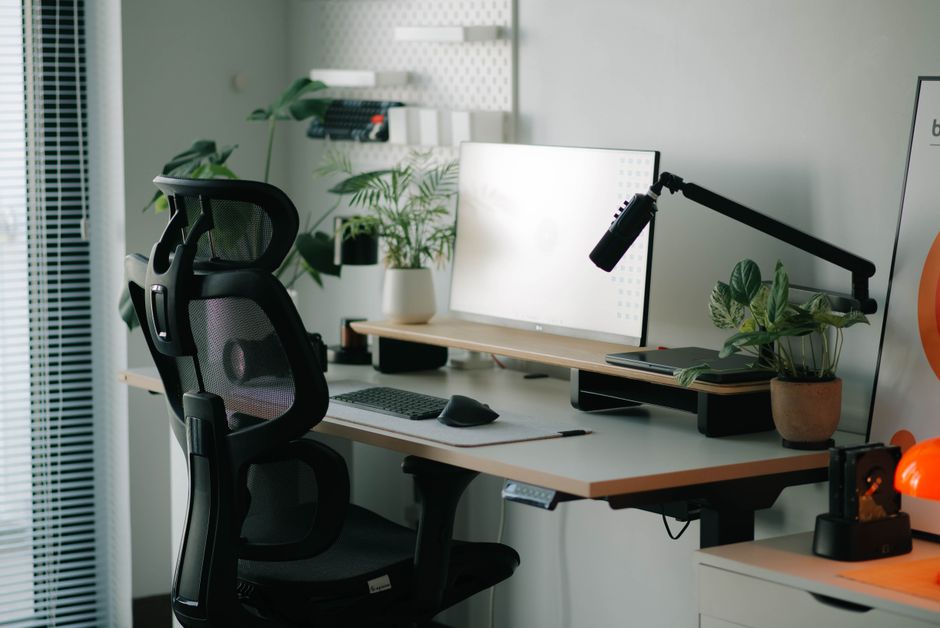
Modern work environments often place significant mechanical demands on the upper spine. Sitting with rounded shoulders and a forward head position forces the muscles between your shoulder blades into a constant eccentric stretch. Research published in PubMed on musculoskeletal pain among office workers demonstrates that prolonged static postures contribute significantly to chronic neck and upper back complaints.
When your head shifts forward past your center of gravity, the effective load on your posterior postural muscles increases dramatically. The rhomboids and middle trapezius must fire continuously just to prevent your torso from slumping further forward. Over hours at a keyboard, this constant low-grade workload creates muscle fatigue, reduces blood flow, and prompts the body to lay down dense protective knots.
How Can Massage for Pain Between Shoulder Blades Provide Relief?
Targeted manual therapy works by directly altering tissue tone, interrupting muscle guarding reflexes, and improving local circulation. When applied properly, massage encourages stiff muscle fibers to lengthen and allows nutrient-rich blood to return to starved areas of tissue.
Applying Targeted Trigger Point Massage for Pain Between Shoulder Blades
Trigger points are localized, hyperirritable nodules found within taut bands of skeletal muscle. Utilizing focused trigger point massage involves applying sustained, gentle compression—often called ischemic compression—directly onto the tender knot.
This sustained pressure temporarily restricts blood flow to the hyperactive knot. When the pressure is released, fresh blood rushes back into the compressed fibers. This wash of oxygen and nutrients helps clear accumulated metabolic waste, decreases local sensitivity, and signals the central nervous system to let go of protective muscle guarding.
Deep Tissue and Myofascial Release Techniques
While trigger point work isolates specific muscle knots, broader manual therapies target the surrounding connective network. Chronic tension often leads to adhesions within the fascia—the continuous web of connective tissue that wraps and supports every muscle fiber.
Techniques such as myofascial release, structural integration (Rolfing), and fascial counterstrain gently stretch and mobilize these bound fascial layers. Loosening the connective tissue restores natural glide between the rhomboids, trapezius, and underlying rib cage, allowing your shoulder blades to move smoothly without catching or pulling.
What Are the Best Self-Massage Techniques and Tools for Knots?
You do not need complicated equipment to get started with upper back relief at home. Simple tools paired with steady, controlled pressure can make a noticeable difference in daily muscle comfort.

Step-by-Step Self-Massage for Pain Between the Shoulder Blades
Using a standard tennis ball or lacrosse ball against a flat wall offers precise control over how much body weight you apply:
- Position the Ball: Stand with your back to a smooth wall. Place the ball between your spine and the inner bony edge of your shoulder blade. Never place the ball directly over your spine or bony edges.
- Lean Back Gently: Step your feet out slightly from the wall and bend your knees. Lean into the ball until you feel a firm, comfortable pressure on the tense muscle tissue.
- Cross Your Arm: Bring the arm on the target side across your chest to hold your opposite shoulder. This movement opens up the space between your spine and shoulder blade, exposing the rhomboids and deep stabilizers.
- Hold the Tender Spot: When you locate a sensitive knot, stop moving and hold sustained pressure for 30 to 90 seconds. Breathe slowly into your belly to encourage the muscle to relax.
- Slow Micro-Rolls: After holding, perform small, slow up-and-down rolls over the tight band for 30 seconds before releasing.
Comparing Tools for At-Home Scapular Relief
Different self-massage tools serve different functional purposes depending on your reach and sensitivity:
- Tennis Ball: Soft to medium density; excellent for beginners because the rubber has slight give against a wall.
- Lacrosse Ball: High density and firm; ideal for deeper, pinpoint pressure once your tissues have adapted to lighter work.
- Massage Cane: Curved ergonomic handle; allows you to apply leverage and reach tricky upper trapezius and levator scapulae trigger points from a seated position without leaning against a wall.
- Foam Roller: Broad surface area; perfect for mobilizing the thoracic spine into gentle extension, though less precise for isolating individual deep knots.
How Do You Distinguish Good Pain from Bad Pain and Prevent Recurrence?
Listening closely to your body during self-care ensures you release tension without causing tissue trauma or aggravating nerves.
Good Soreness Versus Nerve Irritation
Self-massage should always produce a productive, satisfying sensation often described as a "good hurt." This feels like a deep, dull therapeutic ache that gradually softens as you breathe and hold the pressure.
In contrast, sharp, pinching, electric, or burning sensations indicate that you are pressing on a nerve, a rib joint, or an inflamed tendon. If you experience tingling or numbness traveling down your arm or into your fingers, stop immediately and shift off that area. The American Massage Therapy Association notes that back and neck pain are common drivers for seeking manual care, but skilled touch requires knowing how to navigate around sensitive anatomical structures safely.
Corrective Stretches and Scapular Strengthening
Releasing a tight muscle is only the first step; restoring balance between opposing muscle groups keeps the tension from returning. If the chest muscles remain shortened and tight, they will continuously pull the shoulders forward, restyling tension into the upper back.
- Doorway Chest Stretch: Place your forearm against a doorframe at a 90-degree angle. Step gently forward with one foot until you feel a broad stretch across the front of your chest and shoulder. Hold for 30 seconds while breathing smoothly.
- Thoracic Spine Extensions: Sit tall or lie across a foam roller placed horizontally beneath your mid-back. Support your head with your hands and gently arch backward over the roller, opening up the thoracic rib cage without arching your lower back.
- Scapular Wall Slides: Stand with your back flat against a wall, elbows bent at 90 degrees. Slowly slide your arms upward while keeping your shoulder blades drawn down and back, strengthening the lower trapezius and serratus anterior.
Frequently Asked Questions About Shoulder Blade Pain Massage
How often should you massage a knot between your shoulder blades?
For at-home self-care, brief daily sessions of 5 to 10 minutes are generally ideal for persistent tightness. Spend 30 to 90 seconds on individual trigger points, allowing tissues adequate rest intervals between sessions so the muscle fibers can recover without excessive soreness.
Why does my upper back ache after sitting at a computer all day?
Sitting for extended periods typically pulls the shoulders into protracted, rounded alignment. This places the rhomboids and middle trapezius in a prolonged, lengthened state where they must continuously work to support the upper body, reducing local blood flow and prompting muscle knots to form.
When should you see a specialist instead of relying on self-massage?
You should seek professional clinical evaluation if your upper back discomfort is accompanied by radiating numbness, weakness, or tingling down your arm, if the pain begins suddenly following an acute injury, or if your symptoms persist past two weeks despite consistent self-care.
Whenever you are ready to address persistent upper back knots and move with greater ease, schedule your initial session online.