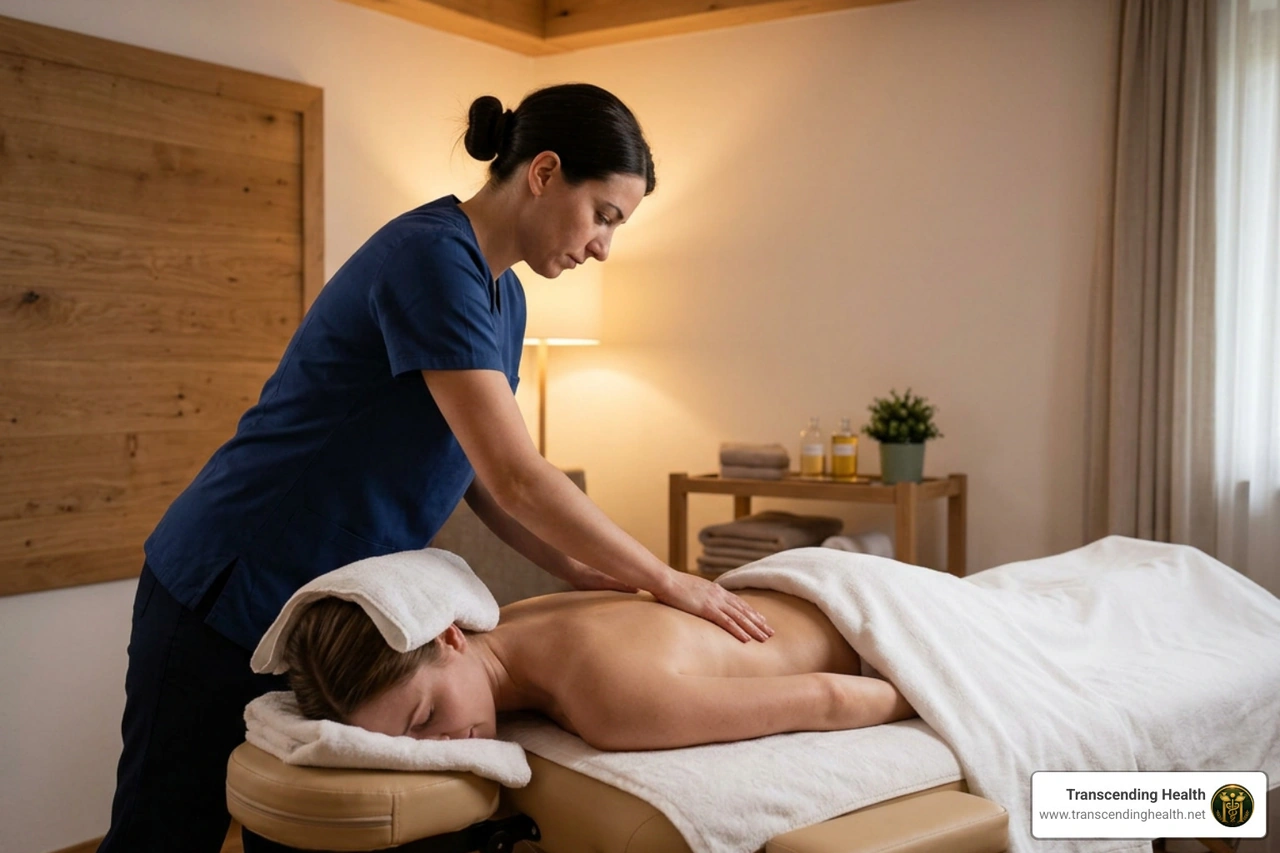
Massage can be a helpful part of managing stress and anxiety. Many people find that slow, steady touch helps their breathing ease and their body feel safer. It is not a treatment for an anxiety disorder, and it does not replace care from a mental health professional, but it can be a calming support alongside that care.
This guide is written for people who feel anxious about the massage itself as much as anything else. I want to explain how a session can be shaped around you, so it feels like rest instead of one more stressful thing.
How might massage help with stress and anxiety?
When you are stressed, your body tends to stay on alert. Your shoulders creep up, your jaw tightens and your breathing gets shallow. Gentle, predictable touch can help many people shift out of that state, at least for a while.
Research on massage and anxiety is mixed but encouraging. The National Center for Complementary and Integrative Health notes that massage may help with anxiety for some people, while research is still growing. You can read their overview on massage therapy. In plain terms, massage may help you feel calmer, and it is generally safe for most healthy adults when done by a trained therapist.
For a deeper look at how massage affects the nervous system, see our post on massage for stress relief.
What if getting a massage makes you anxious?
You are not alone. New places, being touched by someone new and lying still can all feel like a lot. Here is how we make it easier:
- You choose how much clothing to remove. You can stay fully clothed if you prefer.
- You choose the pressure. Gentle is always an option.
- You can talk or stay quiet. Either is fine.
- You can stop at any time. No explanation needed.
- You can skip areas. If your face, feet or belly feel off-limits, just say so.
It can help to tell us when you book that you feel anxious. We will slow down, explain each step and check in more often.
Which massage styles suit an anxious nervous system?
Slower, gentler styles tend to work best when your goal is to calm down. A few to consider:
- Restorative massage ($120 for 60 minutes) uses calm, unhurried strokes and breath. Keanen leads most of these sessions.
- Relaxation massage focuses on comfort and full-body ease.
- Fascial counterstrain ($180 for 75 minutes) uses gentle positions of comfort and very little pressure, which suits sensitive bodies.
If deep pressure makes you tense up, it may work against you on stressful days. You can always add deeper work later, once you feel at home with your therapist.
What can you do during the session to relax?
Try these simple steps:
- Breathe out slowly. A longer exhale than inhale can help your body settle.
- Notice where you are holding. Let your jaw, hands and shoulders soften.
- Ask for what you need. A blanket, a pillow under your knees, the lights lower or quiet music.
- Let your mind wander. You do not have to empty it. Just notice the touch when you can.
How often should you book massage for stress?
For general stress, monthly sessions work well for many people. During a hard stretch, every two weeks for a while can help. The best plan is one that feels like support, not pressure. Our guide on how often to get a massage explains more.
What else helps between sessions?
Massage works best alongside other healthy habits. Gentle movement, regular sleep, time outside and short breathing breaks during the day all help. Some people also find our nervous system regulation services helpful.
We also offer donation-based Community Support services, including the Sound Lounge, Light Water and Rife, each with a $5 minimum donation. Donations support the Unified Wellness Project.
When should you get other help?
If anxiety is getting in the way of work, sleep, relationships or daily life, please talk with your doctor or a licensed mental health professional. If you are in crisis or thinking about harming yourself, call or text 988 to reach the Suicide and Crisis Lifeline. Massage can be part of your care, but it should not be the only part.
What does it cost?
A therapeutic massage with evaluation is $130 for 60 minutes. Restorative massage is $120 for 60 minutes. A 90-minute session costs the 60-minute price plus 50 percent. We do not bill insurance, and we accept HSA and CareCredit. Tips are welcome but never required. You can see all prices on our pricing page, and compare every option for massage in Charlottesville.
Frequently asked questions
Can massage cure anxiety?
No. Massage may help you feel calmer, but it does not cure anxiety. It works best as one support alongside professional care and healthy habits.
Is it normal to feel emotional during a massage?
Yes. Some people feel teary or emotional as their body relaxes. That is okay. You can pause, take a breath or end the session early if you need to.
Can I bring someone with me?
Ask us when you book. We want you to feel safe, and we can talk through what would help most.
If you have been putting off a massage because it feels like too much, start small. Book a session, tell us you are nervous and let us go at your pace.
Ready to book? Book online or call (434) 465-2905.