How to Support a Natural Lymphatic System Flush
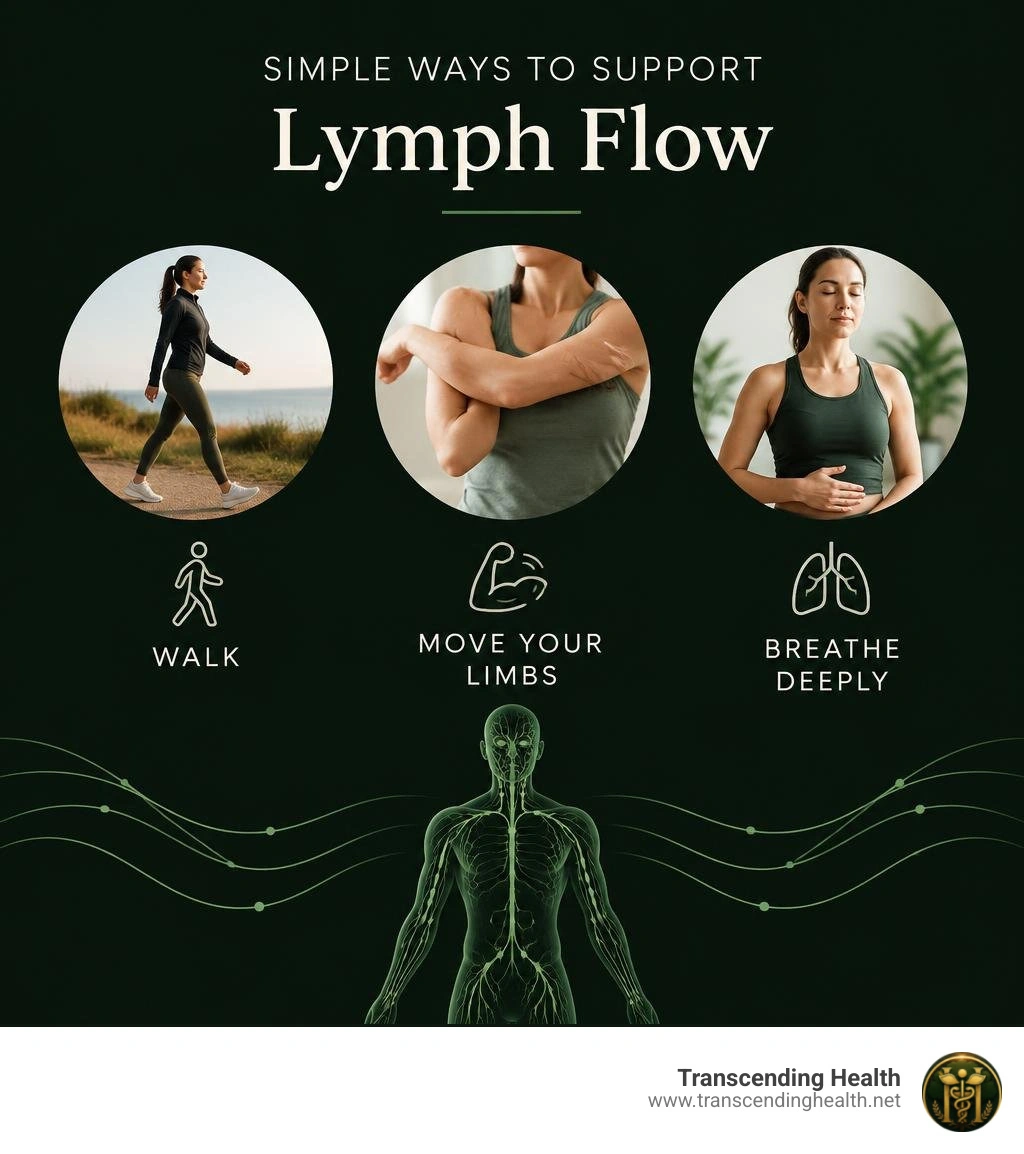
For a natural lymphatic system flush, start with a walk, move your arms and ankles during the day, and take slow breaths that expand your belly. Muscle movement and breathing help lymph fluid travel through your body. You do not need a detox drink to make that happen.
Your lymphatic system helps manage fluid and supports immune defense. If you have new or lasting swelling, speak with a clinician before trying drainage massage.
I'm Drew Edmondson, owner of Transcending Health, a human restoration and performance center at 1445 Rio Road East, Suite 201 F, Charlottesville, VA 22901. My work brings together hands-on care, corrective exercise, and wellness guidance, so I'll explain how to approach a lymphatic system flush without the hype.
How Does Your Lymphatic Network Work, and When Might Flow Be Affected?
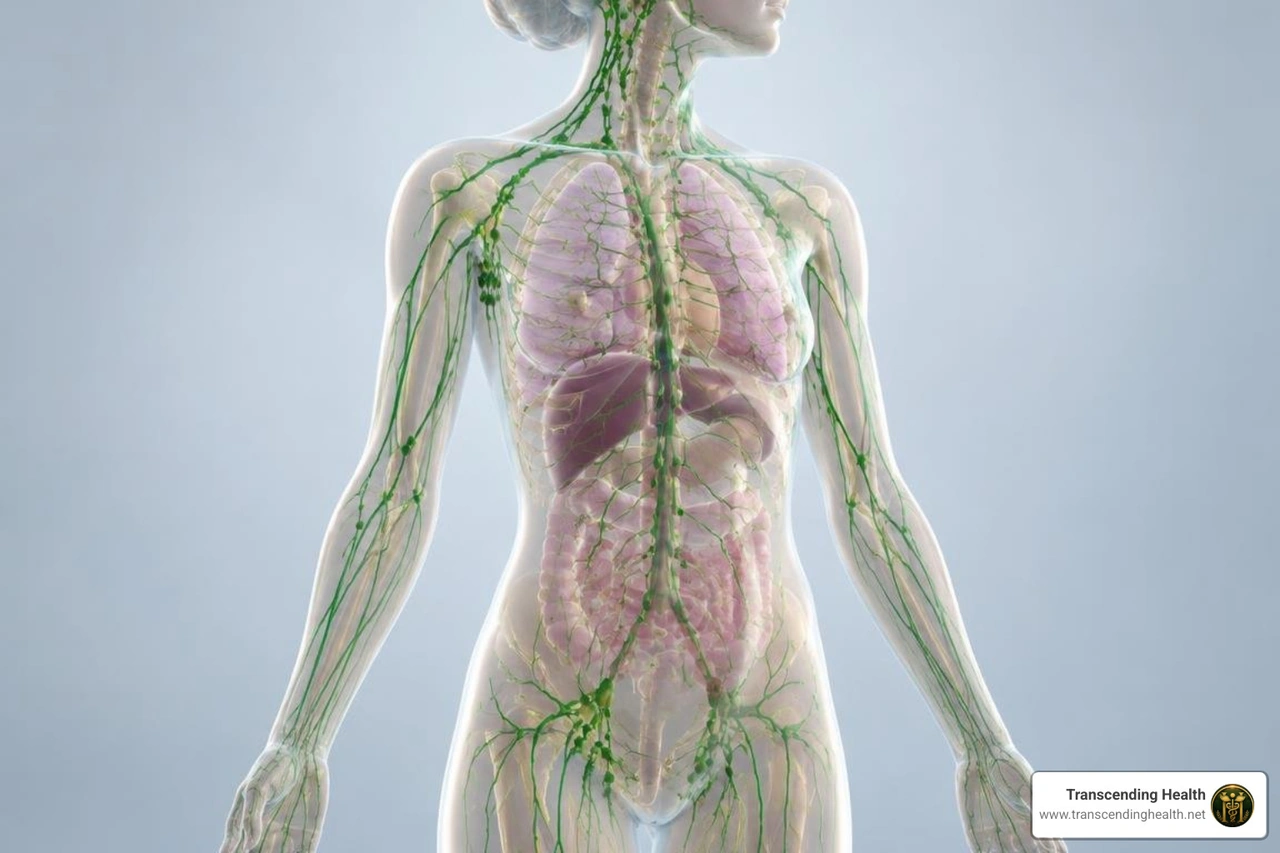
Your cardiovascular system has a dedicated pump: the heart. Your lymphatic system does not. It relies entirely on physical movement, muscle contractions, and pressure changes from your breath to keep fluid moving.
This network of tiny vessels, nodes, and lymphoid tissue runs throughout your entire body. When tissues become congested due to lack of movement, surgery, or inflammation, fluid stagnates. Understanding how chronic stress lives in the body often reveals how shallow breathing and chronic tension restrict natural circulation.
Understanding the Body's Secondary Circulatory System
Think of the lymphatic system as your body's built-in recycling and filtration network. Interstitial fluid bathes your cells, delivering nutrients and collecting waste products. The lymphatic capillaries absorb this excess fluid, turning it into lymph.
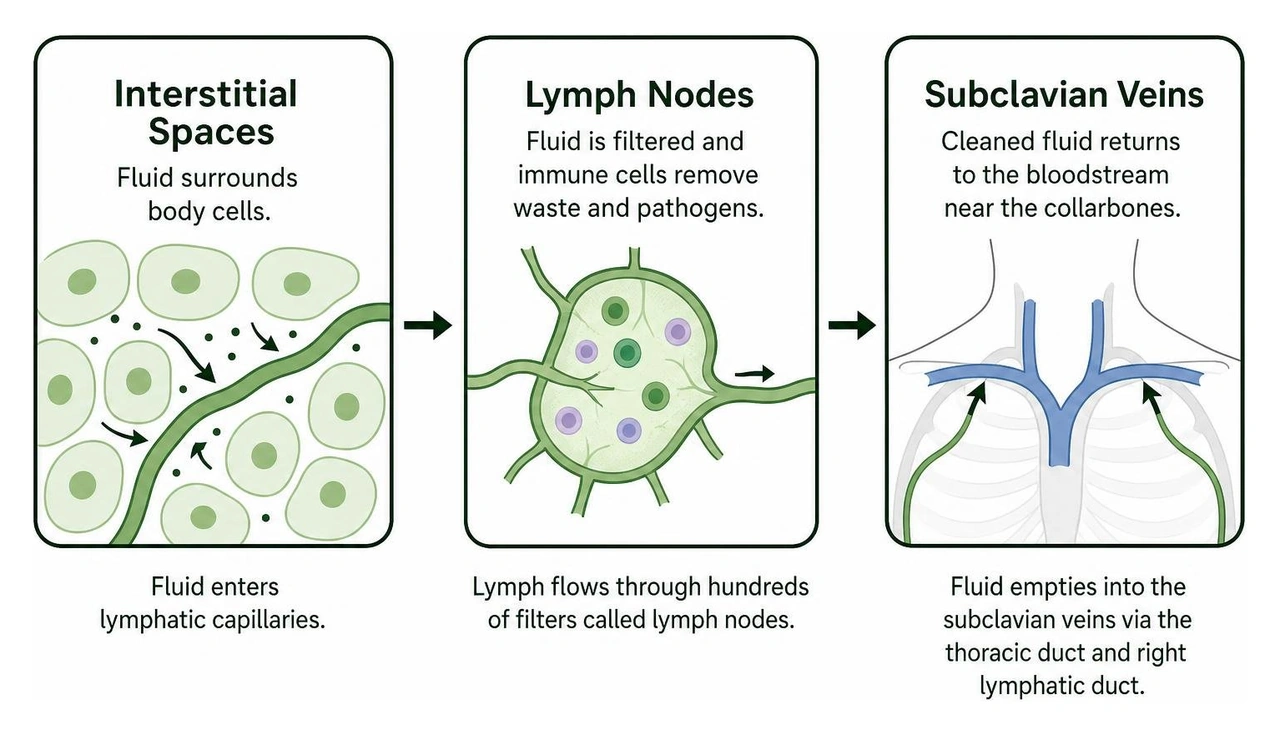
Lymph travels through hundreds of small filters called lymph nodes located in clusters around your neck, armpits, and groin. Specialized immune cells inside these nodes break down pathogens, cellular debris, and foreign particles. Finally, the cleaned fluid empties back into the bloodstream near your collarbones through the thoracic duct and right lymphatic duct.
What Changes in Lymphatic Flow Should You Discuss With a Clinician?
Temporary puffiness after a salty meal or a long flight is common. Persistent, unexplained fluid retention is not. You should seek guidance from a medical doctor if you notice:
- Unilateral swelling (swelling in only one arm or leg)
- Skin that leaves a deep indentation when pressed (pitting edema)
- Sudden heaviness, tightness, or pain in a limb
- Skin that looks red, hot, or inflamed
- Swollen lymph nodes that feel hard or do not resolve after a few weeks
Conditions such as lymphedema, venous insufficiency, and kidney or heart disease require professional medical diagnosis and management.
What Are Some Ways to Support Lymphatic Flow?
Supporting your lymphatic flow does not require expensive cleanses or aggressive treatments. It responds best to simple, rhythmic physical inputs that create gentle pressure changes throughout your tissues.
| Method | Primary Mechanism | Best For |
|---|---|---|
| Low-Impact Walking | Rhythmic calf and leg muscle pumping | Daily baseline fluid movement |
| Diaphragmatic Breathing | Abdominal and thoracic pressure changes | Deep core drainage (cisterna chyli) |
| Rebounding | Acceleration, deceleration, and gravitational shift | Full-body cellular stimulation |
| Manual Drainage | Skin stretching along directional pathways | Localized congestion relief |
At Transcending Health in Charlottesville, we regularly combine hands-on therapies with focused massage to take clients out of fight-or-flight states, which naturally encourages healthy circulation.
How Can Movement, Rebounding, and Diaphragmatic Breathing Help?
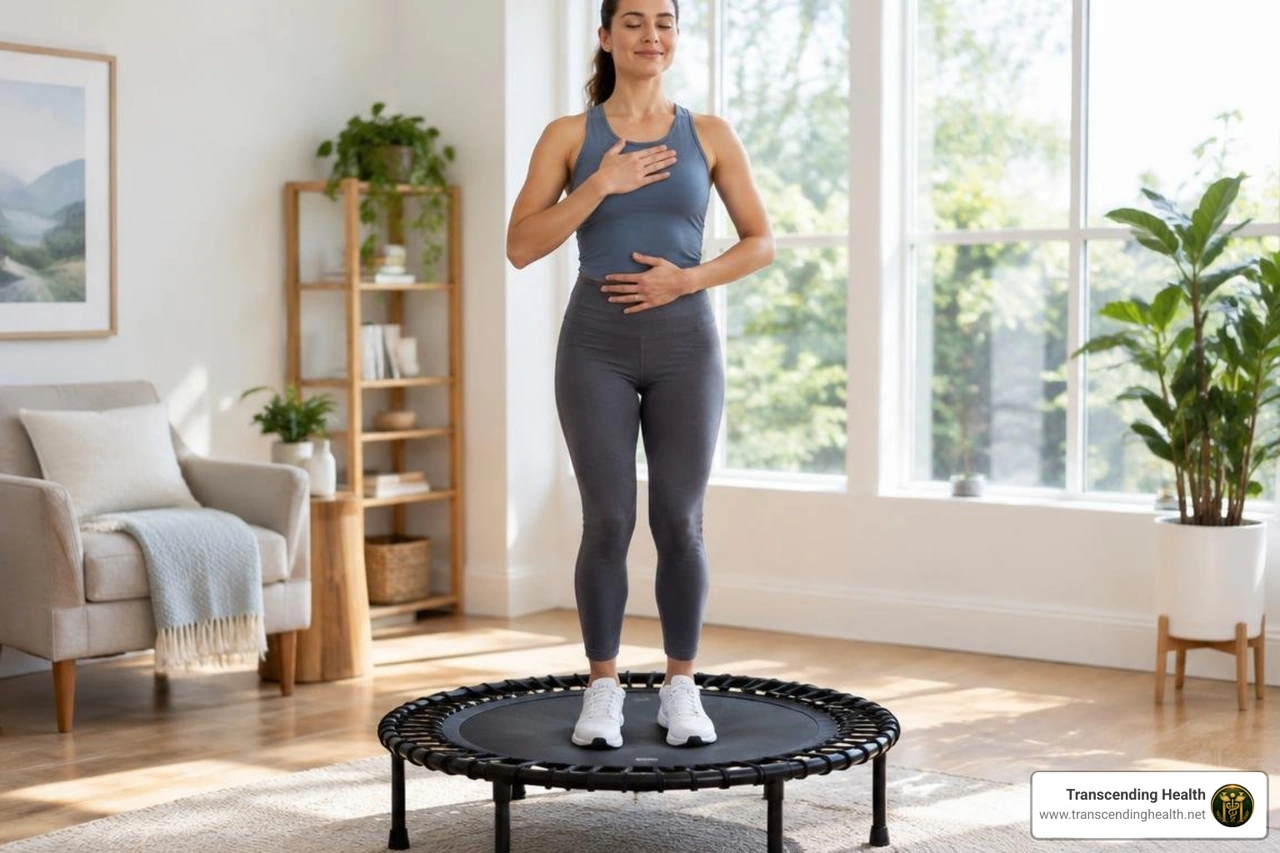
Because lymph vessels have one-way valves, every time your muscles contract, they squeeze the vessels and push fluid upward toward your heart. When you relax, the valves prevent backflow.
According to research published in the Journal of Applied Physiology, rhythmic muscle contractions and gravitational loading help drive lymph propulsion through the body's valved vessels, supporting immune cell circulation and fluid clearance.
Deep belly breathing creates a natural suction effect. Your main lymphatic collection vessel, the cisterna chyli, sits right beneath your diaphragm in the upper abdomen. As you take a deep breath and expand your belly, the downward motion of the diaphragm massages this deep trunk and pulls stagnant fluid up from your lower extremities.
What Should You Know About Professional Manual Drainage?
Manual lymphatic drainage (MLD) is a specialized, gentle hands-on technique developed to redirect stagnant fluid toward functioning lymph nodes. Unlike deep tissue or sports massage, MLD uses exceptionally light touch—just enough pressure to stretch the superficial skin where delicate lymph capillaries live.
At our Charlottesville clinic, we offer targeted lymphatic drainage massage to help clients reduce post-activity fluid accumulation, ease tissue heaviness, and support post-injury recovery.
How Can You Safely Perform Lymphatic Drainage at Home?
You can practice gentle self-drainage at home without fancy tools or lotions. In fact, performing self-drainage on clean, dry skin works best because it allows your hands to gently stretch the skin rather than slide across it.

For a safe lower-body protocol, you can follow the NHS patient guide on leg self-lymphatic drainage, which emphasizes opening central drainage pathways before working on swollen limbs.
What Is a Gentle Step-by-Step Sequence for Lymphatic Drainage?
Always clear the "drains" before moving fluid toward them. If the central collection points are congested, fluid from your limbs has nowhere to go.
- Clear the Terminus: Place your flat fingers just above your collarbones and make 5 to 10 slow, gentle circles inward toward your neck.
- Deep Diaphragmatic Breaths: Place your hands on your ribs and take 5 slow, deep belly breaths to activate the cisterna chyli.
- Open Regional Nodes: Gently pump the lymph nodes in your armpits (for upper-body work) or your groin crease (for lower-body work) with light, flat-handed pressure.
- Gentle C-Strokes: Use your flat palms to gently stretch the skin upward toward the nearest opened node cluster. Work from proximal (closest to the node) to distal (farther down the limb).
- Finish with Breathing: End your session with 3 to 5 deep belly breaths to help process the mobilized fluid.
What Precautions and Contraindications Should You Know?
While manual drainage is exceptionally gentle, manually moving stagnant fluid into the bloodstream can strain certain compromised body systems. Do not perform lymphatic drainage if you have:
- Active cellulitis or skin infections
- Acute deep vein thrombosis (DVT) or blood clots
- Congestive heart failure
- Acute renal (kidney) failure
- Active, unexplained fevers
If you have a history of cancer with lymph node removal or cardiovascular conditions, get clearance from your physician before starting any lymphatic therapy routine.
How Do Lifestyle Habits and Nutrition Support Long-Term Flow?
A single drainage session provides short-term relief, but your daily habits dictate how well your fluid circulates over the long haul.
Regular physical activity keeps your connective tissues pliable and supports vascular tone. The MD Anderson Cancer Center recommends accumulating at least 150 minutes of moderate aerobic exercise or 75 minutes of vigorous exercise weekly to maintain healthy lymphatic flow and manage weight. Even a simple 15- to 20-minute daily walk across local Albemarle County trails creates enough muscular pumping to help clear metabolic byproducts.
How Can Nutrition and Hydration Support General Wellness?
Lymph fluid is mostly water. When you are dehydrated, lymph thickens and moves sluggishly through its microscopic vessels. Maintaining consistent hydration keeps interstitial fluids thin and easily transportable.
Focus on:
- Clean Hydration: Sip water consistently throughout the day rather than chugging large amounts at once.
- Electrolyte Balance: A diet balanced in potassium, magnesium, and moderate sodium prevents fluid retention.
- Anti-Inflammatory Foods: Whole vegetables, berries, lean proteins, and healthy fats help reduce the chronic inflammatory load on your capillary beds.
- Weight Management: Research from Cleveland Clinic notes that excess adiposity places physical pressure on lymphatic channels, impairing vessel pumping efficiency and increasing the risk of secondary fluid retention.
How Can Daily Movement Support Tissue Health?
Sedentary postures compress the inguinal nodes in your hips and the popliteal nodes behind your knees. If you sit at a desk during the workday, break up prolonged stillness with simple mobility drills:
- Ankle Pumps: Flex and point your feet 15 times every hour while seated.
- Shoulder Rolls: Roll your shoulders backward 10 times to open the thoracic outlet near your collarbones.
- Seated Marching: Lift your knees alternatively for 30 seconds to stimulate blood and lymph return through your pelvic floor.
Frequently Asked Questions About Lymphatic Drainage
How long do the visible effects of lymphatic drainage typically last?
Visible de-puffing and tissue lightness typically last from a few days up to two or three weeks, depending on your baseline physical activity, hydration, and salt intake. Because your body continually produces metabolic waste and interstitial fluid, drainage techniques provide temporary clearance rather than a permanent fix.
Do commercial lymphatic detox drops and supplements work?
There is no peer-reviewed clinical evidence showing that over-the-counter herbal drops or "detox" tinctures stimulate lymphatic vessels or flush toxins. Your liver, kidneys, and lymphatic system already handle fluid balance and filtration naturally. Physical movement, hydration, and breathing remain the only proven ways to mechanically move lymph.
How often should you perform at-home lymphatic drainage?
For general wellness and mild morning puffiness, a brief 5- to 10-minute self-care sequence can be done daily or a few times a week. If you are managing post-injury fluid or general stiffness, consistency is far more effective than long, infrequent sessions. Always use gentle pressure and discontinue if you experience pain or skin irritation.
Ready to Restore Your Natural Fluid Balance?
If you are dealing with chronic muscle tension, sluggish recovery, or localized fluid retention, we are here to help you find a clear path forward. At Transcending Health, we start with a comprehensive body assessment before designing an individualized recovery plan that integrates hands-on manual therapy, corrective movement, and modern recovery tools.
Contact Drew Edmondson and the team at 434-465-2905 or email us at info@transcendinghealth.net.
Book Your Assessment and Session on Our Appointment Calendar