

Lymphatic Drainage of the Nose: Where Does the Fluid Go?

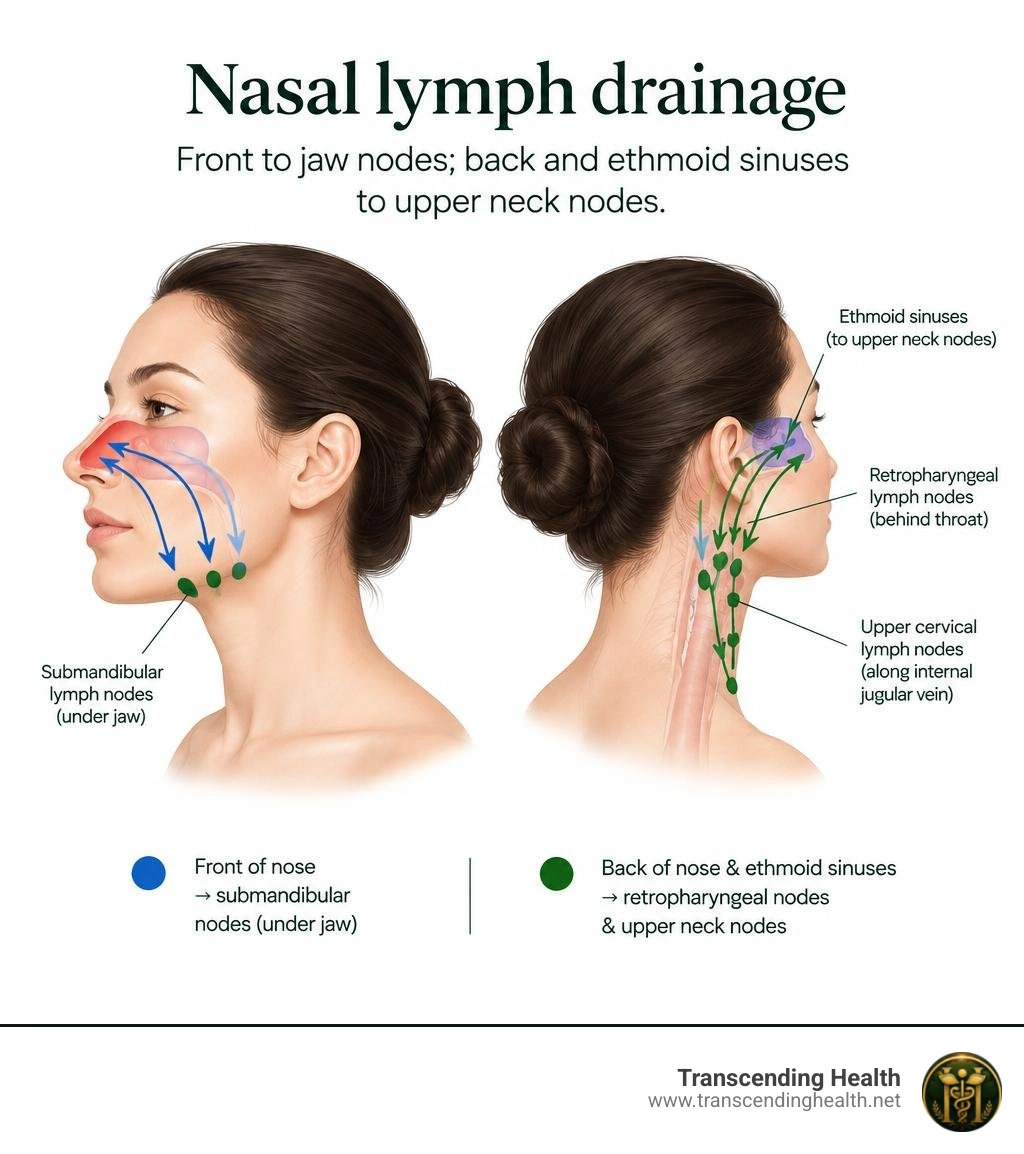
Lymphatic drainage of the nose moves excess fluid from nasal tissues toward lymph nodes in the head and neck. Fluid from the front of the nasal cavity reaches nodes beneath the jaw. Fluid from farther back, including the ethmoid sinuses, reaches nodes behind the throat and deep in the upper neck. If your face feels puffy, try a light sweep from beside the nose across the cheek toward the ear, then down the side of the neck toward the collarbone. Keep pressure gentle, and stop if it hurts or makes you dizzy.
This is not the same as draining mucus from the sinuses, and massage will not treat an infection or a blocked nasal passage. The guide below explains the routes fluid takes and where gentle self-care may fit.
I’m Drew Edmondson, owner of Transcending Health, a human restoration and performance center at 1445 Rio Road East, Suite 201 F, Charlottesville, VA 22901. My experience coordinating massage and recovery care informs this guide for people searching “lymphatic drainage nose.”
How Does Lymphatic Drainage of the Nose Actually Work?
The lymphatic system functions as the body's internal drainage and immune filtration network. In the face and sinuses, tiny initial lymphatic capillaries sit directly within the skin and mucous membranes. These vessels absorb interstitial fluid—the fluid bathing our cells—along with cellular waste and inflammatory proteins.
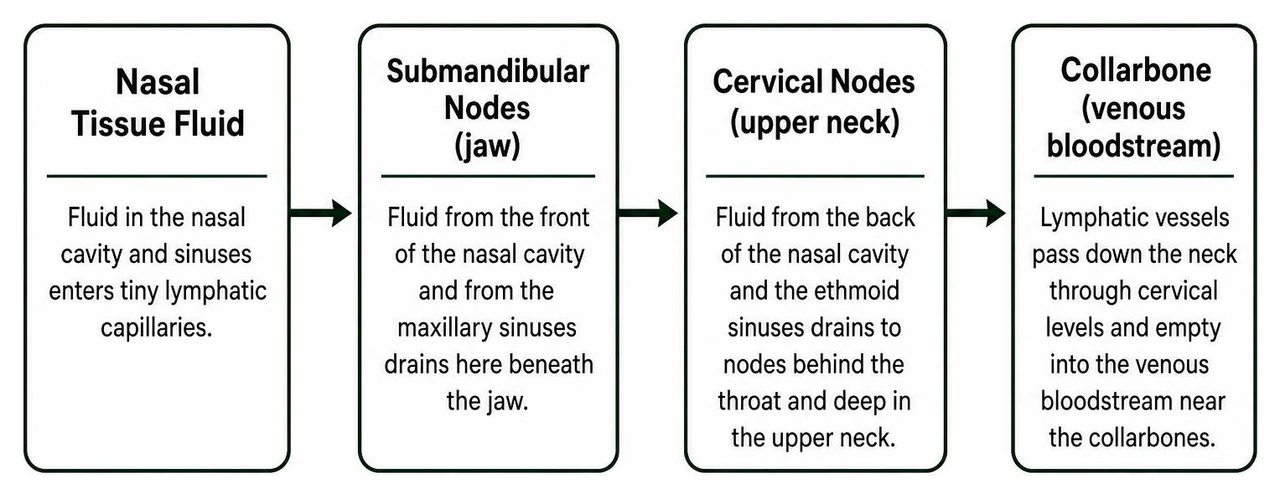
Anatomically, the pathways divide based on region. The anterior third of the nasal cavity drains forward and downward into the submandibular lymph nodes resting just beneath the jawline. The posterior two-thirds of the nasal cavity and the ethmoid sinuses drain backward toward the retropharyngeal lymph nodes behind the throat and directly into the superior deep cervical lymph nodes along the internal jugular vein. This regional drainage pattern is well documented in peer-reviewed anatomical literature, including studies indexed on PubMed.
The maxillary sinuses, which sit under the eyes inside the cheekbones, empty primarily into the submandibular node network. From these collection points, lymphatic vessels pass craniocaudally (from head to tail) through five distinct cervical levels in the neck before finally emptying into the venous bloodstream near the collarbones.
Because lymph fluid is mostly water, systemic hydration directly affects its viscosity and flow rate. A practical daily baseline is to take your body weight in pounds, divide that number by two, and drink that many ounces of water throughout the day. This simple habit keeps lymph moving smoothly through delicate nasal channels.
How Are Nasal Lymphatics Connected to Brain Glymphatic Flow?
The nasal lymphatic network connects directly to the central nervous system. In recent years, researchers discovered that cerebrospinal fluid (CSF) filters through tiny openings in the arachnoid membrane and exits through the cribriform plate at the roof of the nasal cavity.
Research on cerebrospinal fluid drainage pathways through the cribriform plate demonstrates that this exit route connects directly with the brain's glymphatic waste-clearance system. When these channels become sluggish or atrophy with age, the clearance of metabolic waste products—including amyloid-beta—slows down. Simple daily habits that support circulation, such as resonance frequency breathing and structured posture routines, help preserve fluid transit across these vital neurological exit points.
What Causes Lymphatic Congestion in the Sinuses and Face?

When interstitial fluid accumulates faster than cervical lymph vessels can clear it, local tissues become waterlogged. This is distinct from a classic bacterial sinus infection. Sluggish lymph flow produces a sensation of dull facial heaviness, mild puffiness around the eyes, persistent throat-clearing, and a foggy head, but without the acute facial pain or high fever typical of bacterial illness.
Tender or slightly enlarged cervical lymph nodes in chronic sinus sufferers often indicate that the lymphatic system is working overtime to clear upstream inflammation. You can explore how cervical pathways influence total head pressure in our comprehensive cervical lymphatic drainage guide.
Why Does Nasal Congestion Worsen When Lying Flat?
Many people notice their sinus pressure spikes the moment their head hits the mattress. This shift comes down to basic fluid dynamics and gravity.
When you lie flat on your back, gravity no longer assists venous return from the head. Blood pools slightly in upper-body veins, raising pressure in the nasal venous sinusoids and causing delicate membranes to swell. Interstitial fluid shifts into nasal tissues, and without gravity, thick mucus pools in dependent sinus pockets. Elevating your head on an incline between 30 and 45 degrees or adopting a side-lying posture (especially left lateral sleep) relieves baseline venous engorgement and supports steady overnight drainage. The Cleveland Clinic notes that head elevation can help reduce overnight sinus pressure.
How Can You Relieve Nasal Congestion with At-Home Techniques?
You can stimulate lymphatic movement at home using gentle physical activity, heat, and targeted touch. Taking a warm shower or breathing moist steam helps dilate lymphatic capillaries and thin thick mucus.
Because the lymphatic system lacks a central pump like the heart, muscle contraction drives fluid movement. Performing two minutes of gentle, rhythmic toe bouncing at the bathroom counter stimulates the large lymph vessels in the calves, abdomen, and chest, accelerating cervical drainage from the neck down. Following movement with targeted sinus massage to drain and relieve pressure helps clear localized stagnation.
Step-by-Step Self-Massage for Lymphatic Drainage of the Nose
When performing self-massage for lymphatic drainage of the nose, use extremely light touch—roughly the weight of a penny resting against your skin. Pressing too hard compresses superficial lymph vessels flat, preventing fluid from moving, and can even trigger lightheadedness or dizziness.
- Clear the Terminus: Place your fingertips flat above your collarbones and perform 10 gentle downward skin stretches toward your chest.
- Open the Neck: Gently stroke the sides of your neck downward from below the ears toward the collarbones 5 to 10 times.
- Maxillary Sinus Sweep: Place your index and middle fingers beside your nostrils over the cheekbones. Hold light contact for 5 to 10 seconds, then gently glide outward toward your ears.
- Frontal Sinus Sweep: Place your fingertips at the inner corners of your eyebrows. Lightly sweep upward and outward across the brow toward the temples.
- Drain Downward: Finish by sweeping from the temples, down in front of the ears, and along the neck to the collarbones.
A focused three-minute daily routine of these light strokes encourages ciliary mobilization and clears stagnant facial fluid without irritating inflamed tissues.
How Hands-On Techniques Support Lymphatic Drainage of the Nose
Different hands-on modalities offer distinct advantages for facial fluid stagnation:
| Modality | Primary Mechanism | Best Used For | Caution / Contraindications |
|---|---|---|---|
| Self-Administered Sinus Massage | Gentle fingertip skin stretching | Daily home maintenance, mild morning puffiness | Avoid heavy pressure; stop if dizzy |
| Professional Lymphatic Drainage Massage | Systematic manual drainage of deep cervical chains | Persistent facial heaviness, post-injury swelling, systemic fluid stagnation | Active infection, untreated fever, acute blood clots |
| Facial Cupping | Negative suction pulling fluid through fascia | Releasing myofascial tension along cheeks and jaw | Never leave cups static; avoid broken skin or active rosacea |
Professional bodywork provides deeper drainage than home self-care can achieve alone. At our Charlottesville restoration center, we begin every client relationship with a comprehensive new-client consultation and movement assessment. From there, our therapists incorporate targeted lymphatic drainage massage alongside fascial counterstrain and recovery technologies to resolve underlying fluid imbalances throughout the neck, face, and shoulder girdles.
When Should You Seek Professional Care for Sinus Symptoms?

While gentle self-care eases everyday fluid stagnation, certain situations require medical oversight. Following cosmetic or reconstructive nasal procedures, swelling can persist for months. Post-operative tissue responds well to gentle touch, but you should always obtain explicit surgeon clearance before applying pressure to delicate healing structures. The American Academy of Otolaryngology provides guidance on post-surgical sinus care and recovery expectations.
Home drainage techniques are not appropriate for active infections or structural emergencies. Seek prompt evaluation from a qualified physician if you experience red-flag symptoms such as:
- A high fever accompanying facial pain
- Visual changes, double vision, or swelling around the eye sockets (periorbital edema)
- Severe, unrelenting headaches or stiffness in the back of the neck
- Sinus pressure and discolored discharge lasting longer than 10 consecutive days without improvement
Frequently Asked Questions about Nasal Lymphatic Drainage
How quickly does lymphatic drainage of the nose provide sinus relief?
A light three-minute self-massage session often provides an immediate reduction in superficial facial tension as interstitial fluid shifts toward the ears and neck. For chronic, sluggish congestion, practicing a consistent daily routine of hydration, movement, and gentle massage typically produces noticeable structural relief within one to two weeks.
What does lymphatic stagnation in the face feel like compared to an infection?
Lymphatic stagnation presents as a diffuse, heavy fullness across the cheeks, bridge of the nose, and forehead, often accompanied by puffiness under the eyes and mental fatigue, but without systemic fever. A bacterial sinus infection typically presents with localized throbbing pain, thick discolored mucus, tooth sensitivity, and fever.
Can you perform nasal lymphatic massage after rhinoplasty?
Gentle lymphatic drainage can help reduce post-operative edema and support tissue recovery around the bridge and cheeks. However, you must wait for clearance from your operating plastic surgeon before touching your nose, and you must avoid any firm pressure that could displace nasal bones or delicate cartilage grafts.
If you are experiencing persistent neck tightness, facial puffiness, or slow recovery in Central Virginia, our team is here to help you restore natural fluid dynamics. Schedule your initial consultation and bodywork assessment through our online appointment calendar to experience tailored, hands-on restoration at Transcending Health.