
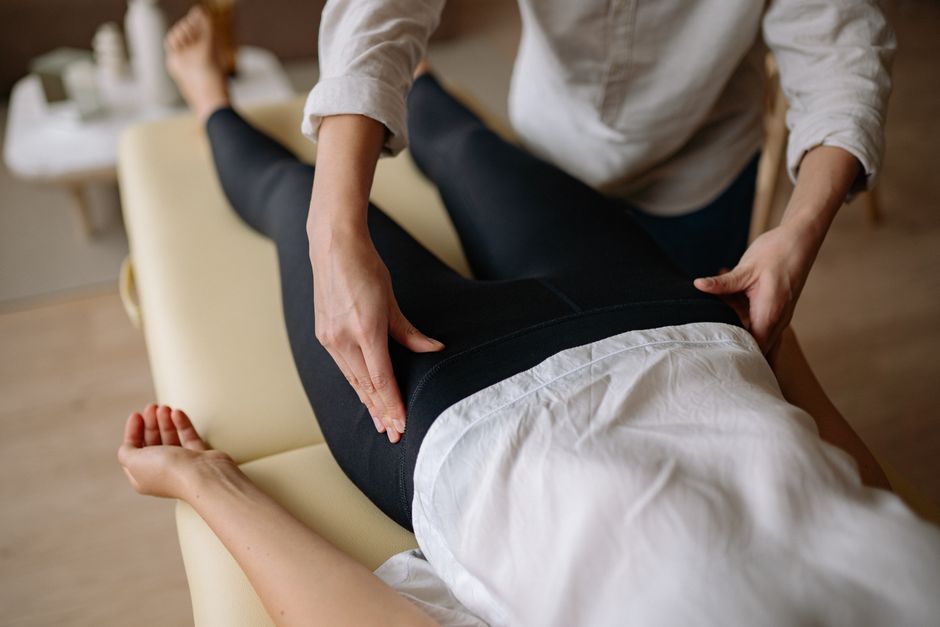
How to Ease Deep Glute Tension With Trigger Point Release
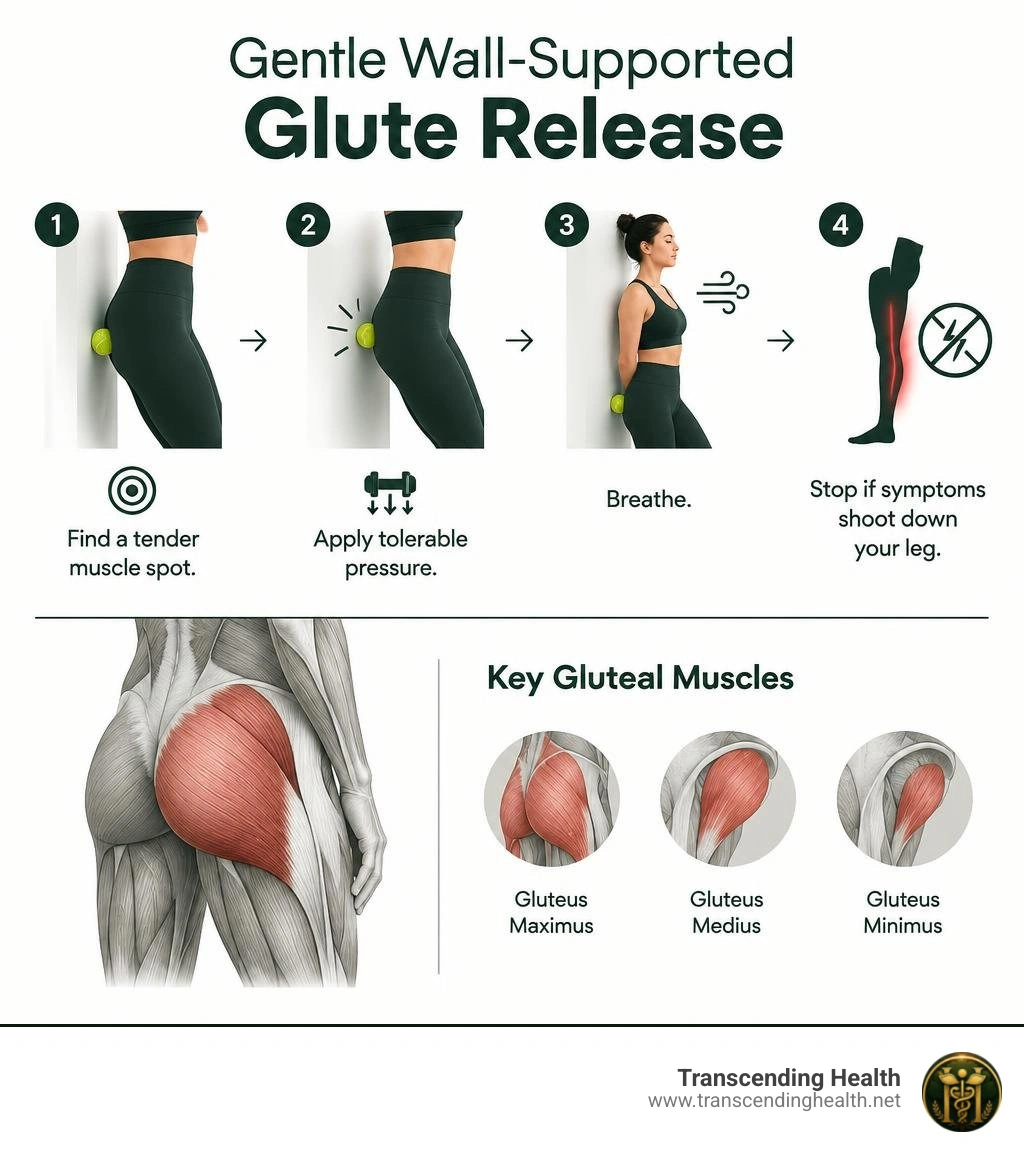
For gluteal trigger point release, place a tennis ball between a wall and the fleshy part of your buttock. Lean in gently until you feel steady, tolerable pressure on a tender spot. Breathe, pause briefly, then move the ball to another sore area. Stop if you feel sharp pain, tingling, or pain shooting down your leg.
A sore spot in the glutes can cause an ache beyond the spot itself, including around the hip or lower back. That does not mean every buttock ache is a trigger point. If symptoms keep coming back, it helps to look at how you move as well as where you hurt.
I’m Drew Edmondson, owner of Transcending Health, a human restoration and performance center at 1445 Rio Road East, Suite 201 F, Charlottesville, VA 22901. My work bringing together hands-on care and corrective exercise shapes this guide to gluteal trigger point release: start gently, pay attention to your symptoms, and address what may be feeding the tension.
What Are Gluteal Trigger Points and Why Do They Cause Buttock Pain?
A myofascial trigger point is a hyperirritable spot within a taut band of skeletal muscle. When a muscle fiber stays contracted, it restricts local capillary blood flow. This creates localized tissue ischemia, oxygen deprivation, and an accumulation of metabolic waste products that irritate local sensory nerves. In the hips, this muscular tension creates a deep, frustrating ache.
Your posterior hip complex relies on several key muscles that frequently develop these irritable knots:
- Gluteus Maximus: The largest muscle in the pelvis, responsible for hip extension and powerhouse movements. An anatomical study on gluteus maximus trigger points identified three primary trigger point zones corresponding directly to nerve entry points from the inferior gluteal nerve.
- Gluteus Medius: Sits on the upper-outer quadrant of the hip to stabilize your pelvis when walking or standing on one leg.
- Gluteus Minimus: Lies deep beneath the medius and often refers pain down the lateral or posterior thigh.
- Piriformis: A deep lateral hip rotator through or underneath which the sciatic nerve travels.
- Quadratus Lumborum: A deep lower-back stabilizer that connects the spine to the pelvis and frequently refers discomfort directly into the gluteal region.
When these fibers lock up, they produce referred pain. That means pressing a knot in the gluteus medius might send an ache across your sacroiliac joint or down the side of your hip. Learning about trigger point massage mechanisms can help you understand how sustained compression softens these taut bands.

How Can You Tell Glute Trigger Points Apart From True Sciatica?
It is common for people to assume any radiating buttock ache is true sciatica caused by a herniated lumbar disc. However, myofascial trigger points in the gluteus medius, gluteus minimus, and piriformis often create "pseudo-sciatica," perfectly mimicking nerve root irritation without any spinal disc involvement.
True disc-related sciatica stems from structural nerve root compression at the spinal level, often accompanied by progressive motor weakness or distinct numbness. Piriformis syndrome occurs when a contracted piriformis muscle physically compresses the sciatic nerve within the greater sciatic notch. Meanwhile, greater trochanteric pain syndrome (GTPS) causes lateral hip tenderness over the bony prominence of the femur.
Before aggressively mashing your hips, a proper structural assessment is vital. When evaluating movement limits, manual techniques like trigger point massage focus on isolating taut bands from structural joint and nerve dysfunctions.
How Do You Perform Gluteal Trigger Point Release at Home?
Self-myofascial release works by applying steady, mechanical pressure to a contracted muscle spindle, encouraging the central nervous system to downregulate tone and restore microcirculation.
Gluteal Trigger Point Release Protocol
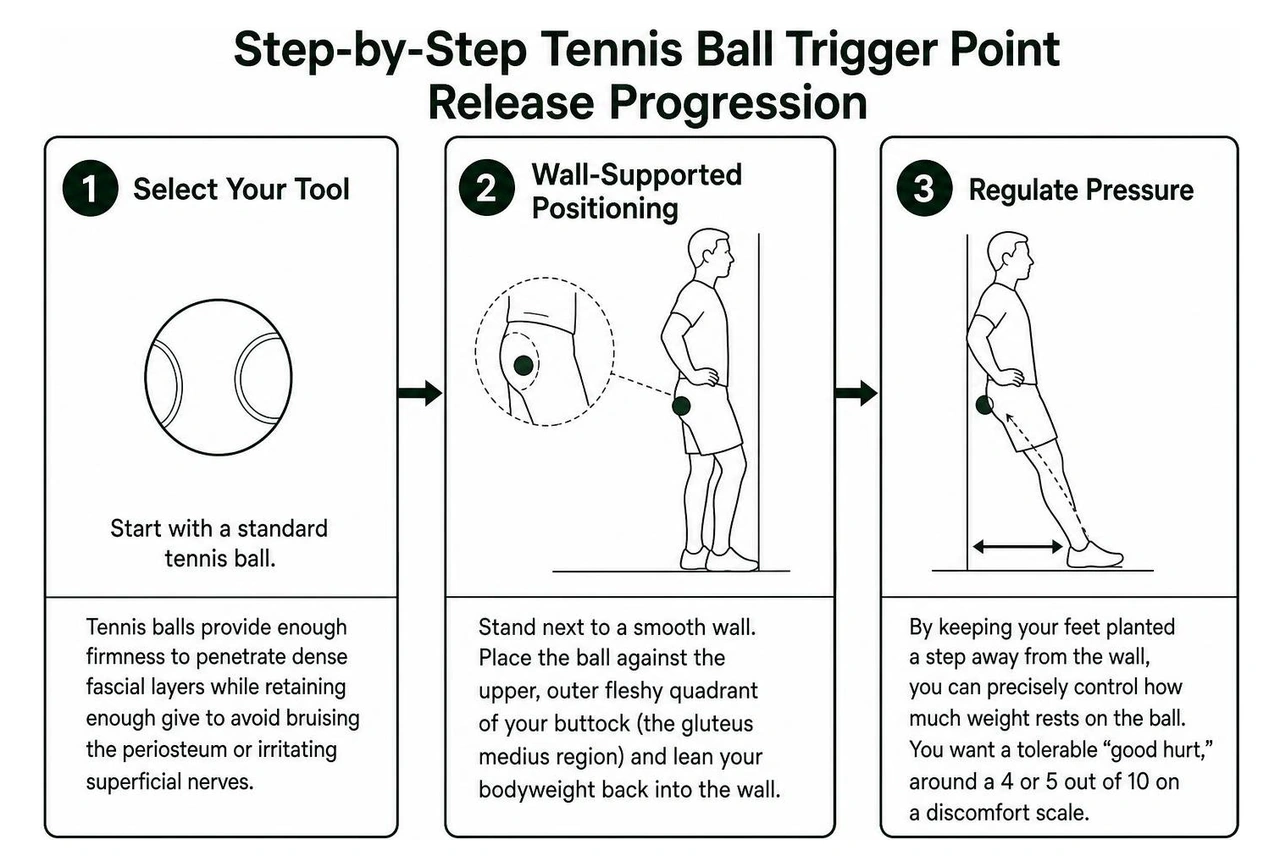
- Select Your Tool: Start with a standard tennis ball. Tennis balls provide enough firmness to penetrate dense fascial layers while retaining enough give to avoid bruising the periosteum or irritating superficial nerves.
- Wall-Supported Positioning: Stand next to a smooth wall. Place the ball against the upper, outer fleshy quadrant of your buttock (the gluteus medius region) and lean your bodyweight back into the wall.
- Regulate Pressure: By keeping your feet planted a step away from the wall, you can precisely control how much weight rests on the ball. You want a tolerable "good hurt," around a 4 or 5 out of 10 on a discomfort scale.
- Sustain Static Compression: Do not aggressively roll back and forth. Hold stationary pressure on a tender spot for 20 to 30 seconds while practicing slow, diaphragmatic breathing.
- Progress to the Floor (Optional): Once wall releases are comfortable, you can explore floor-based work by sitting on the floor with your knees bent, placing the ball under your hip, and gently crossing the target leg into a figure-4 position.
For a focused routine on the lateral hip, the American Council on Exercise describes self-myofascial release techniques for the gluteal complex that follow the same principle: find a tender spot, apply tolerable pressure, and breathe. Always avoid placing direct pressure over bony landmarks or the sciatic notch if you feel electric tingling.
What Professional Therapies Work Best for Stubborn Gluteal Knots?
While home self-release provides short-term relief, chronic trigger points often require professional intervention to address complex fascial adhesions and underlying movement dysfunction.
Peer-reviewed clinical research on active soft tissue release for gluteus medius pain shows that active manual soft tissue therapy produces significant symptom improvement in low back and leg pain originating from gluteal trigger points.
Professional Gluteal Trigger Point Release vs. Home Self-Care
At Transcending Health in Charlottesville, we approach gluteal pain through an integrated human restoration model. Rather than endlessly pressing into the same knot, our practitioners combine hands-on modalities with targeted recovery technologies:
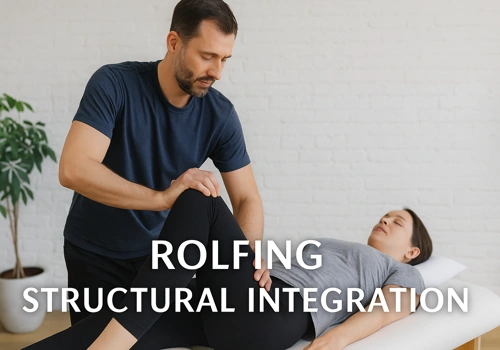
- Hands-On Bodywork: We integrate myofascial release, Rolfing (structural integration), and fascial counterstrain to unwind compensatory fascial strain lines connecting the lower back, pelvis, and legs. Our comprehensive therapeutic massage services tailor soft-tissue pressure directly to your tissue tolerance.
- Targeted Recovery Tech: For deep, calcified, or stubborn tension, we utilize non-invasive SoftWave acoustic wave therapy, focused cryotherapy for acute pain reduction, and orthopedic laser therapy to stimulate cellular repair.
- Assessment & Movement Re-education: Every client begins with a comprehensive body assessment to evaluate pelvic tilt, hip rotation, and gait patterns so we can solve why the muscle became overactive in the first place.
Corrective Exercises and Stretches to Prevent Recurrence
Releasing a tight muscle without strengthening its stabilizers often causes the trigger point to return within days. Once you release the tight hip rotators, restore balance with these basic movements:
- Figure-4 Stretch: Lie on your back, cross your ankle over the opposite knee, and gently draw your thigh toward your chest for 30 seconds to lengthen the piriformis.
- Clamshells: Lie on your side with knees bent at 90 degrees. Keep your feet glued together and open your top knee to activate the posterior gluteus medius fibers without rocking your pelvis.
- Banded Lateral Walks: Place a light resistance band around your ankles and take controlled lateral steps to build endurance across your hip abductors.
- Glute Bridges: Lie supine and press through your heels to extend your hips, ensuring your gluteus maximus drives the movement rather than your lumbar paraspinals.
When Should You Avoid Self-Release and Seek Professional Care?
Self-myofascial release is generally safe, but there are clear contraindications where aggressive ball rolling or percussion massage can cause harm:
- Acute Lumbar Disc Herniation: Deep pressure during an acute disc flare can spike muscle guarding and increase nerve sensitivity.
- Suspected Deep Vein Thrombosis (DVT): Never massage unexplained deep swelling, heat, or redness in the lower extremity.
- Active Infection, Fracture, or Malignancy: Avoid manual pressure over unhealed structural injuries or systemic conditions.
- Pregnancy Precautions: Deep gluteal and sacral work requires specialized prenatal positioning and gentle techniques.
- Progressive Neurological Red Flags: If you experience sudden foot drop, severe numbness in the groin/saddle area, or loss of bowel/bladder control, seek emergency medical care immediately.
Frequently Asked Questions About Gluteal Trigger Points
How often should I perform gluteal trigger point release?
For home self-care, keep sessions brief: spend 1 to 2 minutes per side, holding each tender spot for 20 to 30 seconds, 3 to 5 days per week. Avoid aggressive daily grinding, which can inflame the tissue.
Can a tight glute mimic sciatic nerve pain?
Yes. Trigger points in the gluteus medius, gluteus minimus, and piriformis frequently refer dull, aching pain down the back and side of the leg, creating a pattern often called pseudo-sciatica.
Why might my buttock hurt more after self-release?
If you use excessive pressure, roll too rapidly, or press directly against an inflamed nerve, your nervous system responds with protective muscle guarding. Always back off the pressure and use gentle breathing.
Ready to resolve chronic hip, glute, or lower-back tension with an integrated care plan? Schedule your initial consultation and session on our appointment calendar, call our Charlottesville center at 434-465-2905, or email info@transcendinghealth.net.