If your neck aches by mid-afternoon and your low back is tight by the end of the day, your chair isn't the whole story — but sitting for hours is quietly reshaping how your body loads itself. The fix isn't an expensive gadget. It's understanding what sitting does, and giving your body a few minutes of the right movement.
What eight hours of sitting really does
When you sit, your hip flexors shorten, your glutes switch off, and your upper back rounds forward. Your head drifts ahead of your shoulders, and suddenly your neck is holding up a bowling ball at the end of a lever. None of this is dramatic on any single day — which is exactly why it sneaks up on you as chronic tension.
The spot that hurts usually isn't the source
Here's what most people miss: the place you feel pain is often not where the problem started. Tight hips from sitting pull on the low back. A rounded upper back overloads the neck. So you stretch the sore spot, get an hour of relief, and the ache returns — because the real driver was somewhere else. That's why chasing symptoms rarely works, and why addressing the root does.
A daily reset that actually helps
You don't need a gym. Once or twice a day, cycle through a few gentle moves: roll the neck and shoulders to release the top of the chain, open the chest with a standing backbend, and stretch the hip flexors to take the pull off your low back. Add ten slow bodyweight squats to wake the muscles that switch off when you sit. Five minutes is enough — done daily, it beats a long session once a week.
A 20-second test
Stand with your back to a wall, heels, hips, upper back, and head all touching. If your head won't reach comfortably, that's forward-head posture. If there's a big gap behind your low back, tight hips are tilting your pelvis. Neither is cause for alarm — they're just your body showing you where the day loads up.
Set up your workstation in five minutes
- Screen: top of the screen at or just below eye level, about an arm's length away. Laptop users can add a stand and a separate keyboard.
- Chair: feet flat on the floor, knees about level with your hips, and your low back supported.
- Keyboard and mouse: close enough that your elbows stay near your sides and your wrists stay fairly straight.
- Phone: use a headset or speaker for long calls instead of cradling the phone on your shoulder.
No setup is perfect for eight hours. The best posture is your next one, so plan to change positions often.
A movement schedule for the workday
- Every 30 minutes: stand up, look across the room and take a few slow breaths.
- Every hour: walk for two minutes, even if it is just to refill your water.
- Midday: run through the five-minute reset above.
- End of day: a short walk outside helps your back and your mind shift out of work mode.
Standing desks: helpful, not magic
Standing desks can help because they make it easier to change positions. Standing all day brings its own aches, though. Alternate between sitting and standing every 30 to 60 minutes, wear supportive shoes and use a mat if you stand on a hard floor.
When to get hands-on help
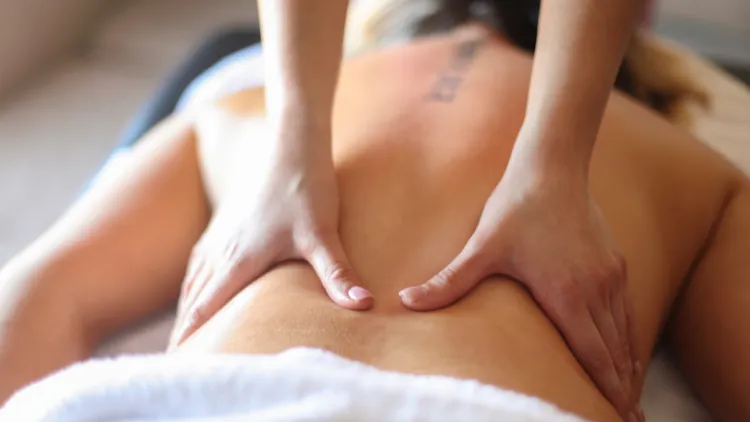
If neck or back pain has lasted more than a few weeks, keeps coming back or is starting to affect sleep, it is worth getting help. Our team often combines massage in Charlottesville with corrective exercise for desk-related pain. You can also read about how we approach neck pain and low back pain.
Related: if desk work has left you with a sore low back and you are weighing your options, read massage vs. chiropractor for low back pain.
Frequently asked questions
Is sitting really that bad for my back?
Sitting itself is not harmful. Sitting still for long stretches without moving is what tends to cause problems. Regular movement breaks make a big difference.
What is the best chair for back pain?
The best chair is one that fits your body and lets your feet rest flat with your back supported. Even a great chair will not help if you stay in it for hours without a break.
When should I see a doctor?
See a doctor if you have numbness, tingling or weakness in your arms or legs, pain after an injury, or pain that is getting steadily worse.
If that sounds like you, movement is the biggest lever you have — and sometimes it needs a hand. Hands-on care, corrective exercise, and a plan tuned to your body can undo years of desk tension faster than stretching alone.
Want to feel loose again? See our services or book a first visit in Charlottesville.