
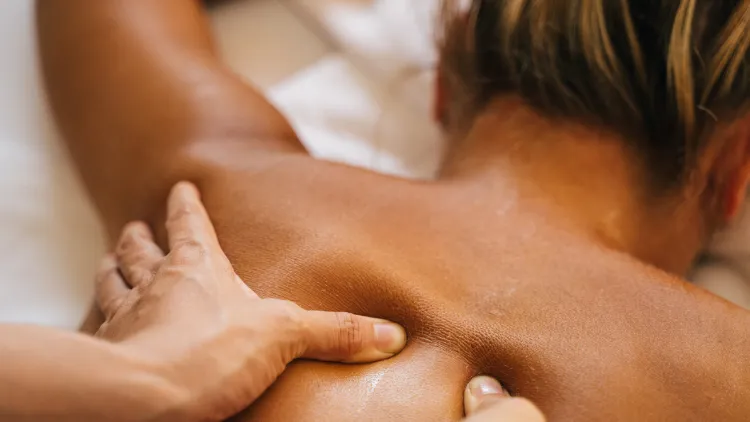
How to Massage Deep Knots Around Your Shoulder Blade
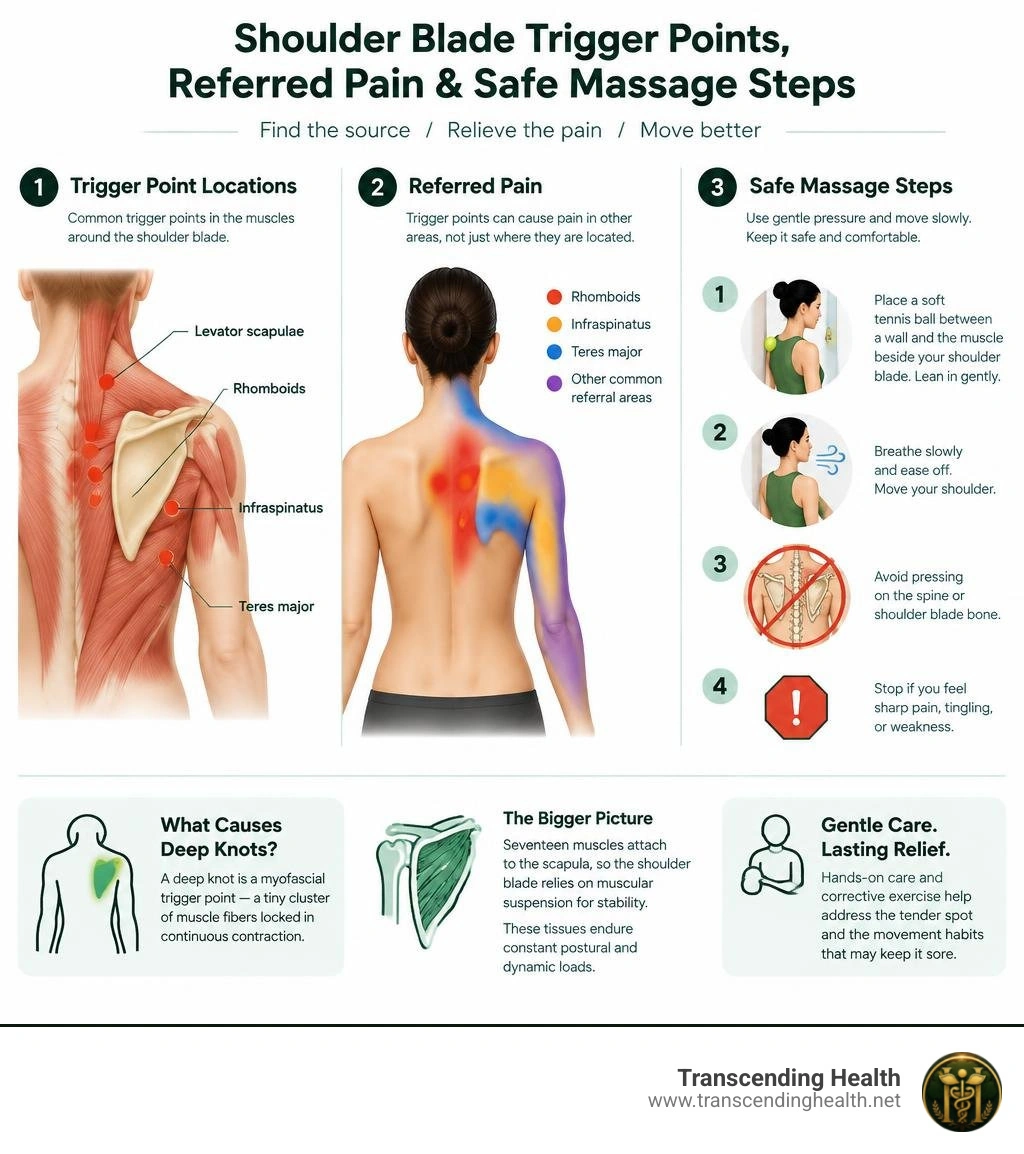
Start gently when you have a deep knot beside the shoulder blade. Place a soft tennis ball between a wall and the muscle beside your shoulder blade. Lean in until the pressure feels comfortable, breathe slowly, then ease off and move your shoulder. Avoid pressing on the spine or shoulder blade bone. Stop if you feel sharp pain, tingling, or weakness. If the ache keeps returning, an assessment can help identify what is putting strain on the area.
I’m Drew Edmondson, owner of Transcending Health at 1445 Rio Road East, Suite 201 F, Charlottesville, VA 22901. My approach to deep knots in shoulder blades massage pairs hands-on care with corrective exercise to address both the tender spot and the movement habits that may keep it sore.
What Causes Deep Knots Around the Shoulder Blade?
A deep knot is not a bundle of tangled muscle fibers or a physical lump under the skin. Clinically, it is known as a myofascial trigger point. These points develop when a tiny cluster of muscle fibers becomes locked in a continuous state of contraction.
Several muscles attach to the scapula, anchoring the shoulder to the neck, spine, and rib cage. Because the shoulder blade relies almost entirely on muscular suspension rather than fixed bony joints for its stability, these tissues endure continuous postural and dynamic loads.
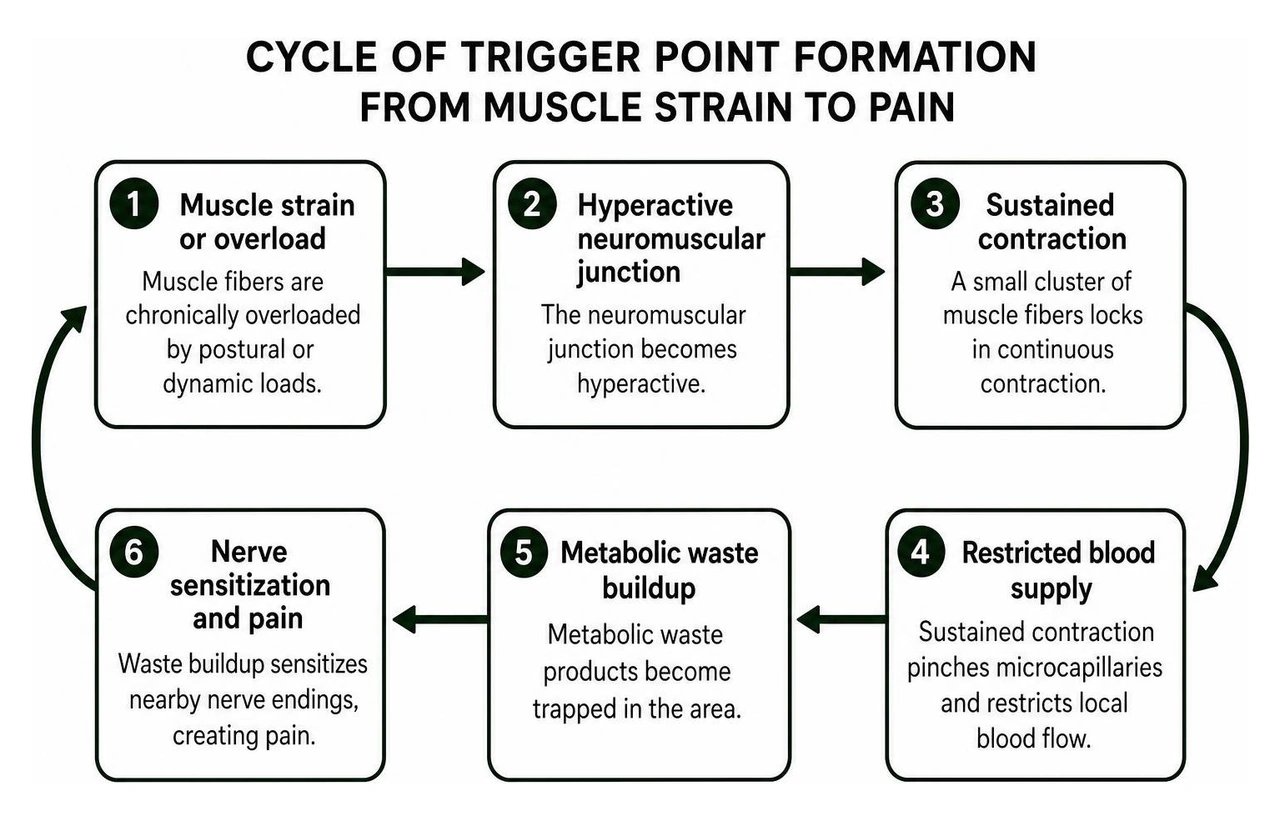
When a muscle fiber is chronically overloaded, the neuromuscular junction becomes hyperactive. This sustains a localized contraction that pinches surrounding microcapillaries. According to the Cleveland Clinic, these sustained contractions restrict local blood supply, trapping metabolic waste products and sensitizing nearby sensory nerve endings.
Anatomy of Scapular Trigger Points
Understanding the exact location of upper back tension helps you pinpoint the right tissue for relief. We detail the mechanics behind these contractions in our guide to understanding why trigger points form.
The primary muscles prone to knots around the scapula include:
- Rhomboids (Major and Minor): Running between the spine and the inner border of the shoulder blade, these muscles contract to stabilize your back.
- Levator Scapulae: Connecting the top inner angle of the scapula to the upper cervical vertebrae, this muscle elevates the blade and easily tightens when holding tension.
- Middle and Lower Trapezius: These large postural muscles support shoulder retraction and depression.
- Infraspinatus: Located on the flat back surface of the shoulder blade, trigger points here often refer pain deep into the front of the shoulder or down the arm.
- Subscapularis: Positioned along the underside of the shoulder blade against the rib cage, this muscle can restrict arm rotation when hypertonic.
Postural Strain and Perpetuating Factors
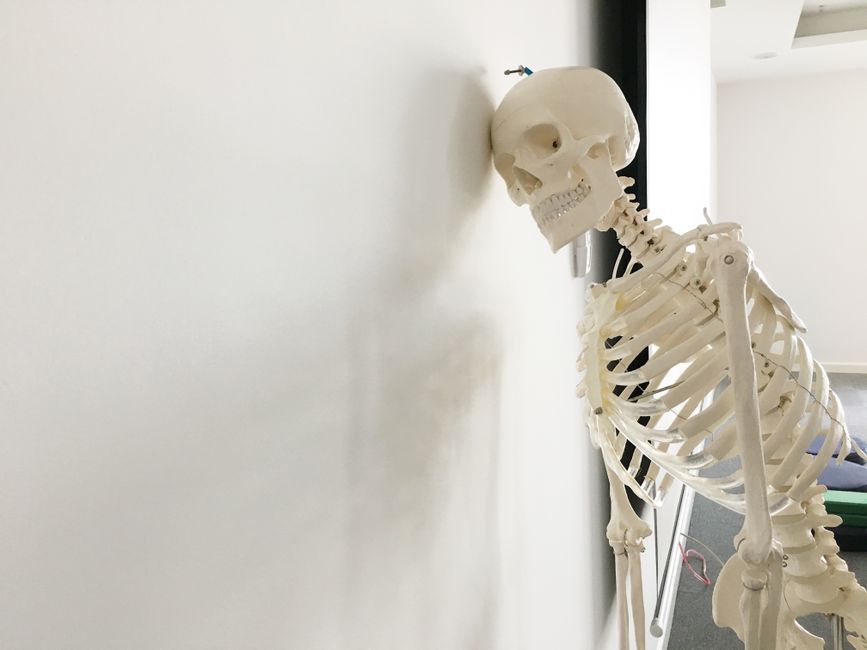
A primary driver of deep scapular knots is sustained postural strain. Prolonged computer use often encourages forward head posture and rounded shoulders. For every inch your head drifts forward, the postural muscles supporting your upper spine must exert substantially more effort to keep your gaze level.
Other perpetuating factors include shallow chest breathing, jaw clenching, and restricted rib movement. When the rib cage cannot expand normally during inhalation, the surrounding intercostal and scapular stabilizers work overtime, locking into protective spasm.
How Deep Knots in Shoulder Blades Massage Releases Chronic Tension
Targeted manual therapy disrupts the self-perpetuating spasm cycle. By applying sustained mechanical pressure to the contracted tissue, skilled hands encourage the locked fibers to lengthen and allow fresh, oxygenated blood to re-enter the region.
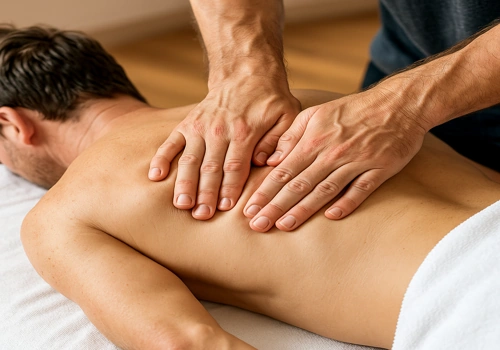
Clinical research on ischemic compression is indexed in PubMed, and a systematic review of ischemic compression found improvements in pain, pressure pain threshold, and range of motion for neck-pain participants with myofascial trigger points.
Clinical Trigger Point Techniques for Deep Knots in Shoulder Blades Massage
Our therapists use structured protocols to release deep restrictions without triggering defensive muscle guarding. Rather than applying rapid, aggressive friction, a practitioner locates the taut band and maintains steady pressure at a manageable intensity that does not provoke sharp pain or guarding.
We utilize focused trigger point massage alongside passive stretching to reset neural tone. Sustained compression gives the central nervous system time to downregulate tension and ease stubborn adhesions.
Massage for deep knots in the shoulder blades can be most useful when careful pressure is paired with an assessment of posture, shoulder movement, and daily load. At Transcending Health, hands-on care may be combined with corrective exercise and mobility training when appropriate, so the plan addresses both the tender area and habits that may contribute to recurring tension. During an assessment, we also ask which activities make the area worse or better and look at how the neck, ribs, and shoulder blade move together. That helps determine whether focused massage is appropriate and whether gentle mobility work or a medical evaluation is the better next step.
Myofascial Release vs Deep Tissue Work
Different types of tissue restriction call for different approaches:
- Myofascial Release: Uses sustained, broad, shearing pressure without heavy lotion to stretch restricted fascial sheets and improve glide between muscle layers.
- Deep Tissue Massage: Uses targeted strokes, cross-fiber friction, and deeper pressure to separate adhered muscle fibers and increase local circulation.
Combining these techniques ensures that both superficial fascial restrictions and deeper muscular trigger points release together.
How Can You Safely Self-Massage Knots Under the Scapula?
Self-massage is an accessible way to manage upper back stiffness between professional sessions. However, technique matters. Aggressive digging or placing hard tools directly against bone can irritate periosteum and inflame spinal nerves.
Home Tools vs Professional Deep Knots in Shoulder Blades Massage
Selecting the right self-care tool ensures safe and effective relief:
| Tool | Target Depth | Spinal Safety | Best Use Case |
|---|---|---|---|
| Foam Roller | Broad / Superficial | Moderate (keep to upper back) | Warming broad tissue and thoracic extension |
| Peanut Ball | Moderate / Targeted | High (spares spinous processes) | Balancing pressure along paraspinal muscles |
| Lacrosse Ball | Deep / Focal | Low (avoid rolling onto bone) | Pinpointing deep rhomboid and infraspinatus knots |
| Massage Cane | Deep / Precise | Moderate (requires controlled pressure) | Hard-to-reach angles near the superior scapular angle |
Step-by-Step Wall Release Protocol
- Warm the Tissue: Gently roll the upper back across a foam roller or take a warm shower.
- Position the Ball: Place a tennis or massage ball between the upper back and a smooth wall, resting it in the muscular channel between the spine and the inner shoulder blade edge.
- Apply Gradual Pressure: Lean gently into the ball until you feel a dull, manageable ache. Keep your feet shoulder-width apart for stability.
- Hold and Breathe: Maintain steady pressure without rolling back and forth. Take slow, deep diaphragmatic breaths to encourage relaxation.
- Add Gentle Movement: While holding steady pressure, slowly bring the arm across the chest to gently stretch the muscle beneath the ball.
- Step Away Slowly: Ease your weight off the wall, roll the shoulders backward, and repeat on the other side if needed.
What Should You Do When Scapular Knots Won't Release?
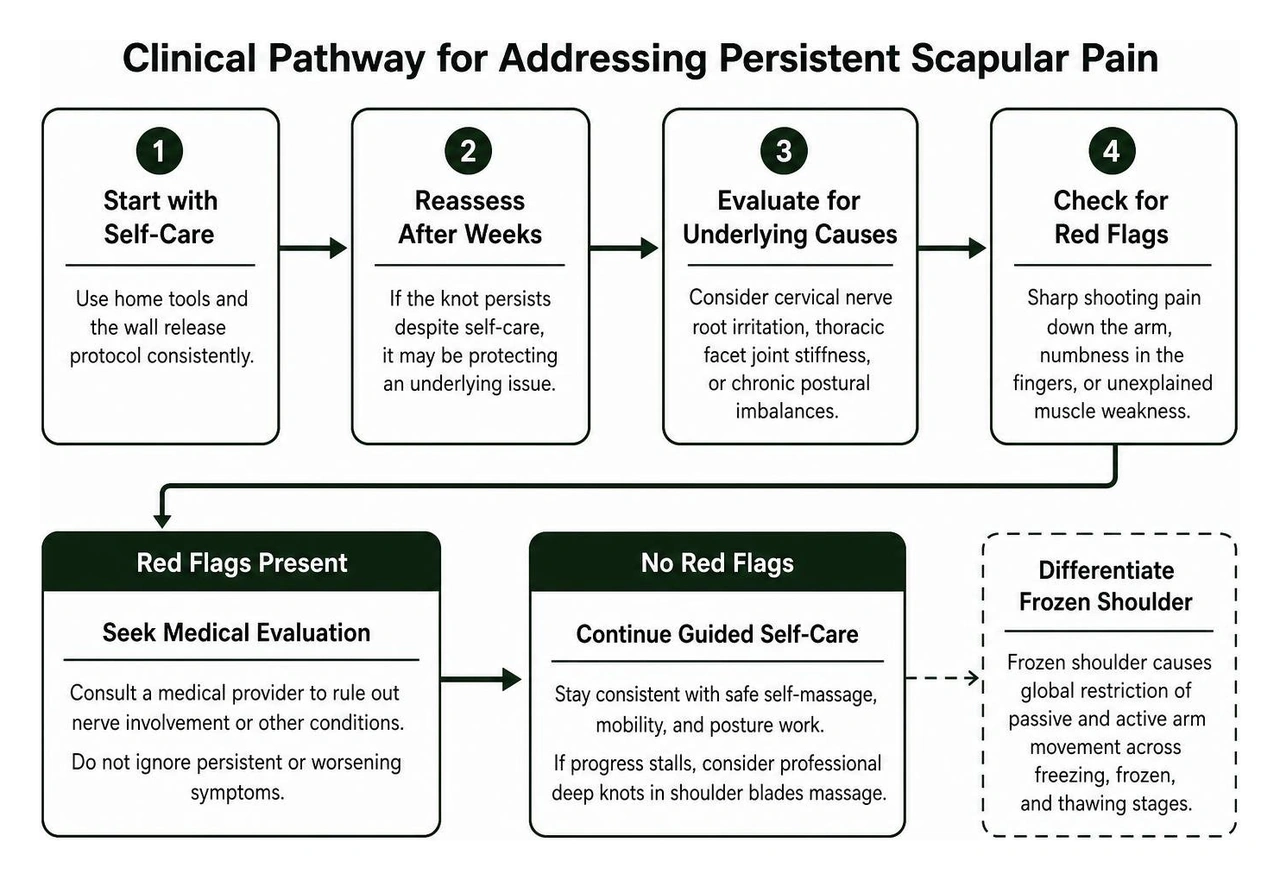
When a knot refuses to release despite weeks of self-care, the muscle is often acting as a protective splint for an underlying issue. Cervical nerve root irritation, thoracic facet joint stiffness, or chronic postural imbalances can cause the nervous system to keep the surrounding tissue locked in contraction.
If you notice sharp shooting pain down the arm, numbness in the fingers, or unexplained muscle weakness, seek an evaluation from a medical provider.
Differentiating Muscle Knots from Frozen Shoulder
It is essential to distinguish between a muscular trigger point and joint capsule pathology such as frozen shoulder (adhesive capsulitis).
According to the American Academy of Orthopaedic Surgeons, adhesive capsulitis involves severe inflammation and contracture of the glenohumeral joint capsule itself. While a deep knot causes localized tenderness and slight muscular tightness, frozen shoulder results in global restriction of passive and active arm movement, progressing through distinct freezing, frozen, and thawing stages.
Advanced Modalities and Movement Coaching
For persistent muscular tension, we offer advanced non-invasive options to accelerate recovery. Modalities like SoftWave acoustic wave therapy, focused cryotherapy, and orthopedic laser help calm localized inflammation and stimulate tissue repair. Pairing these tools with corrective exercises—such as serratus anterior activation and mid-back mobility training—ensures tension stays away long term.
Frequently Asked Questions About Shoulder Blade Knots
How long does it take for deep shoulder blade knots to go away?
Response varies with the cause, daily movement habits, and how long the tension has been present. Consistent movement breaks, posture adjustments, and a tailored plan can support gradual improvement.
Is it normal to feel sore after a deep tissue massage?
Yes. Mild post-treatment soreness similar to the feeling after a challenging workout can occur following deep bodywork. Staying well-hydrated, applying gentle heat, and performing light mobility stretches help ease this temporary tenderness.
Why do knots between the shoulder blades keep returning?
Knots return when the underlying habits driving them remain unchanged. Common culprits include working on non-ergonomic desk setups, holding your head forward while looking at screens, chronic stress, or weakness in the serratus anterior and lower trapezius muscles.
Ready to Restore Your Upper Back Mobility?
At Transcending Health, we believe lasting relief comes from understanding the root cause of your pain. Whether you need focused manual work or advanced restorative care, we are here to support your recovery.
Schedule your session today through our online booking calendar or explore our full range of therapeutic bodywork on our massage services page. You can also reach our Charlottesville clinic directly at 434-465-2905 or by email at info@transcendinghealth.net.