How Athletic Sports Massage Helps Runners and Lifters
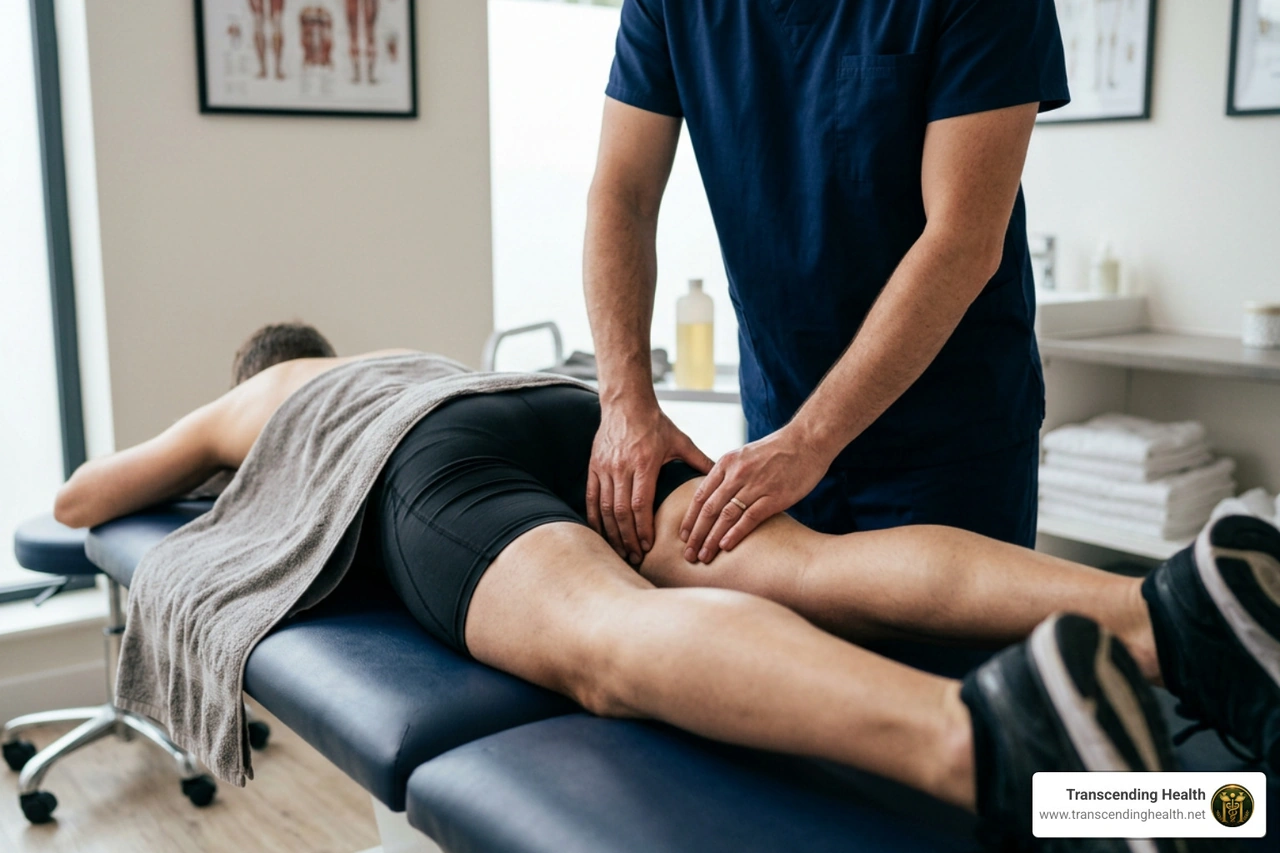
Athletic sports massage is targeted bodywork shaped around your training and the movements that feel restricted. For runners and lifters, it may ease post-workout soreness, improve range of motion, and help you feel more ready for your next session. It is not a proven shortcut to faster times or heavier lifts, and it cannot replace sleep, sensible training, or medical care for an injury.
I'm Drew Edmondson, owner of Transcending Health, a human restoration and performance center at 1445 Rio Road East, Suite 201 F, Charlottesville, VA 22901. My experience bringing massage and corrective exercise into coordinated recovery plans for active adults shapes how I think about athletic sports massage: start with what you want to get back to doing, then choose the care that fits.
A focused session can be especially useful when training volume climbs. Runners often arrive with calves and hip flexors that feel dense and stuck. Lifters may notice that tight lats or pecs change how the bar sits on their back or how their shoulders move overhead. In both cases, the goal is not to force a muscle to give in. The goal is to restore enough give and control that your next run or lift feels less like a fight with your own body.
What Is Athletic Sports Massage and How Does It Differ from General Bodywork?
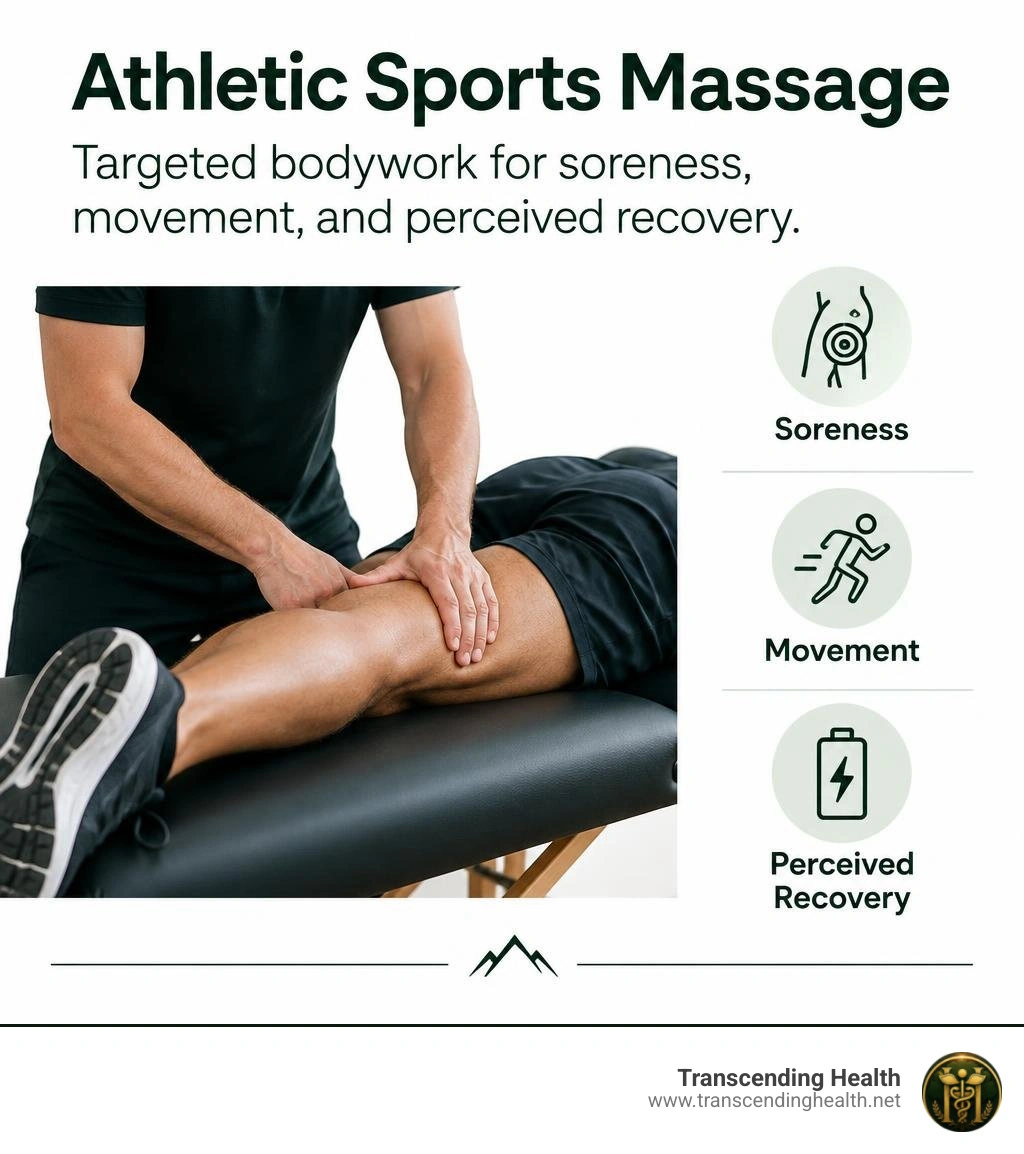
Athletic sports massage is hands-on work aimed at a training goal. Relaxation massage uses light, even strokes to help you unwind. Sports massage focuses on the muscles your training loads again and again.
When comparing deep tissue vs sports vs restorative massage, the main difference is the goal. Sports massage targets the stiff spots and tight muscles that your own training creates.
Core Techniques in an Athletic Sports Massage Session
A skilled therapist blends several methods depending on where you are in your training:
- Effleurage and Petrissage: Long gliding strokes and kneading that warm up the muscles and boost circulation.
- Trigger Point Therapy: Steady pressure on tender knots to release them and ease pain that spreads to other areas.
- Cross-Fiber Friction: Short strokes across a tendon or muscle to loosen stuck spots and support healthy healing.
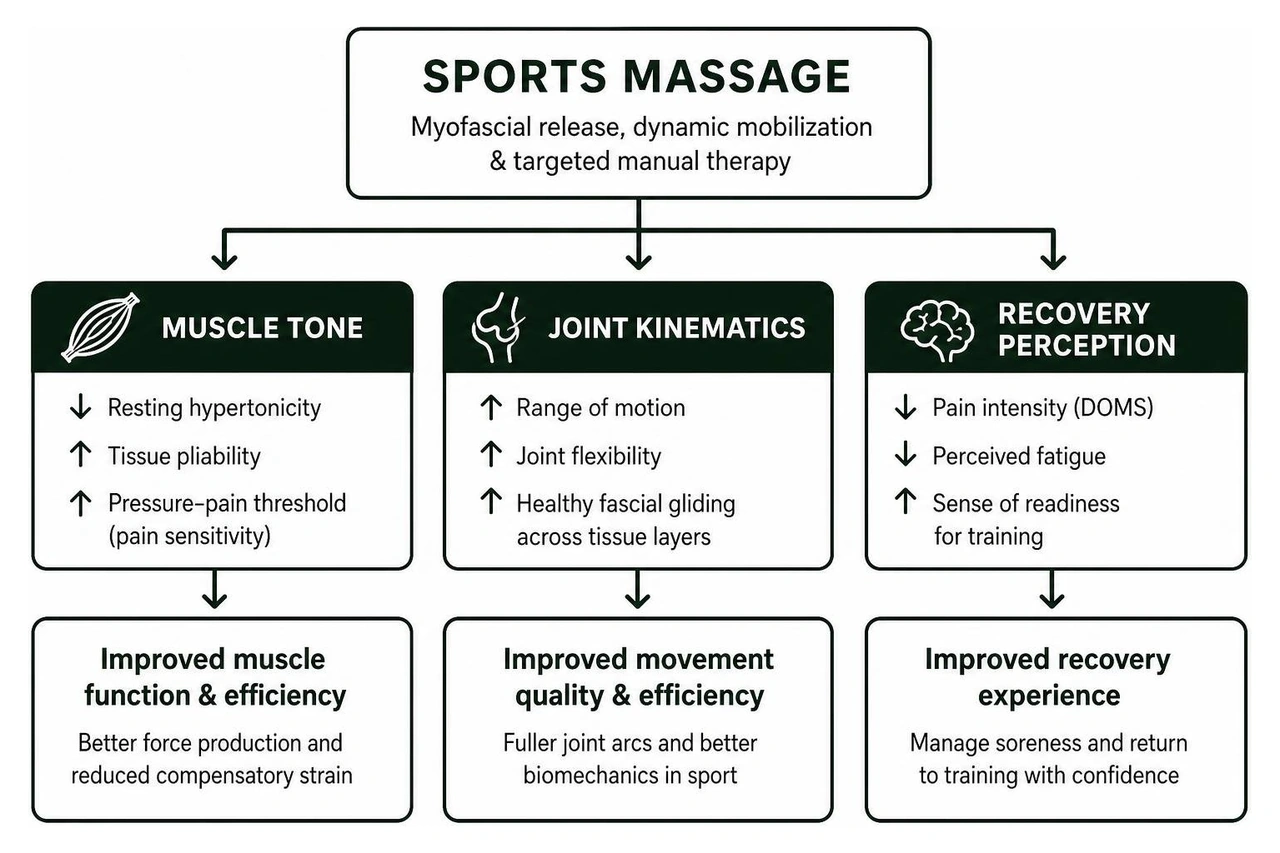
- Myofascial Release and Dynamic Mobilization: Gentle stretching and guided movement that help connective tissue move freely again.
A large review of 47 studies on massage for muscle injuries found that hands-on therapy reduced pain and improved range of motion in active people.
Key Differences for Strength and Endurance Athletes
Runners and lifters stress the body in different ways. Running means thousands of small impacts through the legs. Heavy lifting means bracing your core and holding your joints steady under big loads.
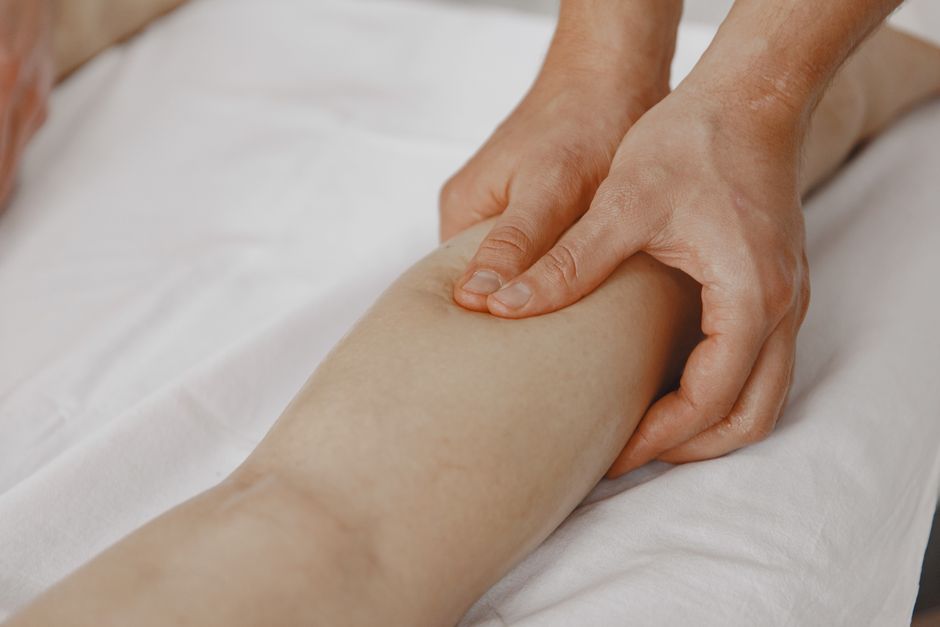
For runners, our sports massage in Charlottesville focuses on the calves, hamstrings, and hip flexors. For lifters, we often work the low back muscles, chest, lats, and glutes so you can move well under heavy loads.
How Does Sports Massage Impact Muscle Recovery and DOMS?
Hard workouts cause tiny damage in muscle fibers. Your body responds with inflammation and the soreness you feel a day or two later, called delayed onset muscle soreness (DOMS). Gym lore says massage "flushes out lactic acid," but lactate clears on its own within about an hour of exercise.
Instead, massage seems to help by calming your nervous system and making sore muscles less sensitive. Many people also simply feel less tired. That can help you handle normal soreness and keep training.
Scientific Evidence on Delayed-Onset Muscle Soreness
Research suggests sports massage can reduce soreness after hard training. In one randomized trial, people who got massage after tiring jump training reported less pain than those who did not.
Massage won't restore your full strength overnight or clear muscle-damage markers from your blood. It can make sore muscles less tender and help you feel less worn out, so your next workout feels more manageable.
Optimizing Flexibility and Joint Range of Motion
Stiff joints make running less efficient and can limit how deep you squat. A large review of massage in sport found that range of motion was one of the most reliable improvements.
Bodywork helps tissue layers glide and lowers extra muscle tension, so your joints can move through their full range without other areas picking up the slack. That is one reason we pair hands-on work with corrective exercise at Transcending Health: the table work opens a window, and the movement work teaches your body to use it.
When Is the Optimal Timing for Athletic Sports Massage in Training Cycles?
Timing shapes how deep and how fast the session goes. Deep work right before a race or meet can leave your muscles feeling heavy. Light, rhythmic work after an event helps you settle down.
| Timing | Primary Goal | Recommended Techniques | Best Window |
|---|---|---|---|
| Pre-Event | Wake up muscles and loosen up | Light, quick strokes and active stretching | 24–48 hours prior |
| Post-Event | Calm down and ease soreness | Gentle, broad strokes and light kneading | 24–72 hours after |
| Maintenance | Release deep tension and restore balance | Trigger point, myofascial release, Rolfing | Between heavy training blocks |
Pre-Event vs. Post-Event Protocols
Pre-event sessions prepare your body without leaving you sore. We use brisk strokes and assisted stretching to warm the tissue and help you feel ready.
Post-event sessions do the opposite. We use broad, soothing strokes to calm your system, move fluid, and ease cramping muscles without stressing tired fibers.
Maintenance Sessions and Integrating an Athletic Sports Massage Routine

Maintenance sessions happen during your regular training. This is where deeper work fits best. Your therapist checks how you move, then releases long-standing tight spots before small issues turn into injuries.
Active runners and lifters usually get the most benefit from a focused session every 2 to 4 weeks. The right rhythm depends on how much you train, how well you recover, and how your body responds to hands-on work.
Who Benefits Most and When Should Athletes Seek Medical Assessment?
You don't need to be an elite athlete to benefit. Weekend 10K runners, masters powerlifters, and people who sit at a desk all day and train at night all build up imbalances. Long hours of sitting tighten the hip flexors and stiffen the upper back. Those areas then take a beating in evening squats or interval runs.
Tailored Protocols for Runners and Heavy Lifters
- For Runners: We work the outer thigh along the IT band, the bottom of the foot, the calves, and the hip flexors to keep your stride smooth.
- For Lifters: We focus on the muscles around the shoulder blades, the rotator cuff, the lats, and the deep glutes to support healthy shoulders and a stable spine.
Contraindications and Recognizing Red Flags
Massage is safe for most people, but it is not a cure-all and does not fit every symptom. Pause bodywork and see a doctor if you notice:
- Sudden, unexplained swelling, heat, or redness in a joint or muscle.
- Sharp pain that gets worse when you put weight on it.
- Numbness, tingling, or electric-feeling pain running down an arm or leg.
- A possible broken bone, a badly torn ligament, or signs of a blood clot.
Knowing the difference between normal tightness and a real injury keeps your recovery safe.
Frequently Asked Questions About Athletic Sports Massage
How often should runners and lifters schedule sports massage?
If you train consistently, a session every 2 to 4 weeks is a good balance. It gives your body time to adapt between visits and catches tightness before it turns into an overuse strain.
Does sports massage help prevent repetitive strain injuries?
It can't prevent accidents, but regular sessions help your therapist spot tight areas and stiff joints early. Working on them may reduce extra strain on your tendons and joints.
What credentials should athletes look for in a sports massage therapist?
Look for a state-licensed massage therapist with extra training in orthopedic assessment and movement, plus hands-on methods such as structural integration, myofascial release, or fascial counterstrain.
Conclusion
Athletic sports massage is a practical, research-backed way to ease soreness, improve range of motion, and stay ready through hard training. At Transcending Health in Charlottesville, we combine targeted clinical massage therapy with recovery tools and movement coaching to keep you moving at your best.
Ready to reset your movement and support your training recovery? Schedule your next session online.