
Your First Steps After Achilles Tendinitis Surgery
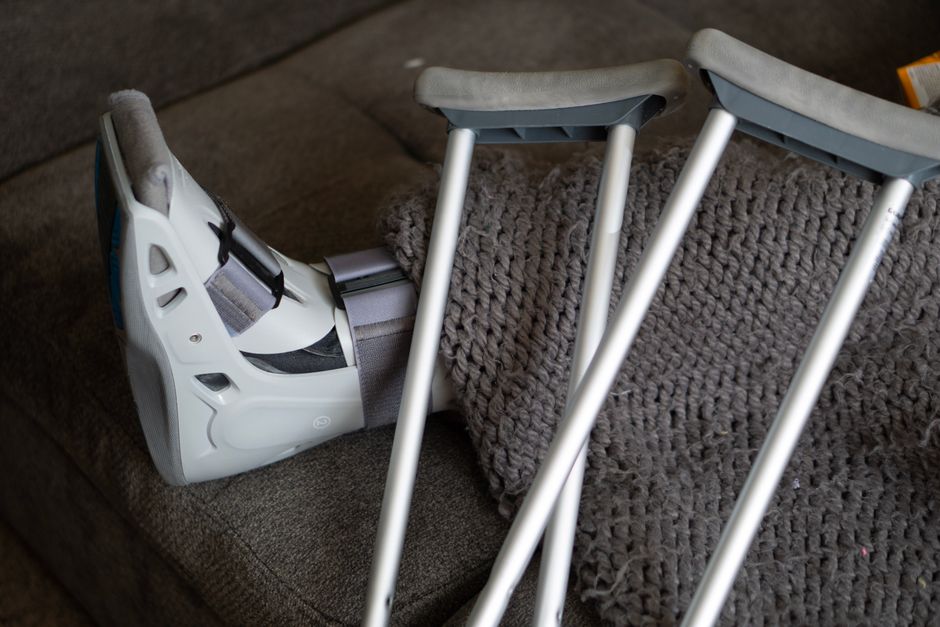
Recovery after Achilles tendinitis surgery starts with protecting the healing tendon. Keep your surgical incision clean and dry, elevate your operative leg to ease swelling, and use your walking boot, cast, or crutches exactly as directed by your surgeon. Begin gentle movement and add weight to your foot only when your surgeon or care team explicitly clears you. If you develop a fever, worsening wound redness, new calf pain, or sudden trouble breathing, seek immediate medical attention.
I’m Drew Edmondson, owner of Transcending Health, a human restoration and performance center located at 1445 Rio Road East, Suite 201 F, Charlottesville, VA 22901. My daily work helping active adults and athletes coordinate surgical rehabilitation, manage soft tissue adaptations, and rebuild foundational movement patterns shapes this comprehensive guide to Achilles tendinitis surgery recovery.

What Are the Main Surgical Options and How Do They Impact Achilles Tendinitis Surgery Recovery?
When conservative management such as activity modification, progressive tendon loading, orthotics, and acoustic wave therapy fails to resolve chronic insertional or midportion Achilles tendinopathy, orthopedic foot and ankle surgeons discuss operative intervention. The primary objective is excising degenerate, non-viable tendon fibers, shaving irritating bony spurs such as a prominent Haglund deformity on the calcaneus, and restoring optimal tendon tension. The specific surgical procedure selected by your orthopedic specialist directly shapes your early postoperative timeline, weight-bearing progression, and soft tissue healing constraints.
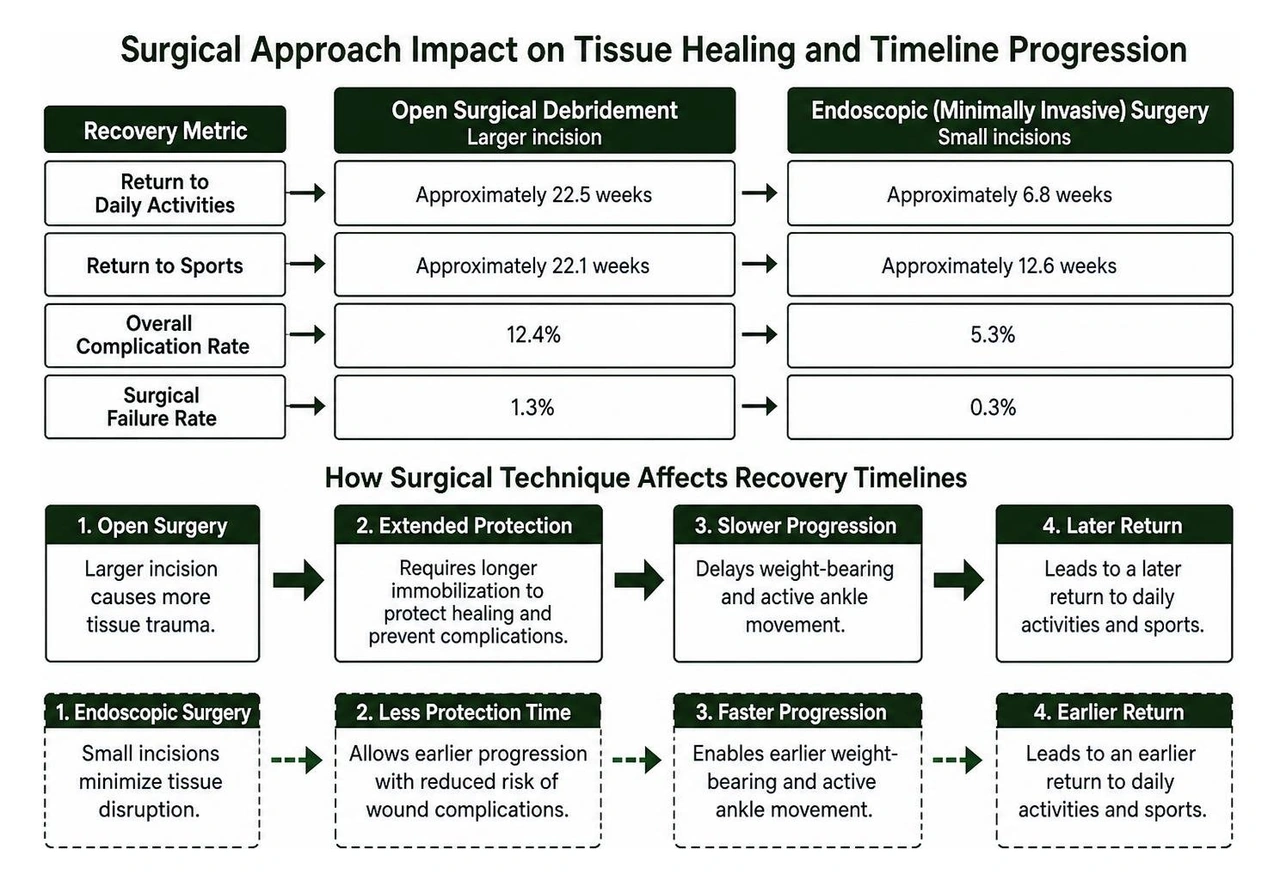
According to a systematic review and meta-analysis on insertional Achilles surgery, patients return to daily activities in approximately 22.5 weeks after open surgical debridement versus approximately 6.8 weeks after endoscopic surgery, and return to sports in approximately 22.1 weeks versus approximately 12.6 weeks, respectively. The same review reports an overall complication rate of 12.4% for open debridement versus 5.3% for endoscopic surgery, and a surgical failure rate of 1.3% versus 0.3%, respectively.
Both open debridement and endoscopic techniques deliver comparable long-term functional scores, yet endoscopic options significantly reduce early downtime, wound complications, and skin edge breakdown, per the same systematic review.
Open vs. Endoscopic Techniques in Achilles Tendinitis Surgery Recovery
Open surgery involves a longitudinal incision across the posterior heel. This direct visualization allows the surgeon to perform thorough debridement, resect large intratendinous calcifications, and securely reattach detached tendon tissue using bio-absorbable suture anchors. When more than fifty percent of the tendon is compromised, a flexor hallucis longus tendon transfer may be integrated to augment plantarflexion power. Additional insights from the American Academy of Orthopaedic Surgeons emphasize that extensive open repairs require strict early immobilization to ensure anchor security.
Endoscopic procedures use small puncture portals, specialized arthroscopic shavers, and fiber-optic cameras to debride the retrocalcaneal bursa and resect the superior calcaneal tuberosity with minimal soft tissue disruption. This approach preserves surrounding cutaneous nerves, maintains local microvascular blood supply, and drastically lowers the risk of wound dehiscence.
How Surgical Technique Affects Recovery Timelines
Surgical tissue trauma dictates early mechanical constraints. Larger open incisions demand extended non-weight-bearing periods to prevent skin necrosis and safeguard anchor repairs. Minimally invasive methods allow earlier progression through protected weight-bearing, enabling active individuals to safely resume movement retraining weeks ahead of traditional open reconstructions.
What Does the Step-by-Step Achilles Tendon Rehabilitation Timeline Look Like?
Tendon tissue remodels at a deliberate, gradual pace because of limited blood supply. Synthesized type-III collagen fibers require structured mechanical tension to realign into strong type-I parallel bundles, a biological process documented in peer-reviewed research on Achilles tendon rehabilitation protocols. A systematic review of early functional rehabilitation after Achilles repair outlines similar milestone-based progressions used by many orthopedic teams.
Phase 1 and 2: Early Healing and Achilles Tendinitis Surgery Recovery Protocols
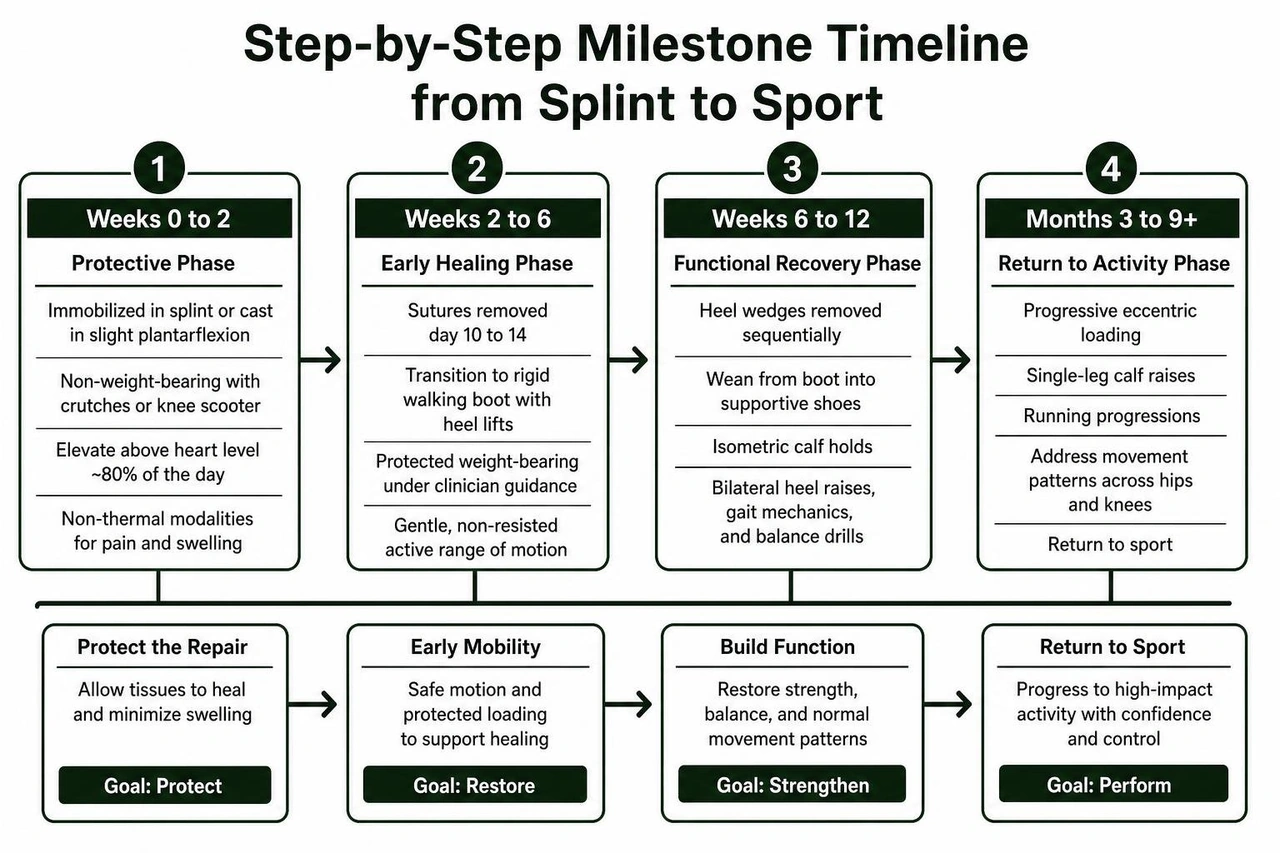
- Weeks 0 to 2 (Protective Phase): The foot remains immobilized in a rigid posterior splint or cast, positioned in slight equinus (plantarflexion) to minimize tension on the repaired tendon fibers. You must remain completely non-weight-bearing using crutches, a walker, or a knee scooter. Keep the operative leg elevated above heart level for most of each day to control interstitial edema, as instructed by your surgical team. Localized non-thermal supportive tools like focused cryotherapy can assist in easing peri-incisional swelling and inflammatory discomfort once surgical dressings permit safe exposure.
- Weeks 2 to 6 (Early Healing Phase): Sutures are typically removed between postoperative days 10 and 14. Patients transition into an adjustable pneumatic walking boot fitted with internal heel wedges. Protected weight-bearing begins under clinical guidance, gradually progressing from partial to full tolerance. Gentle, non-resisted active plantarflexion and dorsiflexion within safe ranges prevent arthrofibrosis. These early phases fit into a broader recovery plan that should follow your surgeon's instructions.
Phase 3 and 4: Functional Loading and Return to Activity
- Weeks 6 to 12 (Functional Recovery Phase): Heel wedges inside the boot are removed sequentially to restore neutral ankle dorsiflexion without overstretching healing tendon fibers. Patients gradually transition into supportive athletic footwear. Guided rehabilitation emphasizes isometric soleus and gastrocnemius holds, seated bilateral heel raises, gait mechanics retraining, and proprioceptive balance drills.
- Months 3 to 9+ (Return to Activity Phase): Progressive overload shifts toward eccentric heel drops, single-leg calf raises, and running progressions. A systematic review of eccentric exercise for Achilles tendinopathy supports progressive loading as part of rehabilitation. Integrating dedicated personal training and corrective exercise helps rebuild bilateral calf strength symmetry, correct compensatory hip mechanics, and ensure long-term joint resilience.
How Should You Manage Self-Care, Incision Healing, and Complication Risks at Home?

Your home recovery environment directly influences early tissue repair and complication avoidance. Prioritize adequate sleep, maintain strict limb elevation during the initial two weeks, and protect your dressings from moisture. When bathing, utilize specialized waterproof cast sleeves, shower chairs, or sponge baths to ensure the splint remains entirely dry. To support collagen synthesis and cellular repair, nourish your body with wholesome meals and review our clinical guide on protein intake for tissue repair and healing.
Recognizing Red Flags and Post-Surgical Complications
While most recoveries proceed smoothly, remaining vigilant for post-surgical complications protects long-term outcomes. Contact your orthopedic surgeon immediately if you notice any of these warning signs:
- Deep Vein Thrombosis (DVT): Sudden, severe calf tenderness, localized heat, or swelling spreading above the cast. Sudden chest tightness or shortness of breath warrants immediate emergency medical evaluation.
- Surgical Site Infection: Rapidly spreading erythema, persistent localized heat, foul-smelling or purulent discharge, or an oral fever exceeding 101°F.
- Nerve Irritation or Neuropraxia: Progressive tingling, sharp burning, or persistent numbness along the lateral heel and foot border corresponding to the sural nerve distribution.
Returning to Daily Life, Driving, and Work
Individuals with sedentary desk jobs can frequently resume seated or remote work within 1 to 2 weeks post-surgery. Occupations requiring prolonged standing, walking, or physical labor often require 6 to 12 weeks of modified duty. If your procedure involved your right foot, operating a motor vehicle is strictly prohibited until you have fully transitioned out of the boot, discontinued all narcotic pain medications, and demonstrated rapid, pain-free emergency braking reaction times on objective testing.
How Can Advanced Recovery Modalities and Movement Support Long-Term Healing?
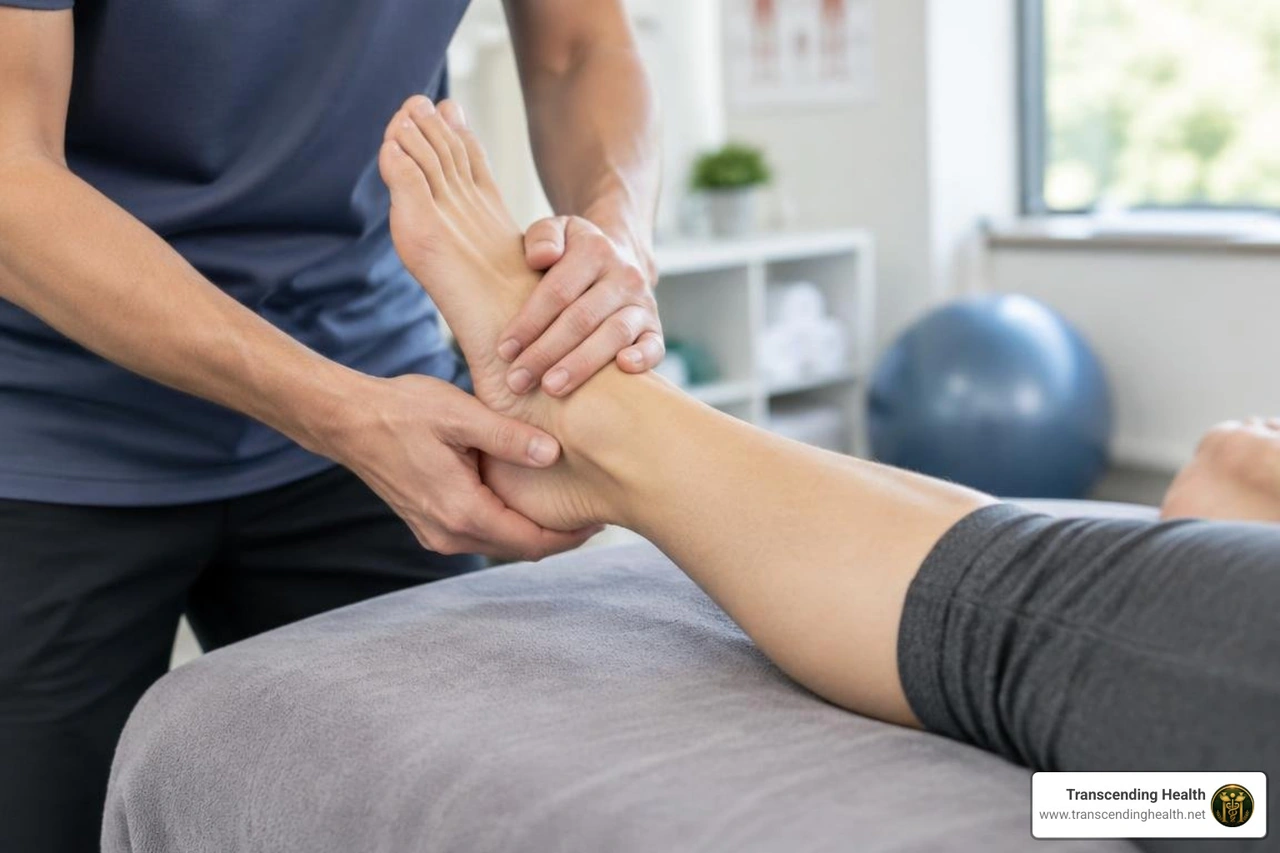
Once surgical incisions are fully healed and your orthopedic surgeon provides clearance for supportive bodywork, a comprehensive restoration plan helps eliminate residual joint stiffness, remodel scar tissue, and correct compensatory gait adaptations.
At Transcending Health in Charlottesville, we guide active clients through a clear recovery path starting with an in-depth consultation and movement assessment, followed by customized supportive care:
- Cellular and Microvascular Stimulation: Non-invasive technologies like orthopedic laser therapy and SoftWave acoustic wave therapy deliver targeted energy to stimulate local cellular metabolism, enhance microcirculation, and accelerate tissue repair around remodeled collagen.
- Targeted Manual Restoration: Hands-on therapies—including fascial counterstrain, structural integration (Rolfing), and specialized sports massage—release compensatory tension across the plantar fascia, posterior calf compartment, hamstring group, and pelvis.
- Corrective Movement and Mobility: Progressive mobility drills and corrective exercise restore full ankle dorsiflexion, normalize kinetic chain alignment, and prepare your body for pain-free daily activity and athletic performance.
Frequently Asked Questions About Achilles Tendinitis Surgery Recovery
How long does it take to walk normally without a boot?
Most surgical patients transition completely out of their walking boot into supportive athletic shoes between weeks 6 and 12. This step-down process involves gradually removing internal heel wedges to restore neutral dorsiflexion, practicing protected weight-bearing, and systematically rebuilding a symmetrical heel-to-toe gait pattern under clinical supervision.
When can athletes safely return to running and high-impact sports?
Recreational straight-line running generally resumes between 4 and 6 months post-surgery, while explosive, jumping, and cutting sports often require 6 to 9 months of rehabilitation. Clearance typically requires strong calf strength and power symmetry compared to the uninjured side, as outlined in rehabilitation and return-to-sport guidance, along with pain-free single-leg calf raises and passing structured plyometric return-to-sport testing.
What lifestyle factors can delay Achilles tendon healing?
Nicotine consumption from smoking or vaping constricts peripheral microvascular blood flow and significantly elevates the risk of wound dehiscence and tendon repair failure. Additional delaying factors include premature weight-bearing against medical advice, uncontrolled blood glucose levels, chronic systemic inflammation, inadequate sleep hygiene, and insufficient dietary protein intake during active collagen remodeling.
Navigating Achilles tendinitis surgery recovery demands disciplined patience, structured milestone progression, and proactive kinetic chain restoration. Whether you are preparing for an upcoming procedure or rebuilding strength months down the line, our experienced team in Central Virginia is here to support your return to pain-free movement and athletic vitality.
Ready to build your personalized tissue recovery and mobility roadmap? Book your assessment with Transcending Health today.