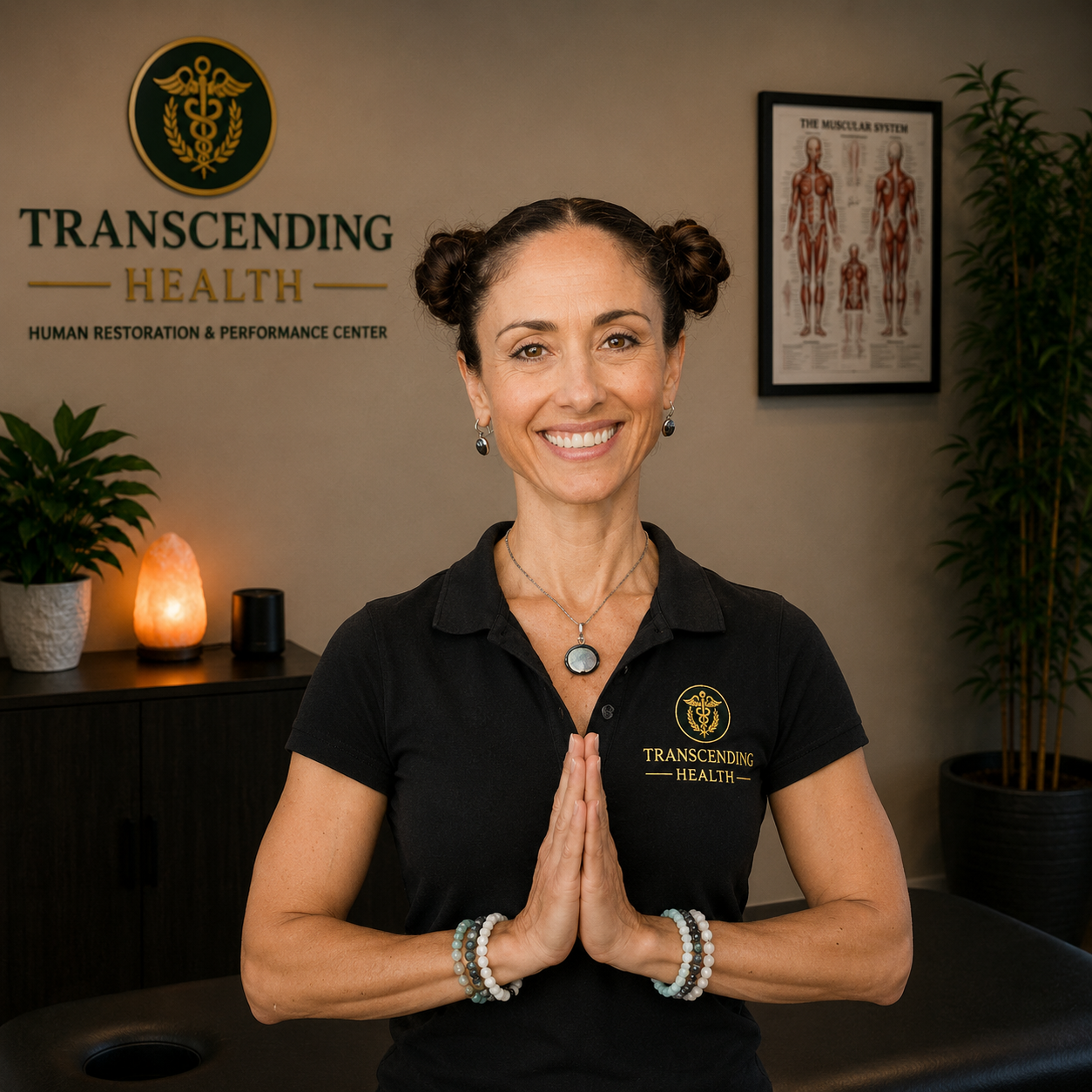
Acupuncture is a traditional therapeutic practice that uses fine needles placed at specific points on the body to support pain relief, nervous system regulation, circulation, and overall wellness.
Restore balance and relieve pain with acupuncture, a proven therapy that activates your body’s natural healing systems. This ancient practice helps regulate energy flow and reduce inflammation—without drugs or downtime.
Acupuncture is a traditional therapeutic modality that involves the precise placement of thin, sterile needles at specific points throughout the body to support physiological balance, circulation, nervous system regulation, and overall wellness. Rooted in Traditional Chinese Medicine, Acupuncture has been practiced for thousands of years as a comprehensive system designed to support the body's natural ability to regulate, recover, and maintain internal harmony.
At Transcending Health, Acupuncture is approached as both a restorative and integrative therapy that supports physical, emotional, and energetic well-being through individualized treatment strategies tailored to each client's unique presentation and wellness goals.
Sessions are customized according to factors such as stress levels, physical discomfort, nervous system balance, recovery needs, circulation patterns, sleep quality, movement restrictions, and overall constitutional health. Treatments may incorporate both traditional Eastern principles and modern integrative wellness perspectives to create a comprehensive therapeutic experience.
Rather than focusing solely on isolated symptoms, Acupuncture seeks to support broader patterns of imbalance within the body while encouraging improved regulation, recovery, and overall physiological resilience.
Acupuncture originated within Traditional Chinese Medicine and has been practiced for several thousand years throughout East Asia as part of a broader medical and philosophical system centered on balance, circulation, and the interconnected nature of bodily function.
Traditional Acupuncture developed through observations surrounding energy flow, organ relationships, circulation patterns, environmental influences, and the body's capacity to maintain internal equilibrium. Classical practitioners mapped specific acupuncture points and meridian pathways believed to influence various physiological systems and energetic relationships throughout the body.
Over time, Acupuncture evolved into a highly refined therapeutic discipline utilized for a wide range of wellness and recovery applications. As global interest in integrative medicine expanded during the twentieth century, Acupuncture became increasingly incorporated into rehabilitation settings, wellness centers, hospitals, pain management programs, and holistic healthcare environments throughout the world.
Today, Acupuncture continues bridging traditional healing philosophy with modern integrative healthcare approaches while remaining one of the most widely recognized complementary therapeutic modalities globally.
Traditional Acupuncture is grounded in the understanding that health involves dynamic balance within the body's interconnected systems. According to Traditional Chinese Medicine, disruptions in circulation, energetic balance, stress regulation, or physiological harmony may contribute to physical discomfort, fatigue, tension, recovery limitations, and broader patterns of imbalance.
Through the strategic placement of fine needles at specific acupuncture points, the modality seeks to support circulation, nervous system regulation, muscular relaxation, energetic balance, and the body's natural recovery processes. Treatments are designed to encourage communication between different physiological systems while supporting the body's ability to regulate itself more efficiently.
Modern interpretations of Acupuncture also explore its relationship to neuromuscular pathways, connective tissue signaling, circulation, and nervous system responses. Research continues examining how acupuncture stimulation may influence pain modulation, stress responses, circulation patterns, inflammatory signaling, and autonomic nervous system activity.
At Transcending Health, treatments are individualized according to each client's physical presentation, stress profile, wellness goals, and overall constitutional balance. Sessions are designed to create a calming and restorative therapeutic environment that supports both immediate relaxation and long-term wellness support.
Today, Acupuncture is utilized within wellness centers, rehabilitation clinics, integrative healthcare systems, sports recovery programs, hospitals, and holistic medical environments throughout the world. As interest in preventative wellness and integrative healthcare continues growing, Acupuncture has become increasingly recognized as a valuable supportive modality within multidisciplinary care strategies.
At Transcending Health, Acupuncture is integrated alongside Massage Therapy, Breathwork, Functional Medicine, Assisted Stretching, Reiki, restorative therapies, and movement-focused wellness services to support comprehensive physical and nervous system recovery.
Because stress, circulation, recovery, sleep quality, and nervous system balance all influence overall health, Acupuncture often complements both therapeutic and preventative wellness programs. The modality may support individuals seeking improved recovery, stress reduction, nervous system regulation, muscular relaxation, energetic balance, and overall wellness maintenance.
Modern integrative approaches increasingly recognize that therapies addressing both physiological and nervous system regulation may play an important role in supporting long-term health and resilience.
Research involving Acupuncture continues exploring its relationship to nervous system regulation, circulation, muscular tension, stress physiology, recovery support, pain modulation, inflammatory responses, and overall wellness outcomes.
Studies have examined how acupuncture stimulation may influence autonomic nervous system activity, neurotransmitter signaling, circulation patterns, and the body's stress response mechanisms. Research also continues investigating Acupuncture's potential role in supporting relaxation, recovery, sleep quality, movement comfort, and overall physiological regulation.
Modern integrative healthcare models increasingly recognize the importance of therapies that support both physical recovery and nervous system balance while encouraging broader wellness adaptation and resilience.
While traditional Acupuncture remains rooted in Eastern medical philosophy, contemporary research continues expanding understanding of how the modality may interact with modern physiological systems and recovery processes.
Acupuncture may be especially beneficial for individuals experiencing chronic stress, muscular tension, nervous system overload, recovery limitations, physical discomfort, sleep disruption, emotional fatigue, circulation-related concerns, or broader patterns of physical and energetic imbalance.
The modality may also support individuals seeking relaxation, wellness maintenance, stress management support, recovery enhancement, or integrative approaches to overall well-being.
Because treatments are highly individualized, Acupuncture may be adapted according to each client's physical condition, wellness goals, sensitivity level, and overall health presentation.
Acupuncture should always be performed by properly trained and qualified practitioners using sterile, professional techniques and individualized treatment planning.
Certain medical conditions may require modification, medical clearance, or additional consideration, including pregnancy, bleeding disorders, severe cardiovascular conditions, acute infections, neurological instability, or certain complex medical presentations.
At Transcending Health, treatments are tailored according to each client's health history, comfort level, wellness goals, and overall physical condition to ensure sessions remain safe, supportive, and appropriate for the individual.
Communication throughout the treatment process remains important to ensure client comfort and proper therapeutic pacing.
Sessions typically involve consultation, point selection, gentle needle placement, and a period of therapeutic rest designed to encourage relaxation and physiological regulation. The experience is often described as calming, grounding, and restorative.
Clients may report reduced stress levels, muscular relaxation, improved physical ease, enhanced recovery support, improved sleep quality, increased calmness, greater nervous system balance, and an overall sense of restoration following treatment.
Some individuals also describe feeling mentally clearer, physically lighter, or more emotionally regulated after sessions as the body transitions into a more relaxed and balanced state.
Over time, regular treatments may help support improved recovery patterns, stress adaptation, and overall wellness resilience.
Acupuncture serves an important role within Transcending Health's integrative wellness philosophy by supporting nervous system regulation, circulation, recovery, relaxation, and overall physiological balance.
It complements Massage Therapy, Functional Medicine, Breathwork, Reiki, restorative therapies, Assisted Stretching, and movement-focused wellness services by helping clients create greater balance between stress, recovery, physical function, and long-term wellness support.
Within ongoing wellness pathways, Acupuncture reinforces the understanding that physical health, nervous system regulation, energetic balance, recovery, and stress management are deeply interconnected aspects of sustainable long-term well-being.
Healing is a Process, Not an Appointment
By signing up, you gain private access to our holiday specials and receive monthly coupons that bring you closer to your health and happiness goals. But that's not all – you'll also be the first to know about upcoming events that can elevate your wellness journey.
Book Now