A warm-up and a stretch are not the same thing. A warm-up gradually prepares you for the activity ahead. Stretching focuses on moving into or holding a position that challenges flexibility. A stretch can be part of preparation, but standing still in one position does not reproduce the demands of walking briskly, cycling or lifting weights.
For someone returning to a Charlottesville gym, preparing for a neighborhood walk or rebuilding a consistent routine, the useful question is: “What will I ask my body to do next?” Start there instead of copying a demanding routine intended for a different sport.
Give each part of the session a purpose
AAOS describes warming up as a gradual transition that increases circulation, muscle temperature and breathing. An easy version of the planned activity is a straightforward starting point. A cyclist can begin slowly in a low gear; a walker can begin at a relaxed pace.
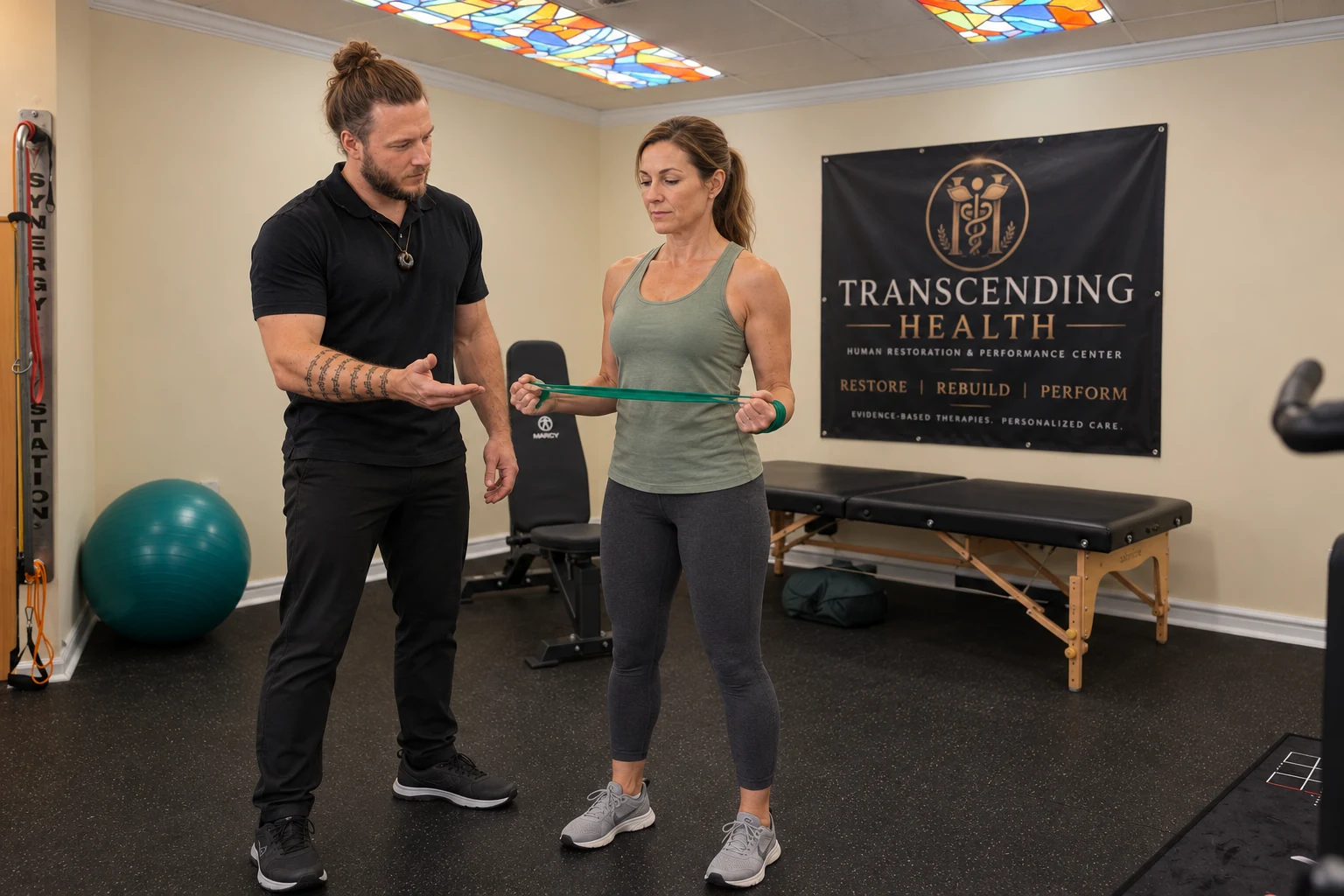
Dynamic movements involve controlled motion through a comfortable range. Static stretches involve holding a position. They serve different purposes, and neither label means a movement is appropriate for everyone. If an exercise feels unfamiliar, ask for a demonstration before adding speed, resistance or a larger range.
MUSC Health's warm-up guidance separates easy cardiovascular activity, activity-related movements and stretching. Its examples are written around athletic preparation; a beginner need not reproduce the whole list. The structure is useful even when the movements need to be much simpler.
Plan the first few minutes before you arrive
Here is an editorial planning checklist, not a prescribed exercise program:
- Name the main activity. Write “walk,” “cycle” or the first movement your trainer has assigned.
- Identify its easiest version. Decide how you will start below the intensity of the main session.
- Know your restrictions. Keep any clinician's or rehabilitation professional's instructions available.
- Choose a check-in. Ask whether you feel ready to continue comfortably rather than rushing because a timer finished.
- Leave room to change plans. A shorter or modified session can be the appropriate choice.
This checklist is especially useful when your schedule is tight. If you have only a short training window, plan the transition into exercise as part of that window. Do not treat preparation as an extra that must disappear before the main workout can begin.
Where does stretching fit?
AAOS recommends warming up before stretching, moving gently and avoiding bouncing. Stretching should not be painful. Stop or reduce the movement instead of forcing a position because it appears in a routine.
For an existing injury, use an individualized plan. AAOS's foot and ankle conditioning guidance, for example, calls for professional supervision, an initial low-impact warm-up and attention to pain. It is a condition-specific resource, not a reason to prescribe those same exercises to every reader.
It can help to keep two separate questions in your training notes: “What prepares me for today's activity?” and “What flexibility work belongs in my longer-term plan?” Ask your trainer or rehabilitation professional to explain where each assigned movement fits. You should not have to guess from a social-media label.
Make the plan specific to your situation
Imagine two people attending the same exercise class. One has been active consistently; the other is returning after an injury with specific restrictions. Identical preparation may not be suitable. This is a hypothetical comparison, not a client result or a claim that one routine prevents all injuries.
Our personal training and corrective exercise service provides a place to discuss movement goals and how an exercise plan can be adapted. When injury management is the main issue, medical or rehabilitation guidance takes priority. Read our guide to rest, reloading and seeking care for the broader recovery context.
Frequently asked questions
Does stretching replace a warm-up?
No. They have different purposes. Start with gradual activity appropriate to the workout and use stretching where it belongs in your plan.
Is five minutes always enough?
No single duration fits every person or activity. AAOS notes that warm-up time depends partly on fitness level. Your response and the activity ahead matter.
Should I push farther if a stretch hurts?
No. Pain is a reason to stop or adjust, not a target. Ask a qualified professional about persistent symptoms or restrictions.
Can a warm-up guarantee that I will not get injured?
No. Preparation is one part of a training plan. It cannot guarantee an outcome or make an unsuitable workout safe.
To discuss a manageable starting point, use the Transcending Health appointment page. Bring your goals, current routine and any instructions from your healthcare team.
This article offers general education, not a diagnosis or an individual treatment plan. Discuss health concerns and activity restrictions with a qualified healthcare professional.