
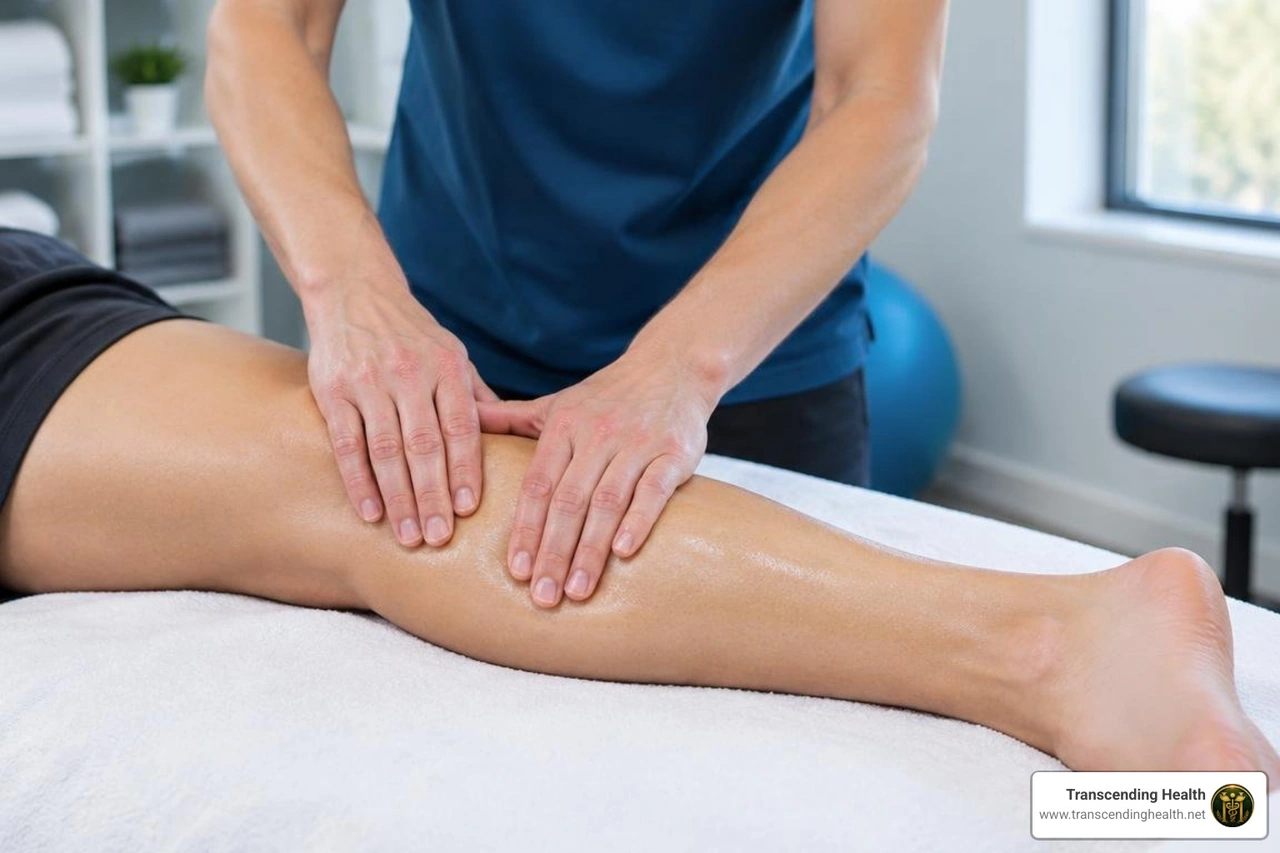
When Is It Safe to Start Massage for Ankle Sprain Recovery?
Starting hands-on therapy at the right moment makes the difference between speeding up your recovery and setting it back. During the acute inflammatory phase—the first 48 to 72 hours following an injury—your body rushes blood, fluid, and white blood cells to stabilize the torn tissue. Pressing into or rubbing an acute ligament tear disrupts the delicate fibrin clot and worsens internal bleeding.
Once active inflammation settles, targeted medical massage therapy introduces beneficial mechanical stress (mechanotherapy) that promotes cellular repair, improves blood flow, and aligns healing collagen fibers.
Identifying When the Acute Phase Has Passed
Before touching the injured joint, check for physical signs that the initial inflammatory spike has subsided:
- Swelling stabilization: The fluid buildup has plateaued rather than expanding hour by hour.
- Normal skin temperature: The skin over the lateral malleolus feels cool or neutral to the touch, not hot or feverish.
- Pitting edema test: Gently press a thumb into the swollen tissue for five seconds; if it leaves a deep indentation that takes several seconds to bounce back, fluid retention remains high, calling for feather-light lymphatic work rather than deep pressure.
- Partial weight-bearing: You can stand and place partial weight on the foot without sharp, shooting pain.
- Fading bruising: Dark purple bruising begins transitioning into yellowish-green discoloration.
Ankle Sprain Grades and Manual Therapy Timing
The severity of your ligament injury dictates your recovery timeline and when manual therapy can begin:
| Sprain Grade | Ligament Damage | Safe Massage Start Time | Recommended Manual Technique |
|---|---|---|---|
| Grade 1 (Mild) | Microscopic fiber stretching; minimal swelling | 48–72 hours post-injury | Upward calf effleurage, gentle perimalleolar drainage |
| Grade 2 (Moderate) | Partial ligament tear; moderate swelling & bruising | 5–7 days post-injury | Retrograde lymphatic drainage, light fascial sweeps |
| Grade 3 (Severe) | Complete ligament rupture; severe instability | Medical clearance required (often 2–3+ weeks) | Proximal lower leg work only; no direct ankle pressure |

Which Massage Techniques Are Most Effective for Healing Ankle Ligaments?
Manual therapy for an ankle sprain is not a single technique. Instead, it is a phased progression designed to drain metabolic waste, calm overactive pain receptors, and remodel scar tissue. Peer-reviewed research published in the Journal of Interdisciplinary Sport Science Research on massage during static stretching shows that combining gentle massage with targeted stretching produced pain reduction and range of motion improvements, with 70% of participants moving from mild pain to no pain in a single treatment session.
Proximal Calf Clearing and Retrograde Lymphatic Drainage
One of the biggest mistakes people make is massaging the swollen ankle directly while ignoring the calf. The gastrocnemius and soleus muscles act as the circulatory pump for your lower leg. When an ankle rolls, those calf muscles lock up to protect the joint, creating a physical bottleneck that traps fluid.
By applying gentle lymphatic drainage massage along the upper calf and popliteal space behind the knee first, you clear the proximal lymphatic pathways. This creates a negative pressure gradient that pulls fluid upward from the ankle.
Cross-Friction and Perimalleolar Mobilization
In the subacute and remodeling stages (typically 7 to 10 days post-injury for Grade 1 sprains), gentle transverse friction can be applied directly across the anterior talofibular ligament (ATFL) and calcaneofibular ligament (CFL). Targeted manual therapy around the malleolar perimeter gently breaks down chaotic scar tissue adhesions, helping newly formed collagen strands align along natural lines of functional stress, supported by research in the Journal of Athletic Training on manual therapy for lateral ankle sprains.
Clinical Evidence Supporting Massage for Ankle Sprain Recovery
Modern sports medicine research confirms the measurable functional gains of manual bodywork:
- Systematic clinical trials continue to demonstrate that targeted soft tissue mobilization reduces self-reported pain scores while improving joint mobility and weight-bearing tolerance.
- Research in the Journal of Health, Technology and Medicine found that manual massage combined with kinesiotaping produced statistically significant reductions in swelling, pain, and functional impairment (p < 0.001).
Step-by-Step Guide: How to Safely Massage a Sprained Ankle at Home
When performing self-care at home, keep your touch gentle. Think of your ankle as a delicate sponge rather than a tight knot that needs heavy pressure.
Safe At-Home Protocol: Massage for Ankle Sprain Recovery
Follow this 10-minute routine once or twice daily after the acute phase has settled:
- Get into position: Sit on a sofa or bed with your leg elevated on pillows above the level of your heart.
- Apply light lubrication: Use a small amount of neutral lotion or oil to allow your hands to glide smoothly without tugging the skin.
- Clear the calf first (3 minutes): Use open palms to perform long, upward strokes (effleurage) from mid-calf toward the back of your knee. Use very light pressure—no heavier than the weight of a nickel.
- Perform perimalleolar sweeps (3 minutes): Using two or three fingertips, make soft, circular motions around the bony bumps of your ankle (the malleoli), always sweeping upward toward the shin and calf. Avoid pressing directly into the tender center of the sprain.
- Drain the foot (2 minutes): Stroke lightly from the base of your toes across the top of your foot toward your ankle joint.
- Rest and elevate (2 minutes): Keep the leg elevated to let gravity support fluid return.
How Massage Therapy Fits with Other Injury-Recovery Approaches
Hands-on soft tissue therapy is most effective when integrated into a multimodal recovery plan that addresses both local tissue healing and overall movement mechanics.
Combining Manual Work with Focused Cryotherapy and Orthopedic Laser
At Transcending Health, we pair manual bodywork with advanced modalities to accelerate tissue repair:
- Focused cryotherapy: Applied locally to calm residual nerve sensitivity and manage post-treatment inflammation without freezing surrounding healthy tissues.
- Orthopedic laser therapy: Delivers specific wavelengths of light to stimulate cellular ATP production, supporting collagen synthesis in healing ligaments.
- SoftWave acoustic wave therapy: Uses gentle acoustic energy pulses to recruit cellular repair mechanisms and enhance local microcirculation in stubborn or chronic sprains.
How Can Massage Be Paired with Movement-Based Recovery?
Passive treatments alone cannot rebuild joint stability. Once soft tissue work restores your resting range of motion, transitioning into active corrective exercise and mobility training rebuilds the stabilizing reflexes that prevent future roll-overs.
Mistakes to Avoid and When to Seek Medical Evaluation
Steer clear of these common pitfalls during your recovery:
- Deep tissue work too early: Digging into a fresh ligament tear within the first 72 hours restarts internal bleeding and prolongs healing.
- Percussive massage guns on bone or acute ligaments: Massage guns create rapid percussive trauma. While safe on the fleshy upper calf, using them directly over an acutely sprained ankle can tear healing fibers.
- Ignoring persistent swelling: Forcing heavy weight-bearing while the joint remains inflamed leads to chronic ankle instability.
Critical Red Flags Requiring Professional Medical Evaluation
Seek immediate medical attention if you experience:
- An inability to bear weight or take four steps immediately after the injury
- Severe bone tenderness directly over the posterior edge of the medial or lateral malleolus (the Ottawa Ankle Rules)
- Numbness, tingling, or coldness in your foot or toes
- Visual deformity or an audible "crack" at the moment of injury
Review our clinical guide on evaluating sports injuries and next steps if you are unsure whether your injury requires immediate imaging.
Frequently Asked Questions About Ankle Sprain Massage
How many times a day should you massage a sprained ankle?
In the subacute phase, performing gentle lymphatic drainage 1 to 2 times per day for 5 to 10 minutes per session is ideal. Keep sessions brief to avoid overstimulating tender tissues.
Should I use ice or heat before massaging my sprained ankle?
During the first week, stick to focused cold therapy if mild swelling lingers. In the chronic rehabilitation stage (after 2 to 3 weeks), applying moist heat before massage can relax tight periarticular tissues and improve joint mobility.
Why is massaging the calf muscle necessary for an ankle injury?
Your calf muscles house the primary venous and lymphatic pathways that drain fluid from the foot. Clearing tight calf tissues relieves pressure on the lower leg, allowing fluid from the ankle to drain efficiently.
At Transcending Health, we integrate specialized massage therapy with advanced recovery modalities to support your healing. Ready to get back on your feet? Book your restoration session today.