Introduction: Massage Therapy Beyond Relaxation
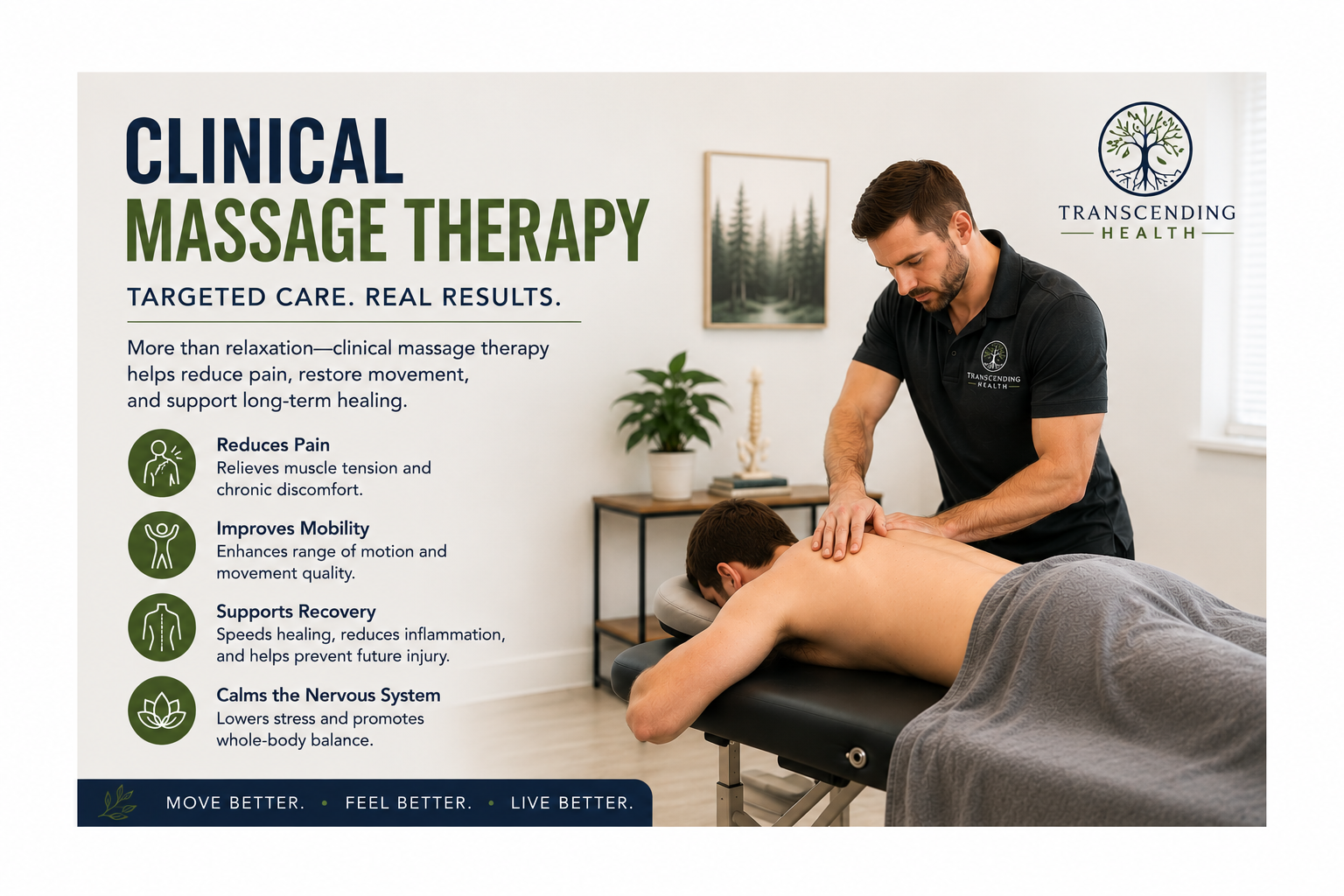
When many people hear the words “massage therapy,” they immediately think of relaxation, spa settings, or temporary stress relief. While relaxation is certainly one of the many benefits of massage, clinical massage therapy serves a much deeper therapeutic purpose. It is a targeted, outcome-oriented form of bodywork designed to address pain, movement dysfunction, muscular imbalances, and nervous system stress.
At Transcending Health, we view clinical massage therapy as more than a luxury service. It is a highly effective therapeutic tool that helps restore movement, improve tissue health, support recovery, and enhance overall function within the body. Rather than simply helping someone feel better temporarily, clinical massage aims to identify and address the underlying causes of discomfort and restriction.
In today’s fast-paced world, many people experience chronic tension, postural strain, repetitive stress injuries, and nervous system overload. These issues often build gradually over time, eventually leading to stiffness, pain, reduced mobility, and physical exhaustion. Clinical massage therapy helps interrupt these patterns by working directly with the muscles, fascia, connective tissue, and nervous system to restore balance and improve how the body functions as a whole.
What Makes Clinical Massage Therapy Different?
Clinical massage therapy differs significantly from a traditional relaxation massage. While relaxation-focused massage typically emphasizes generalized stress reduction and lighter full-body techniques, clinical massage therapy is more specific and therapeutic in nature.
A clinical massage session is often centered around a particular issue or dysfunction. This may include chronic neck tension, lower back pain, shoulder restriction, sciatica, headaches, postural imbalances, or recovery from injury. Rather than applying the same techniques to every client, the treatment is tailored to the individual’s unique movement patterns, pain presentation, and physical needs.
At Transcending Health, our approach to clinical massage combines several therapeutic techniques, including deep tissue work, musculoskeletal manipulation, myofascial release, trigger point therapy, assisted stretching, and structural bodywork. These methods allow us to work more intentionally with the body’s soft tissues to reduce restrictions and improve movement quality.
The goal is not simply to “work out knots,” but to improve the body’s ability to move efficiently and function properly.
Why Pain and Restriction Develop in the Body
The human body is remarkably adaptive. Unfortunately, many of the repetitive patterns we experience throughout daily life are not always beneficial. Long hours spent sitting, repetitive work movements, poor posture, emotional stress, previous injuries, and inactivity can all contribute to muscular dysfunction and tension patterns.
Over time, muscles and connective tissues begin adapting to these stresses. Some muscles become chronically tight and overactive, while others weaken or lose proper activation. This imbalance often creates compensation patterns throughout the body that alter posture and movement mechanics.
For example, prolonged sitting may tighten the hip flexors and weaken the glutes, which can place additional strain on the lower back. Similarly, forward head posture and rounded shoulders from desk work may contribute to chronic neck tension and headaches.
Clinical massage therapy helps address these dysfunctional patterns by improving tissue quality, restoring circulation, and reducing excessive muscular guarding.
How Clinical Massage Therapy Helps the Body Heal
One of the primary benefits of clinical massage therapy is its ability to reduce muscular tension and pain. Chronically tight muscles can compress joints, irritate nerves, and restrict healthy movement patterns. Therapeutic bodywork helps release these restrictions while increasing blood flow and oxygen delivery to tissues.
Improved circulation plays a major role in recovery and healing. When tissues receive better oxygenation and nutrient delivery, the body is able to repair itself more efficiently. At the same time, improved circulation helps remove metabolic waste products and inflammatory byproducts that may contribute to discomfort and stiffness.
Clinical massage therapy also influences the nervous system. Many people live in a prolonged sympathetic (“fight or flight”) state due to chronic stress and overstimulation. This often manifests physically as muscle tension, shallow breathing, jaw clenching, and nervous system fatigue.
Therapeutic massage helps activate the parasympathetic nervous system—the body’s “rest and restore” mode. As the nervous system begins to calm, the body becomes more receptive to healing and relaxation. Many clients notice that they not only experience physical relief after a session, but also feel mentally calmer and emotionally lighter.
Improving Mobility and Movement Quality
Another major benefit of clinical massage therapy is improved mobility and range of motion. Tight fascia and muscular restrictions can limit how joints move and create compensatory movement patterns throughout the body.
When movement becomes restricted, the body often begins “borrowing” motion from other areas, leading to excessive strain and dysfunction. For example, poor mobility in the thoracic spine may cause the neck or lower back to compensate excessively during movement.
Clinical massage therapy helps restore tissue extensibility and improve mobility by reducing restrictions within the muscles and connective tissue. This allows joints to move more naturally and efficiently.
At Transcending Health, we often combine clinical massage therapy with corrective exercise and movement training to reinforce these improvements. This integrative approach helps clients build long-term movement resilience rather than relying solely on passive treatment.
Clinical Massage Therapy and Injury Recovery
Following an injury, the body often develops protective patterns around the affected area. Scar tissue, inflammation, and muscular guarding can persist long after the initial injury has healed.
Clinical massage therapy can play an important role in recovery by improving circulation, reducing tissue adhesions, and restoring proper movement patterns. Therapeutic bodywork may help individuals recovering from sports injuries, overuse conditions, postural strain, or surgical procedures regain mobility and reduce lingering discomfort.
Many clients also seek clinical massage therapy because they feel “stuck” in recurring cycles of tension and pain. By addressing the underlying movement dysfunctions contributing to these patterns, clinical massage helps create more sustainable relief.
The Mind-Body Connection
The body stores stress physically. Emotional stress and mental overload often manifest through physical tension patterns, especially in areas such as the neck, shoulders, jaw, and lower back.
This is one reason clinical massage therapy can have such a profound effect on overall well-being. As physical tension decreases, the nervous system often follows. Clients frequently report improvements in sleep, stress levels, mood, and mental clarity after treatment.
At Transcending Health, we recognize that healing involves both physical and neurological components. By combining therapeutic bodywork with nervous system-focused therapies and movement practices, we help support the body as a whole.
Clinical Massage Therapy at Transcending Health
At Transcending Health, clinical massage therapy is integrated into a larger wellness and recovery model designed to help clients move better, recover more effectively, and improve long-term function.
Our sessions are personalized to each individual’s goals and needs. Whether someone is dealing with chronic pain, muscular tension, movement restrictions, or recovery from injury, we create a treatment approach designed to support meaningful, lasting improvement.
Clinical massage therapy may also be combined with services such as SoftWave therapy, Ortho Laser therapy, corrective exercise training, stretching, and nervous system regulation techniques to enhance outcomes.
This integrative approach allows us to address both the symptoms and the deeper dysfunctions contributing to discomfort and restricted movement.
Experience the Benefits of Clinical Massage Therapy
Clinical massage therapy is more than relaxation—it is intentional, therapeutic bodywork designed to support healing, movement, and recovery.
If you are experiencing chronic tension, pain, mobility restrictions, or stress-related physical discomfort, clinical massage therapy may help restore balance within your body and improve how you feel on a daily basis.