Why Thai Massage Recovery Is Gaining Ground With Athletes
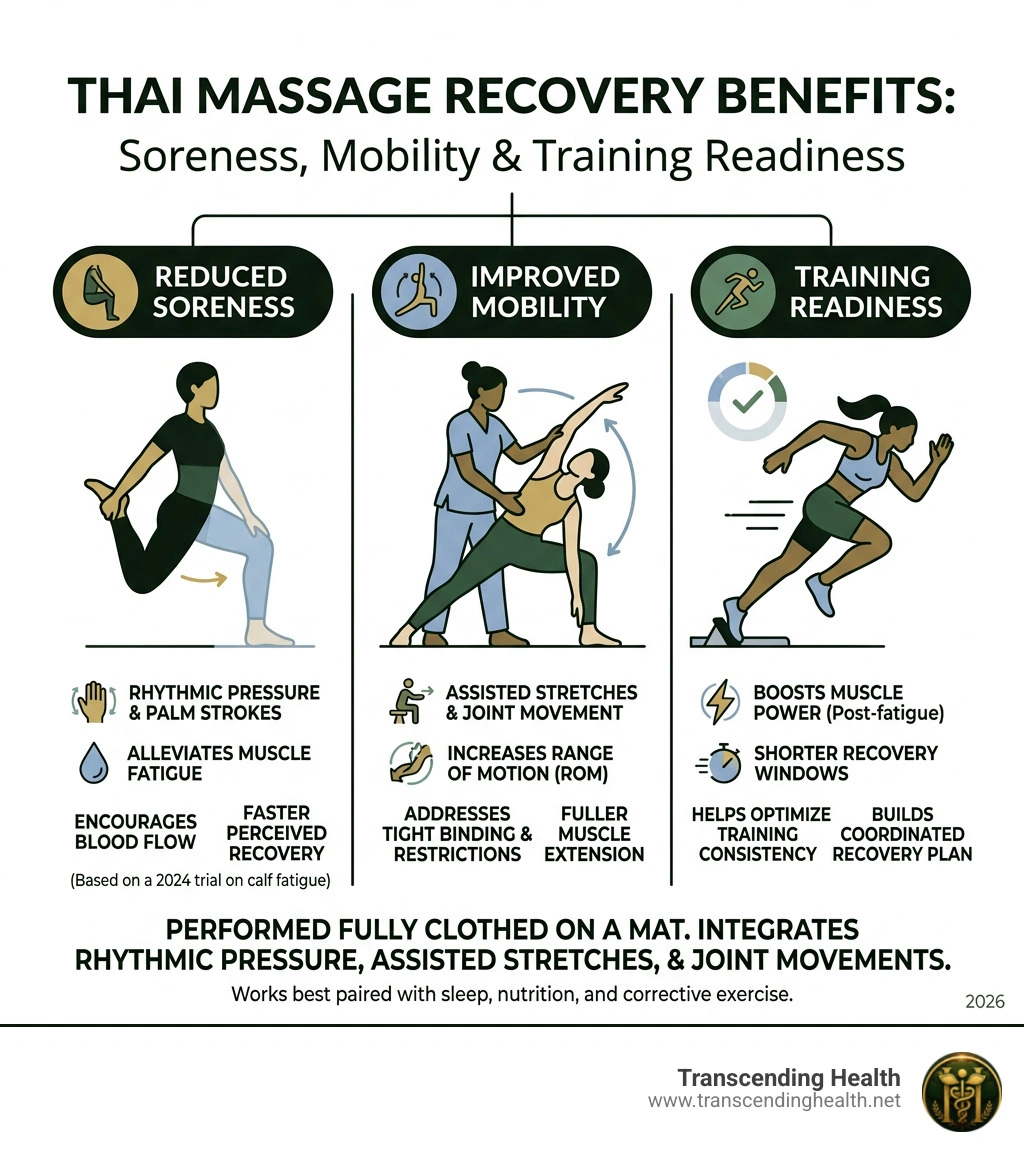
Thai massage recovery can help active adults feel less stiff, move through a fuller range of motion, and reduce perceived muscle fatigue after hard training. It works best as one part of a recovery plan: schedule an in-person session after demanding training or on a rest day, tell the therapist where you are sore or limited, and keep the pressure below the point of sharp pain.
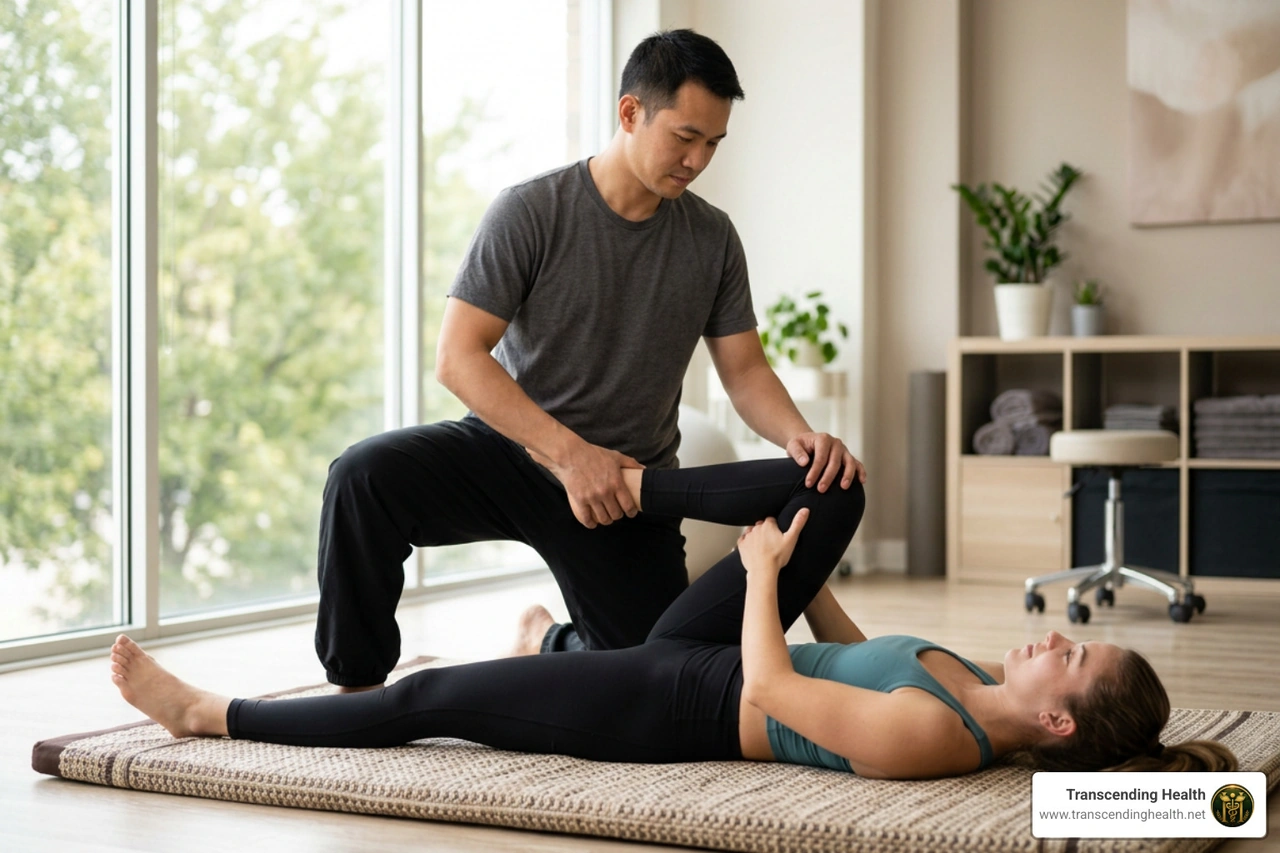
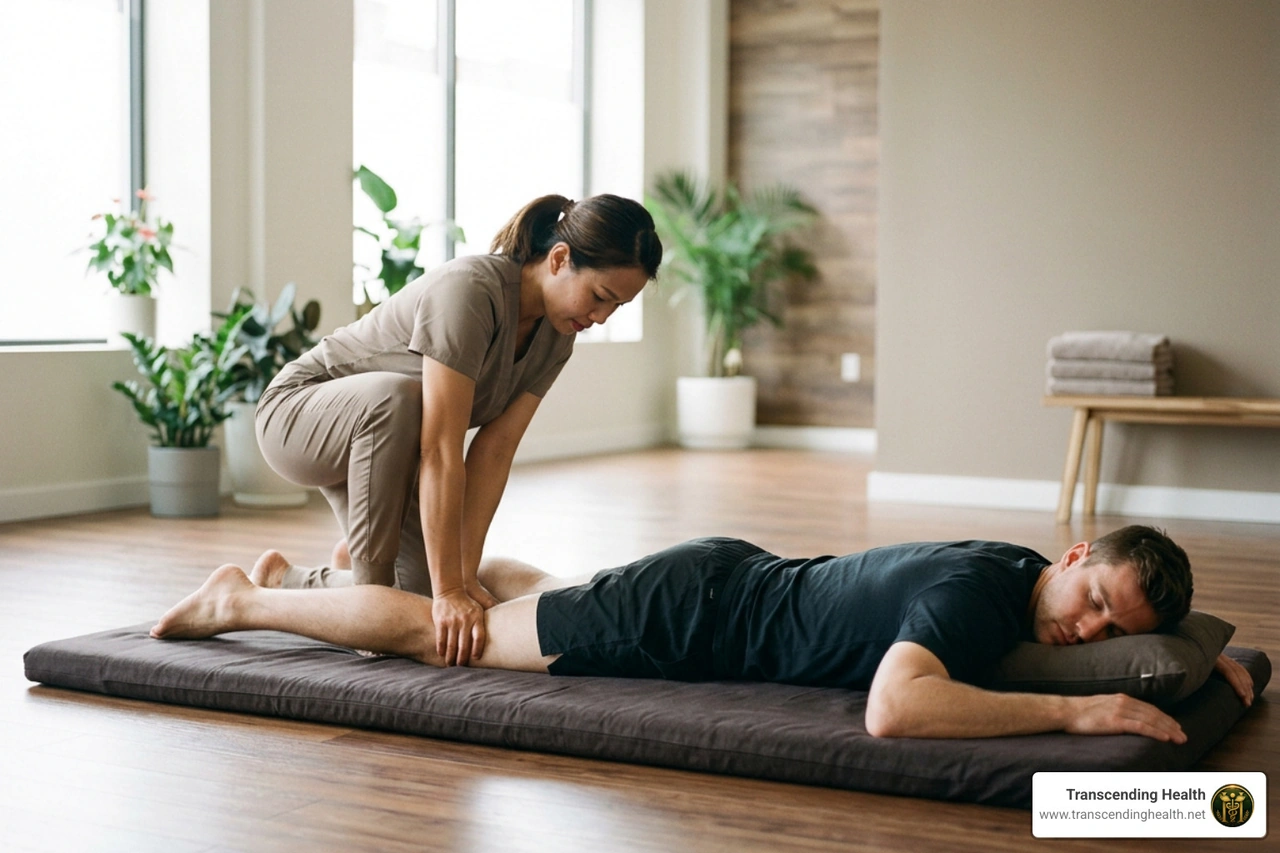
Unlike table-based Swedish or deep-tissue massage, Thai massage is typically done fully clothed on a mat. The therapist uses rhythmic pressure, assisted stretches, and joint movement to address tight muscles and restricted motion. A 2024 randomized trial found that 30 minutes of traditional Thai massage after calf fatigue improved muscle power, fatigue measures, and perceived recovery more than rest alone.
For athletes and active adults in Charlottesville, VA, that combination can be especially useful when recurring back, knee, shoulder, hip, or calf tightness makes training feel harder than it should. It is not a replacement for medical care, physical therapy, sleep, nutrition, or smart training volume, but it can be a practical hands-on tool between workouts.
I am Drew Edmondson, owner of Transcending Health in Charlottesville, and my work in Thai massage recovery fits into a broader approach to pain relief, mobility, injury recovery, and performance. We pair thoughtful hands-on care with corrective exercise and, when appropriate, options such as acoustic wave therapy, also called shockwave therapy, to build a coordinated recovery plan.
Know your Thai massage recovery terms:
5 Evidence-Based Reasons Athletes Rely on Thai Massage Recovery
Traditional Thai massage (often referred to as Nuad Thai) has roots going back over 2,500 years, drawing influences from Ayurvedic medicine, Buddhist traditions, and classical bodywork. While the historical language describes energy channels known as sen lines, modern sports science explains these benefits through fascia, circulation, and nervous system regulation.
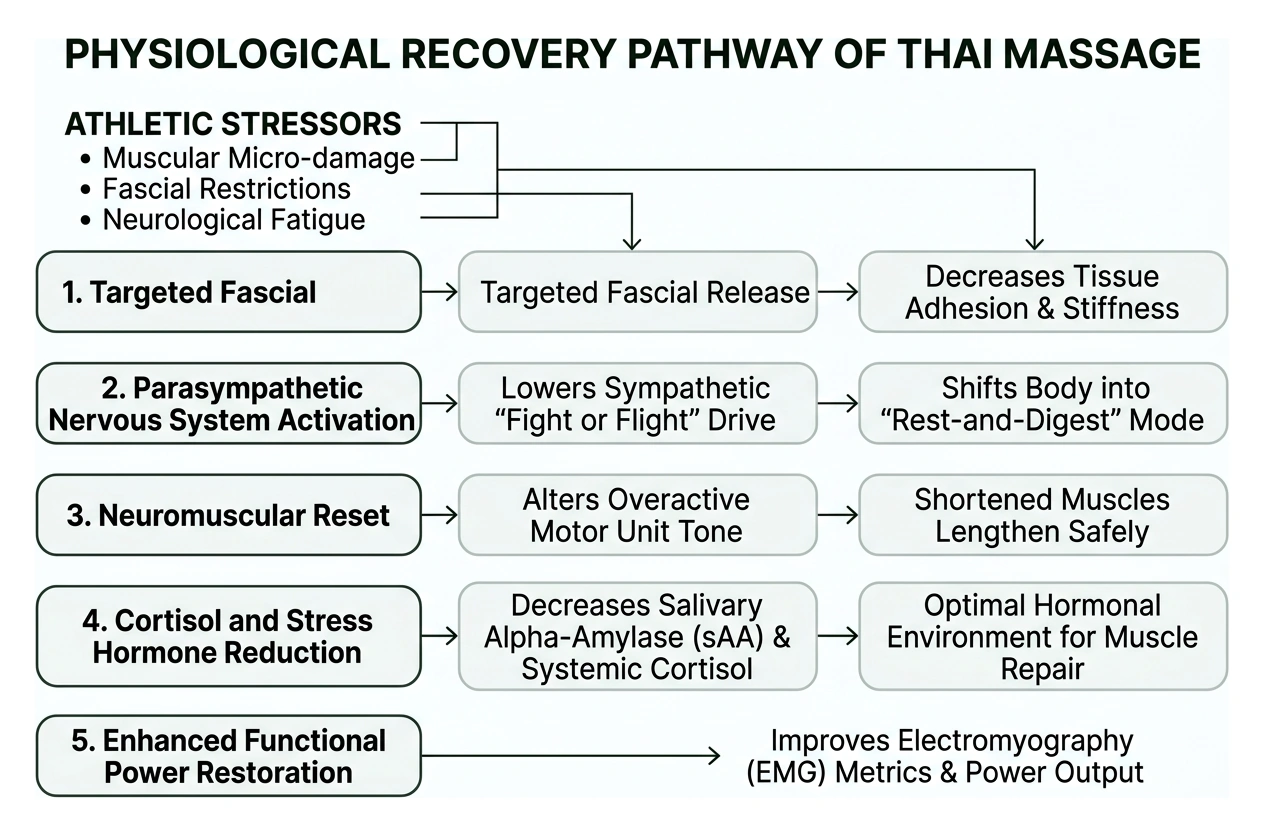
When you push through hard interval sessions, heavy lifts, or high-mileage runs, your muscular system accumulates micro-damage, fascial restrictions, and neurological fatigue. Thai massage addresses these physical stressors simultaneously through five core mechanisms:
- Targeted Fascial Release: Rhythmic compression across major muscle groups shears bound fascial layers, decreasing tissue adhesion and stiffness.
- Parasympathetic Nervous System Activation: Gentle traction and rhythmic rocking downregulate the sympathetic "fight or flight" response, shifting the body into rest-and-digest mode.
- Neuromuscular Reset: Dynamic, passive stretching alters the tone of overactive motor units, allowing shortened muscles to lengthen safely without triggering protective spasms.
- Cortisol and Stress Hormone Reduction: Clinical assessments show that bodywork protocols effectively lower stress markers like salivary alpha-amylase (sAA) and systemic cortisol, creating an optimal hormonal environment for muscle repair.
- Enhanced Functional Power Restoration: Research, such as The influence of traditional Thai massage on recovery from gastrocnemius muscle fatigue: A single-blind randomised controlled trial, confirms that targeted Thai massage improves electromyography (EMG) metrics and power output compared to passive rest alone (Buttagat et al., 2024).
How Thai Massage Recovery Reduces Delayed-Onset Muscle Soreness (DOMS)
Delayed-onset muscle soreness (DOMS) typically peaks 24 to 72 hours after unaccustomed or high-intensity exercise. This discomfort stems from microscopic tears in muscle fibers, localized inflammation, and the accumulation of biochemical markers such as creatine kinase (CK).
A landmark 2023 study from Chiang Mai University demonstrated that athletes receiving Thai massage showed a 32% faster drop in creatine kinase levels compared to athletes who used passive rest. Even more noticeable for the participants, perceived soreness dropped by nearly 40% within 24 hours of treatment.
Looking at objective evidence on post-workout Thai massage, researchers have established that these manual interventions do not just make muscles "feel" better—they objectively alter muscle fatigue recovery profiles. By stimulating local blood flow without requiring active muscular contraction, Thai massage helps restore normal resting muscle tone faster.
Enhanced Joint Mobility and Athletic Range of Motion
Unlike static table massage, Thai massage moves your joints through multiple planes of motion while your muscles remain completely relaxed. Because the therapist leverages their body weight to stabilize and gently stretch your limbs, you can achieve deeper, safer ranges of motion than you could alone on a stretching mat.
- Hip Flexors and Glutes: Long-lever stretches open the anterior hip capsule, relieving tension that causes anterior pelvic tilt in runners and cyclists.
- Ankle Dorsiflexion & Knee Flexion: Joint mobilization around the talocrural and tibiofemoral joints enhances lower-extremity biomechanics. A 2014 study on collegiate volleyball players found that a structured Thai massage program significantly improved lower-body joint mobility and vertical jump performance.
- Spinal Decompression: Gentle rotational stretches and passive extensions create space between vertebrae, alleviating compressive forces from heavy squatting or running on hard pavement.
- Synovial Fluid Stimulation: Passive joint articulation stimulates the production of synovial fluid, providing natural lubrication that decreases joint friction.
Accelerated Lymphatic Drainage and Metabolic Clearance
The circulatory and lymphatic systems work together to deliver nutrient-dense, oxygenated blood to recovering muscle tissue while removing cellular debris. Because the lymphatic system lacks a central pump like the heart, it relies on muscular movement, respiration, and external pressure to maintain fluid movement.
During a Thai massage session, practitioners apply slow, rhythmic compression along the extremities toward the center of the body. This mechanical action:
- Enhances peripheral vascular blood flow
- Encourages venous return
- Reduces interstitial fluid retention and post-workout swelling
- Improves local tissue perfusion, ensuring damaged muscle fibers receive the amino acids and oxygen necessary for structural remodeling
Thai Massage vs. Other Athletic Recovery Modalities
Modern athletic training features no shortage of recovery tools, from foam rollers and percussive massage guns to cold plunges and specialized sports massage. While every tool has its place, understanding how Thai massage compares helps you choose the right modality for your specific training phase.
| Recovery Modality | Primary Mechanism | Hands-On / Assisted | Joint Mobilization | Nervous System Impact | Best Used For |
|---|---|---|---|---|---|
| Thai Massage | Assisted stretching, deep acupressure, whole-body traction | Yes (Full practitioner leverage) | High (Multi-plane passive movement) | Deep parasympathetic activation | Rest days, post-volume deloads, mobility restrictions |
| Sports Massage | Localized friction, effleurage, trigger point therapy | Yes (Table-based with oils) | Low to Moderate | Moderate relaxation or pre-event stimulation | Acute focal knots, pre-race priming |
| Foam Rolling | Self-myofascial compression | No (Self-administered) | None | Variable (Can increase sympathetic tone if painful) | Pre-workout warmups, daily maintenance |
| Ice Baths (Cold Water Immersion) | Vasoconstriction, reduced nerve conduction velocity | No (Passive immersion) | None | Sympathetic shock followed by systemic blunting | Managing acute perceived pain in multi-event tournaments |
Why Dynamic Stretching Outperforms Static Foam Rolling
Foam rolling is a staple in most gym bags, but it has distinct limitations. When you roll out a tight IT band or sore quadriceps, you must support your own body weight in a plank or side-bridge position. This active core and upper-body engagement prevents your nervous system from fully relaxing.
In contrast, Thai massage provides passive dynamic stretching. Because our practitioners use their hands, forearms, knees, and feet to stabilize and position your limbs, your muscles remain completely unengaged. This allows for:
- Proprioceptive Neuromuscular Facilitation (PNF)-style elongation without active muscle guarding
- Assisted joint traction that gently creates space inside tight hip, shoulder, and spinal capsules
- Sustained, targeted leverage that reaches deep stabilization muscles (such as the piriformis, psoas, and quadratus lumborum) that standard foam rollers simply cannot isolate effectively
What Athletes Should Expect During a Thai Massage Session
If you have never experienced a traditional Thai session, it looks and feels quite different from a conventional Western spa massage.
The Session Environment and Flow
- Floor Mat Setup: You will lie on a wide, supportive mat on the floor rather than a narrow massage table. This gives the therapist the space and leverage needed to move your body through full-body stretches safely.
- Comfortable Clothing: Sessions are conducted with the client fully clothed. Wear loose-fitting, breathable athletic wear (such as gym shorts, leggings, and a soft t-shirt) that allows for unrestricted movement. No oils or lotions are used.
- Progressive Rhythm: Sessions typically begin at the feet and work upward along the body’s energy pathways. The practitioner uses rhythmic palming, thumb pressure, and gentle rocking to warm up muscle tissue before transitioning into deeper passive yoga stretches.
- Therapist Leverage: Do not be surprised if your therapist uses their forearms, knees, or feet to apply stable compression or gently steps over your frame to position a leg into external rotation. The contact is deliberate, controlled, and focused on functional alignment.
- Clear Communication: Pressure should feel like a satisfying, therapeutic release—often described as a "good hurt." It should never cross into sharp, shooting, or breath-holding pain.
Navigating Post-Session Soreness and Optimal Aftercare
Because Thai massage works deeply into tight, contracted tissues and mobilizes joints through extended ranges of motion, mild muscular soreness can occur 12 to 24 hours following a session—especially if your tissues were already carrying high training fatigue.
To maximize your recovery and minimize next-day stiffness, follow these post-session guidelines:
- Hydrate Consistently: Drink plenty of water or electrolyte-rich fluids over the next 24 hours to support cellular hydration and metabolic waste clearance.
- Skip Heavy Meals and Alcohol: Avoid heavy, hard-to-digest food and alcohol immediately following a session, as both can interfere with circulation and systemic recovery.
- Take a Warm Shower or Epsom Salt Bath: Gentle heat encourages continued vasodilation and soothes sensitized muscle fibers.
- Keep Movement Light: Opt for easy walking or gentle mobility drills rather than intense exercise for the remainder of the day.
- Allow a 24-Hour Buffer: Give your body 12 to 24 hours of rest before scheduling your next high-intensity interval session or heavy lifting workout.
How to Integrate Thai Massage into Your Training Routine
Recovery is not an afterthought—it is the biological window where training adaptations actually take place. Integrating hands-on bodywork systematically into your training calendar ensures consistent progress while reducing the risk of overuse injuries.
Optimizing Your Thai Massage Recovery Protocol: Frequency and Timing
How often you schedule a session depends on your current training load, athletic goals, and individual recovery needs:
- High-Volume / Peak Training Phases (4–6 hard days/week): Book a session once every 1 to 2 weeks. Focus on deep compression, spinal decompression, and opening chronically tight hip flexors and calves.
- Recreational Athletes & Weekend Warriors (2–3 workouts/week): A session every 3 to 4 weeks provides excellent maintenance, restoring joint mobility and resolving minor compensatory movement patterns before they cause injury.
- Pre-Competition Preparation: Schedule a light, dynamic session 48 to 72 hours before race day or competition. The goal here is nervous system priming, light mobility, and relaxation—avoiding heavy deep-tissue pressure that could leave muscles feeling lethargic.
- Post-Competition Recovery: Book an appointment 24 to 48 hours after your event. This gives acute micro-trauma and swelling time to stabilize before introducing gentle passive stretching and circulatory compression.
- Injury Rehabilitation & Chronic Pain: For managing chronic postural tightness, old scar tissue restrictions, or persistent lower back discomfort, weekly sessions for 3–4 weeks can help reset baseline tissue quality. Clinical trials have found Thai massage to be as effective as standard physical therapy joint mobilization for non-specific lower back pain and chronic neck tension.
At Transcending Health, we often combine hands-on bodywork with other advanced modalities. If an athlete presents with localized tendinopathy, stubborn trigger points, or chronic joint restrictions, pairing hands-on mobilization with acoustic wave therapy (shockwave therapy) or structural integration helps stimulate cellular regeneration alongside functional lengthening.
Frequently Asked Questions About Thai Massage for Athletes
How soon after an intense workout should I get a Thai massage?
We recommend waiting at least 24 to 48 hours following an extremely demanding workout, marathon, or heavy lifting session. Immediately after strenuous exercise, your muscle fibers have acute microscopic tearing and temporary inflammation. Allowing a 24-hour buffer lets acute inflammation settle so the therapist can safely stretch and compress the tissues without causing excessive irritation.
Is Thai massage safe when recovering from a sports injury?
Thai massage can be a valuable part of subacute and chronic injury rehabilitation, but it should not be performed on acute, swollen, or freshly torn tissues. Once acute inflammation has cleared and your healthcare provider has cleared you for manual therapy, gentle Thai techniques can help break down restrictive scar tissue, improve localized circulation, and restore mobility around healing joints.
Does Thai massage hurt more than a standard deep tissue massage?
It should not. While Thai massage can feel intense due to the combination of body-weight pressure and deep stretching, it is always tailored to your comfort and current range of motion. You should never feel sharp, pinching, or unbearable pain. A skilled practitioner continuously checks in and adjusts their leverage to keep the sensation within a productive, therapeutic range.
Conclusion
Athletic progression requires balancing intense physical stress with dedicated, high-quality recovery. Traditional Thai massage offers a time-tested, science-backed approach to restoring joint mobility, reducing delayed-onset muscle soreness, and resetting an overtaxed nervous system.
At Transcending Health, we work with runners, cyclists, strength athletes, and active individuals throughout Charlottesville, VA, and Albemarle County. Our whole-person care model blends individualized hands-on bodywork, structural integration, and corrective movement with modern recovery technologies like acoustic wave therapy to help you stay resilient and perform at your best.
If you are ready to eliminate chronic tightness, move with ease, and optimize your athletic recovery, visit our clinic at 1445 Rio Road East, Suite 201, Charlottesville, VA 22901.
Schedule your next in-person session today by booking online at Transcending Health's Appointment Calendar.
References
Vitsarut Buttagat, Sujittra Kluayhomthong, Pattanasin Areeudomwong. "The influence of traditional Thai massage on recovery from gastrocnemius muscle fatigue: A single-blind randomised controlled trial." Complementary Therapies in Medicine, 2024. DOI 10.1016/j.ctim.2024.103056.